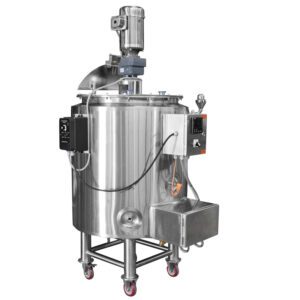
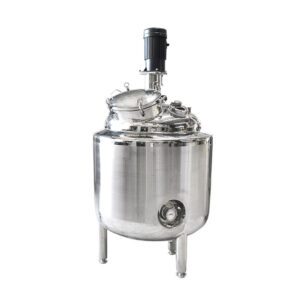
Vacuum emulsifier system is an advanced stainless steel mixing tank designed for high-shear dispersion, emulsification, and homogenization of cosmetics, chemicals, food, and resin products. It integrates vacuum mixing, heating/cooling, and high-speed dispersing technology to achieve fine particle reduction and stable formulations. With durable SUS304/SUS316 construction, flexible agitator options, and precise control, it ensures efficient production, smooth texture, and high product consistency for industrial manufacturing applications.
Vacuum emulsifier system is a high-performance industrial mixing tank widely used in cosmetics, coatings, food, and chemical processing industries. The system combines vacuum emulsification, high-speed dispersion, and homogenization to achieve ultra-fine and stable product textures. It is constructed from stainless steel 304 or 316 with optional heating and cooling jackets for different process requirements. The tank supports multiple agitator types such as anchor, frame, and spiral mixing. With a vacuum environment, it prevents air bubbles and improves product stability. The system is designed for efficient production, easy operation, and long-term durability, making it ideal for modern industrial manufacturing plants.
Working principle
Step 1: Raw materials are loaded into stainless steel mixing tank Step 2: Vacuum system removes air from the mixing chamber Step 3: Heating or cooling jacket adjusts required processing temperature Step 4: High-speed dispersing disc rotates to break particle structure Step 5: Agitator ensures multi-directional material movement and blending Step 6: Vacuum suction cycle continuously refines material circulation Step 7: Homogenization process reduces particle size for stable formulation Step 8: Finished product is discharged after reaching required consistency
Product Parameter Table
Parameter
Specification
Volume
1000 L
Motor Power
1.5 kW
Nominal Diameter
1000 mm
Stirring Speed
24-120 r/min (optional)
Nominal Pressure
Atmospheric pressure
Jacketed Pressure
0.25 MPa
Comparison Module
Feature
Traditional Mixing Tank
Vacuum Emulsifier System
Mixing quality
Uneven particle size
Ultra-fine homogeneous mixing
Air bubbles
Present in product
Vacuum bubble-free system
Dispersion efficiency
Low
High-speed dispersion system
Temperature control
Limited
Heating & cooling jacket available
Product stability
Low consistency
High stability and smooth texture
Automation level
Manual operation
Semi/full automatic control
Conclusion: Vacuum emulsifier system provides higher efficiency, stability, and product quality for industrial production.
Main Features
Vacuum mixing environment eliminates bubbles and improves product stability
High-speed dispersing system reduces particle size for smooth texture
Multiple agitator designs support different viscosity materials
Stainless steel SUS304/SUS316 ensures corrosion resistance and hygiene safety
Optional heating and cooling jacket improves process flexibility
Hydraulic lifting system simplifies cleaning and maintenance
Strong dispersion capability ensures uniform mixing of materials
Modular design supports cosmetic, food, and chemical applications
Application Scenarios
For cosmetic manufacturers → unstable cream texture → achieve smooth and stable emulsions
For paint and coating factories → uneven pigment dispersion → ensure uniform color and consistency
For food processing plants → poor mixing uniformity → improve product stability and taste
For resin production → high viscosity mixing difficulty → enable efficient homogenization
For laboratory research → small batch inconsistency → achieve precise formulation control
For chemical industries → air bubble contamination → ensure vacuum bubble-free mixing
Why Choose Us
100% direct manufacturer with full production control
Rich industrial experience in mixing and emulsification systems
Strict quality control system ensures stable machine performance
Flexible MOQ supports small and large scale projects
Fast delivery with 20% shorter lead time than industry average
Professional engineering team provides full technical support
24/7 response within 1 hour for inquiries and quotations
Reliable after-sales service ensures long-term operation stability
FAQ
1. What is vacuum emulsifier system used for in cosmetics industry? It is used to produce creams, lotions, and stable cosmetic emulsions.
2. How does vacuum emulsifier mixing tank work step by step? It mixes materials under vacuum with high-speed dispersion and homogenization.
3. What is the difference between emulsifier tank and mixing tank? Emulsifier tank provides vacuum and high shear homogenization.
4. Can vacuum emulsifier system be used for food production? Yes, it is widely used in food, sauce, and dairy processing.
5. What materials are used in vacuum emulsifier system construction? It is made of stainless steel SUS304 or SUS316.
6. How to prevent bubbles in mixing process? Vacuum system removes air during emulsification process.
7. What is lead time for vacuum emulsifier system delivery? Standard delivery is fast with flexible stock-based production.
Buying Guide
1. What capacity vacuum emulsifier system do I need? Choose based on daily production volume and batch size requirements.
2. Should I choose 304 or 316 stainless steel? 316 is recommended for high-corrosion or pharmaceutical-grade applications.
3. Do I need heating or cooling function? Yes, if your product requires temperature-sensitive processing.
4. What agitator type is best for my product? Anchor for high viscosity, frame for medium, spiral for complex mixing.
5. Is vacuum function necessary? Yes, it prevents bubbles and improves product stability.

 Heavy-Duty Cutting Tool Holder for CNC Milling High Clamping
2 × $98.00
Heavy-Duty Cutting Tool Holder for CNC Milling High Clamping
2 × $98.00 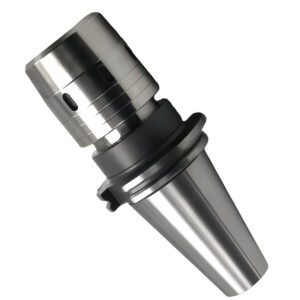 Heavy-Duty Cutting Tool Holder for CNC Milling High Clamping
 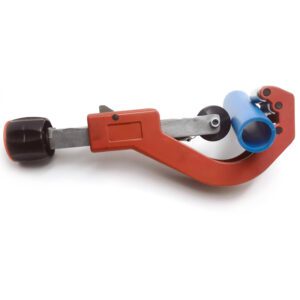 110mm PVC Cutting Tool for 4-Inch Pipe Quick Manual Operation
 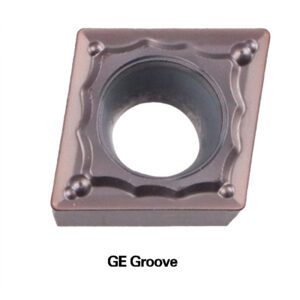 CNC blade diamond CCMT09T304 lathe stainless steel inner hole knife grain boring alloy blade
 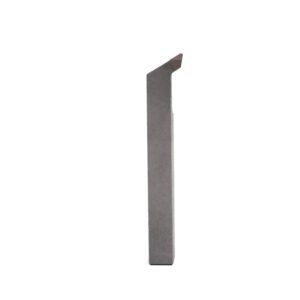 CNC Lathe Cutting Tool for Turning Operations High Stability
 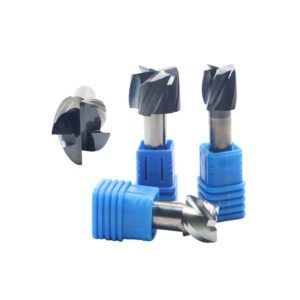 10x75mm 4-Flute Cutting Tool for CNC Milling High Rigidity
  2T/H Beer Pasteurizer Ultra-High Temperature Instant Sterilization System
  2T/H Milk Pasteurization Plant UHT Yogurt Production Line with Cryogenic Bath Pasteurizer
 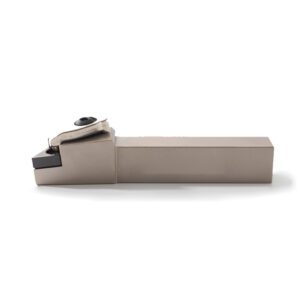 D-Type Carbide Cutting Tool for Aluminum Turning Mirror Finish
 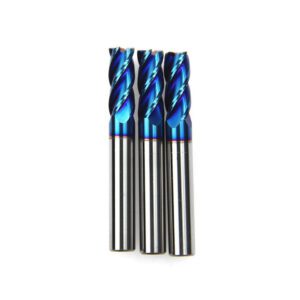 Nano-Coated Cutting Tool for CNC Metal Milling Heat Resistant
 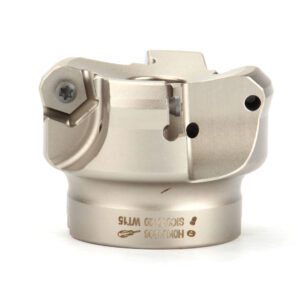 Indexable Face Mill Cutter 2" x 3/4" 45° Coolant Through 4 Flute HOKU08
  3000L/H Beer Flow Pasteurizer Cordon Bleu Beer Plate Type Flow Pasteurizer Flash Pasteurization Equipment for Food Industry Brewery
 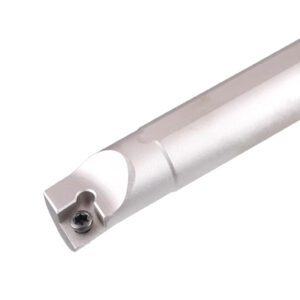 Bore cutter holder S06K-SCLCR06