
Automatic Pasteurization Cooling and Drying Line
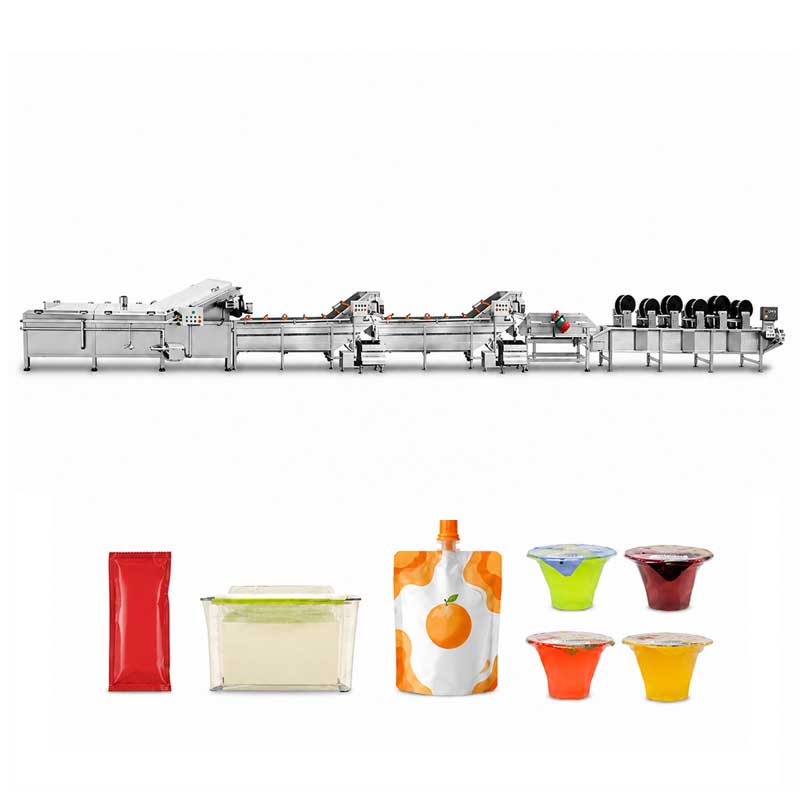
The Automatic Pasteurization Cooling and Drying Line provides continuous thermal processing for packaged food and beverage products. It integrates water bath pasteurization, multi-stage cooling, vibrating dewatering, and flip air drying into one production line. Adjustable processing temperature and conveyor speed allow the system to accommodate different products and packages. It is suitable for jelly cups, pouch drinks, tofu, sausages, sauces, pickled vegetables, and other heat-resistant packaged foods.
Compare
Pasteurization Cooling and Drying Line Product Overview
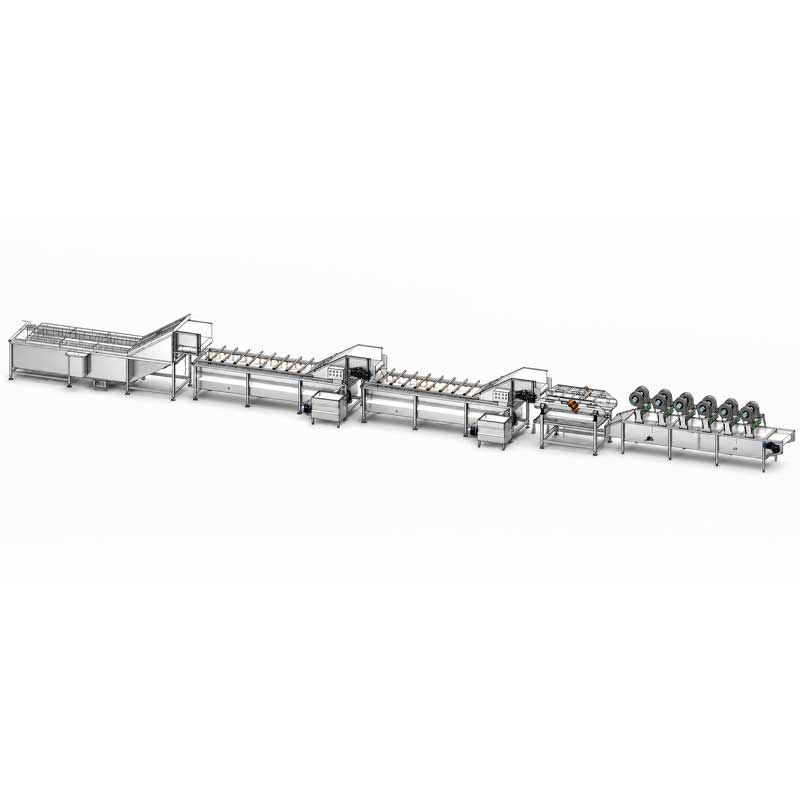
The Automatic Pasteurization Cooling and Drying Line is an integrated continuous processing system designed for packaged foods that require controlled pasteurization followed by rapid cooling and surface water removal.
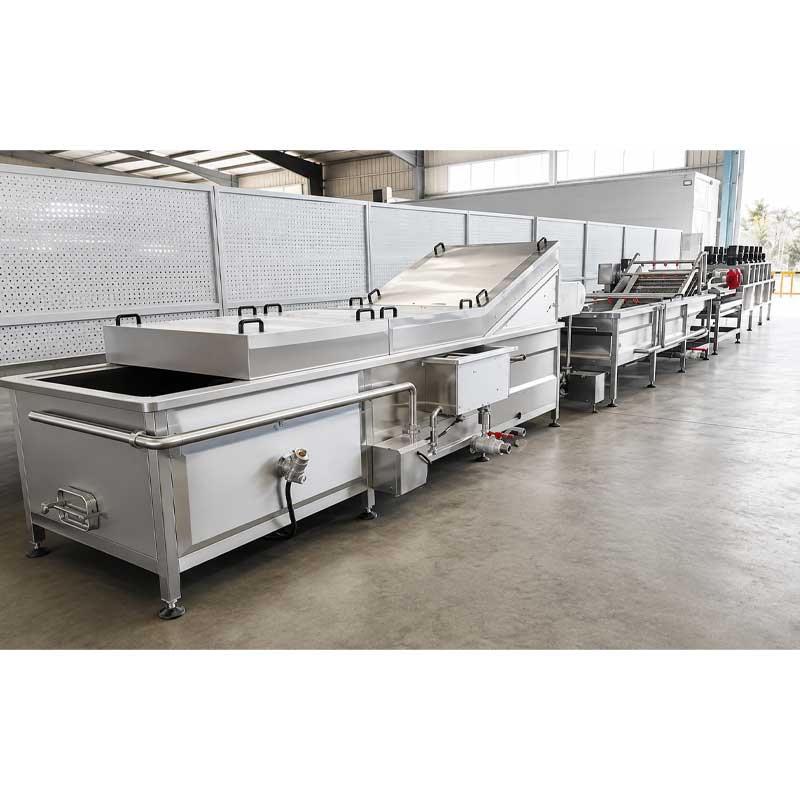
Products are continuously transported through each processing section by conveyor. They first enter a temperature-controlled hot water bath for pasteurization. After the required thermal treatment, the packages pass through multiple cooling stages to gradually reduce their temperature.
A vibrating dewatering section then removes larger droplets from the package surfaces and redistributes the products before they enter the final air-drying section. Multiple high-volume fans combined with a flip conveyor expose different package surfaces to airflow, helping remove residual moisture before labeling, cartoning, or secondary packaging.
Key Features
Integrated Continuous Processing
Pasteurization, cooling, dewatering, and air drying are connected into one continuous production line, reducing intermediate handling.
Controlled Water Bath Pasteurization
Products are processed in temperature-controlled hot water for a specified time according to their thermal process requirements.
Multi-Stage Cooling
Sequential cooling helps reduce product temperature progressively after pasteurization.
Adjustable Conveyor Speed
Conveyor speed can be configured according to the required residence time and production capacity.
Efficient Surface Dewatering
The vibrating screen removes larger droplets before final air drying, reducing the workload of the blower section.
Flip Air Drying System
The conveyor helps turn suitable products so airflow can reach multiple package surfaces.
Multi-Fan Air Drying
Multiple blowers provide intensive airflow to remove residual surface moisture before labeling or cartoning.
Continuous Product Handling
The complete system minimizes repeated manual loading and unloading between individual processing stages.
Stainless Steel Construction
Food-contact and main processing areas can be manufactured from stainless steel for durability and convenient sanitation.
Uniform Water Temperature Control
Temperature uniformity is critical in water bath pasteurization.If different areas of the tank operate at substantially different temperatures, packages may receive inconsistent thermal treatment.
The system therefore uses heated and circulated process water to maintain the required operating conditions.Depending on the final configuration, the heating source can be:
Steam Heating
Suitable for factories with an existing steam supply.
Electric Heating
Suitable for applications where steam infrastructure is unavailable and electrical capacity is sufficient.The reference page identifies both steam and electric heating as available methods for bringing the water to the required pasteurization temperature.
Pasteurization vs. Commercial Sterilization
This distinction is important when selecting equipment.
| Feature | Pasteurization Line | Retort Sterilization |
|---|---|---|
| Typical Process Temperature | Generally below 100°C | Often above 100°C |
| Main Process Medium | Hot Water | Steam / Water / Steam-Air |
| Pressure Vessel | Generally No | Usually Yes |
| Processing Method | Continuous Possible | Usually Batch |
| Cooling | Continuous Multi-Stage | Controlled Retort Cooling |
| Typical Goal | Pasteurization / Microbial Reduction | Commercial Sterility |
| Typical Products | Refrigerated or suitable acid/acidified products | Shelf-Stable Low-Acid Foods |
Advantages of an Integrated Production Line
Reduced Product Handling
Products remain on a connected processing route rather than requiring manual transfer between separate machines.
Continuous Production
The line can match upstream filling and sealing equipment and downstream labeling or packaging systems.
Flexible Thermal Processing
Temperature and residence time can be selected according to different product requirements.
Controlled Cooling
Multiple cooling stages provide a progressive reduction in product temperature.
Improved Surface Water Removal
Mechanical dewatering followed by air drying provides two stages of moisture removal.
Better Preparation for Labeling
Reducing surface moisture helps prepare packages for labeling, coding, and cartoning.
Broad Product Compatibility
The line can handle multiple packaged food categories when appropriately configured.
How to Select the Right Pasteurization Line
Before selecting the equipment, the following information should be confirmed:
1. What Product Will Be Processed?
For example:Jelly, juice, tofu, sausage, sauce, pickled vegetables, or another packaged food.
2. What Is the Package Type?
For example:Pouch, cup, bottle, tray, vacuum bag, sachet, or container.
3. What Are the Package Dimensions?
Provide:Length × Width × Height or bottle/cup diameter and height.
4. What Is the Filling Weight?
For example:100 g, 200 g, 500 g, 1 kg
5. What Is the Required Capacity?
Provide:kg/h, packages/hour, bottles/hour, or cups/hour
6. What Pasteurization Process Is Required?
Provide the required:Temperature + Holding Time
7. What Is the Product Inlet Temperature?
The starting temperature affects the total thermal load.
8. What Outlet Temperature Is Required?
This helps determine cooling capacity and cooling-water requirements.
FAQ
What is a pasteurization cooling and drying line?
It is an integrated continuous processing system that combines controlled thermal treatment, cooling, surface dewatering, and air drying for packaged food products.
What products can it process?
Typical applications include jelly cups, pouch drinks, tofu, vacuum-packed sausages, ketchup, curry paste, pickled vegetables, kimchi, jam, soy milk, and other compatible packaged foods.
What pasteurization temperature does it use?
The required temperature depends on the product. The reference page provides example temperatures of 65°C, 72°C, and 85°C.
Can the heating method be customized?
Yes. The reference system can use steam or electric heating for the pasteurization water.
Why are there two cooling stages?
Multi-stage cooling allows product temperature to be reduced progressively after thermal processing and can help avoid excessively sudden temperature changes.
What does the vibrating screen do?
It removes larger surface water droplets and helps distribute packages more evenly before air drying.
How does the flip air dryer work?
Multiple fans provide airflow while the conveyor turns suitable products so different package surfaces are exposed to the air.
Can it connect to a filling and packaging line?
Yes. The continuous conveyor configuration is suitable for integration with upstream filling/sealing equipment and downstream coding, labeling, or cartoning equipment.
Contact us to get your quotation now.
Get in touch with our engineering team.
Related products
-
Food Preparation Equipment
Food Preparation Equipment Automatic Commercial High-Efficiency Garlic Peeler
 Food Preparation Equipment
Food Preparation Equipment Automatic Commercial High-Efficiency Garlic Peeler
This automatic commercial garlic peeler serves as essential food preparation equipment, designed to rapidly remove the skin from large quantities of garlic cloves with minimal damage. Utilized extensively in food processing factories and central kitchens, its core function is high-volume, continuous peeling to meet industrial production demands while significantly reducing manual labor costs. A key technical advantage lies in its reliance on dry pneumatic peeling technology. The machine uses compressed air jets and friction plates to gently separate the skin from the clove, avoiding the use of water (preventing mold) and minimizing heat generation. Furthermore, the integrated temperature and moisture control system ensures a peeling rate of over 95% even with varying garlic quality.
SKU: n/a -
Food Preparation Equipment
Commercial 1500W multifunctional Dough Mixer Household Electric Food Mixer 5.5L Egg Cream Salad Beater cake mixer
Food Preparation EquipmentCommercial 1500W multifunctional Dough Mixer Household Electric Food Mixer 5.5L Egg Cream Salad Beater cake mixer
Safety instructions
1. Long bright blue light in working condition;
2. The blue light flashes in the ready working state;
3. It does not shine in abnomal working conditions.SKU: n/a -
Food Preparation Equipment
80L commercial dough mixer industrial dough kneading machine electric egg beater flour mixing machine for bread
Food Preparation Equipment80L commercial dough mixer industrial dough kneading machine electric egg beater flour mixing machine for bread
Metals in contact with food are made of stainless steel, three-speed transmission, hard gear transmission, durable, high efficiency, low failure rate, motor overload protection switch, safe and secure, stable motor performance, low noise, and simplified operation
SKU: n/a


