Tray Washing and Drying Machine for Food Processing
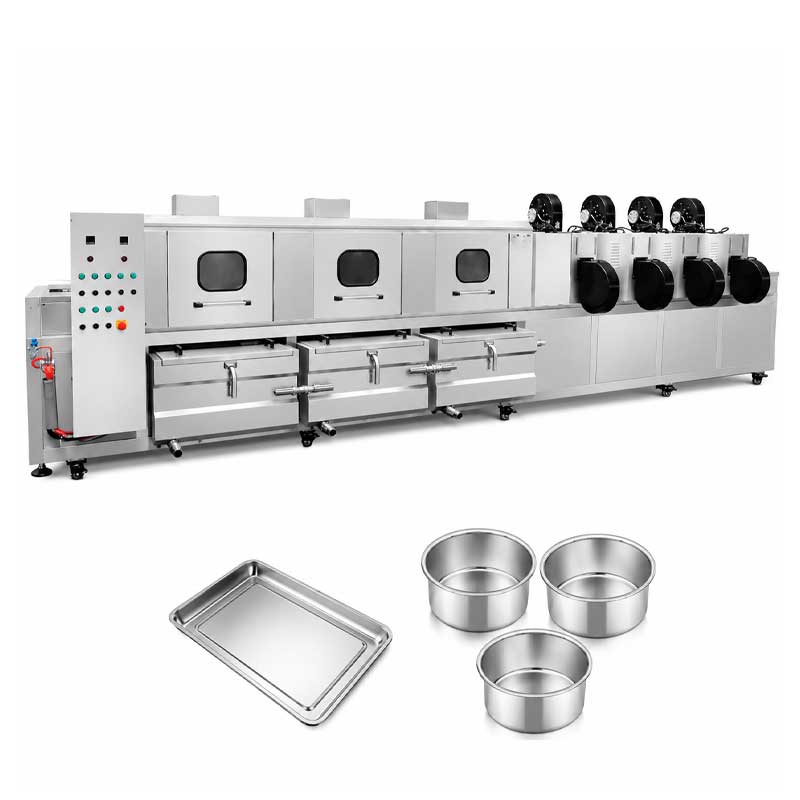
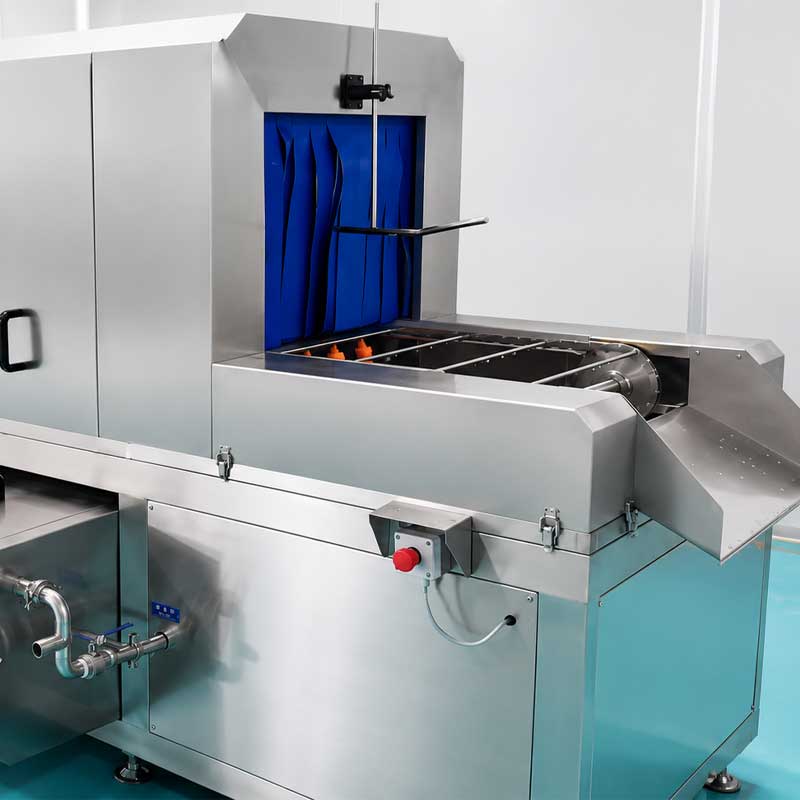
The Tray Washing and Drying Machine provides continuous automatic cleaning for reusable stainless steel trays, pans, baking trays, molds, and food processing containers. It integrates hot water washing, optional detergent cleaning, high-pressure spray, fresh-water rinsing, and air drying in one system. With SUS304 construction, multi-stage water circulation, adjustable conveyor speed, and a reference capacity of 500 trays per hour, it helps reduce manual cleaning and improve container handling efficiency.
Compare
Tray Washing and Drying Machine Product Overview
The Tray Washing and Drying Machine for Food Processing is an automatic industrial cleaning system designed for reusable trays and containers that require repeated washing during food production.
Instead of washing trays manually or transferring them between separate cleaning and drying equipment, the machine combines the complete process into one continuous line:
Loading → Hot Water Pre-Wash → Main Washing → Fresh Water Rinse → Air Drying → Discharge
The reference design incorporates three separate washing sections. The first and second stages use heated water, with detergent available for heavily soiled trays, while the third stage uses fresh or ambient-temperature water for final rinsing. The trays then enter an air-drying section where multiple blowers remove most of the remaining surface water.
This integrated configuration makes the equipment suitable for centralized food factories and other facilities processing large quantities of reusable trays every day.
How the Tray Washing and Drying Machine Works
1. Continuous Tray Feeding
Dirty trays are placed onto the conveyor at the machine inlet.A stainless steel conveying system continuously transports them through the different cleaning zones.The reference equipment uses a SUS304 pintle chain conveyor with guide rods to help position trays during transportation.
2. Pre-Washing
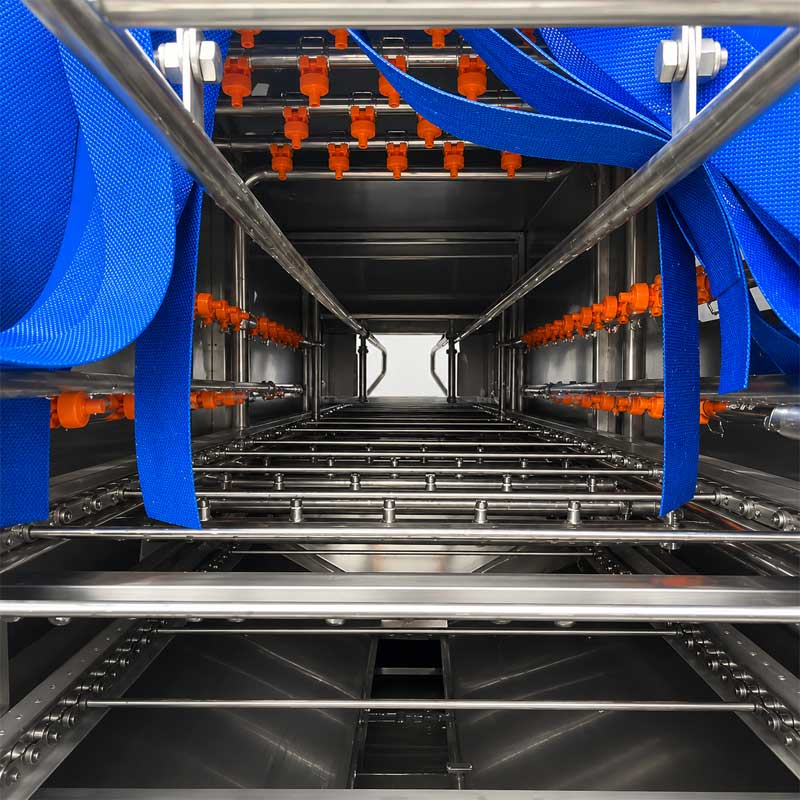
The first cleaning stage uses high-pressure water jets to remove loose food particles and soften adhered residues.For difficult contamination, detergent can be introduced into the first washing tank.This initial stage reduces the contamination load before the trays enter the main washing section.
3. Hot Water Main Washing
The trays continue into the main washing zone where heated water and high-pressure spray provide stronger cleaning action.
The first two water tanks in the reference machine contain electric heating elements, allowing hot water to be used during the main cleaning process.
4. Fresh Water Rinsing
After the main washing stages, trays pass through the third section for rinsing.
Fresh or ambient-temperature water removes remaining loosened residues and cleaning solution before the trays enter the drying zone.
5. Air Drying
After rinsing, the trays move directly into the air-drying section.Multiple blower units direct high-velocity air across the tray surfaces to remove large water droplets and reduce residual surface moisture.
6. Automatic Discharge
Cleaned and air-dried trays leave the machine continuously and can proceed directly to collection, reuse, storage, or the next production area.No manual transfer between the washing and drying stages is required.
Key Features
Washing and Drying in One Machine
The complete washing, rinsing, and air-drying process is integrated into a continuous system, reducing intermediate tray handling.
Three-Stage Cleaning
Separate pre-wash, main wash, and rinsing sections allow different water conditions to be used for different cleaning purposes.
High-Pressure Water Spray
Powerful pumps deliver water to multiple spray nozzles for intensive cleaning of reusable trays.
Fan-Shaped Spray Coverage
The reference system uses nozzles that generate fan-shaped water curtains, increasing spray coverage around the tray surfaces.
Hot Water Cleaning
Electric heating elements are installed in the first and second water tanks of the reference configuration to support heated washing.
Optional Detergent Washing
Cleaning detergent can be added when trays contain grease or other difficult food residues.
Fresh Water Final Rinse
A separate rinsing section helps remove remaining detergent and loosened contamination.
Technical Specifications
| Parameter | Specification |
|---|---|
| Product Name | Tray Washing and Drying Machine |
| Reference Capacity | 500 pcs/h |
| Main Material | SUS304 Stainless Steel |
| Overall Dimensions | 7500 × 1700 × 1850 mm |
| Power Supply | 380V / 50Hz |
| Water Pump 1 | 5.5 kW |
| Water Pump 2 | 7.5 kW |
| Water Pump 3 | 5.5 kW |
| Tank Heating | 18 kW × 2 Tanks |
| Drive Motor | 1.5 kW |
| Speed Control | Frequency Conversion |
| Drying Fans | 0.75 kW × 6 Sets |
| Washing Stages | 3 Stages |
| Heating Method | Electric Heating |
| Cleaning Method | High-Pressure Water Spray |
| Drying Method | Air Blowing |
| Conveyor | SUS304 Pintle Chain |
| Water System | Independent Circulation & Filtration |
| Application | Trays, Pans, Molds, Containers |
Why Choose an Integrated Washer and Dryer?
Using separate washing and drying equipment increases the number of transfer points in the cleaning process.An integrated machine allows trays to move directly from washing to drying without intermediate handling.
This provides several practical advantages:
- Reduced manual transfer
- Continuous processing
- Smaller number of separate machines
- Simplified production flow
- Reduced accumulation of wet trays
- More consistent processing time
- Easier integration with automatic production systems
Food Processing Applications
The Tray Washing and Drying Machine is particularly suitable for facilities where reusable trays circulate continuously between production processes.
Typical applications include:
- Central kitchens
- Ready meal factories
- Meat processing plants
- Poultry processing facilities
- Bakeries
- Confectionery factories
- Chocolate processing plants
- Dairy processing facilities
- Pickled food factories
- Prepared food plants
- Catering production centers
- Beverage processing facilities
How to Select the Right Tray Washing Machine
Before selecting a machine, several important parameters should be confirmed.
1. What type of tray needs to be washed?
Stainless steel tray, baking pan, chocolate mold, food container, or another product?
2. What are the tray dimensions?
Provide the exact length × width × height.Photos or drawings are also useful when the tray has an unusual structure.
3. How many trays need to be washed per hour?
The reference configuration provides approximately 500 pcs/h, but other capacities can be evaluated.
4. What contamination needs to be removed?
For example:
Grease, protein, chocolate, sugar, sauce, starch, dough, meat residues, dairy residues, or general food debris.
5. Is detergent required?
The cleaning program and chemical dosing requirements depend on the contamination type.
6. What drying result is required?
Removing large droplets is different from achieving a nearly dry surface. The required result determines the appropriate air-drying configuration.
Contact us to get your quotation now.
Get in touch with our engineering team.
Related products
-
Central Kitchen Food Processing Machines
Central Kitchen Food Processing Machines Intelligent Automatic Cooker
 Central Kitchen Food Processing Machines
Central Kitchen Food Processing Machines Intelligent Automatic Cooker
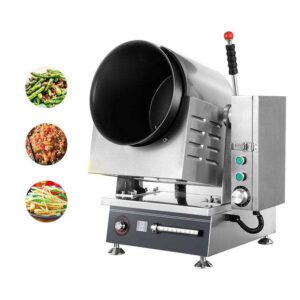
Our Intelligent Automatic Cooker is a revolutionary piece of equipment in the modern central kitchen food processing workflow, specifically designed for chain restaurants and large canteens. Its core function is one-touch, high-quality cooking, particularly excelling at preparing fried rice, stir-fries, and pasta, guaranteeing a high degree of flavor consistency for every dish. Technically, the unit is equipped with an advanced sensor feedback system, paired with precise automatic heat regulation and 360-degree simulated manual stirring technology, effectively preventing sticking and accurately replicating a professional chef’s technique, significantly boosting serving efficiency and dish standardization.
SKU: n/a -
Central Kitchen Food Processing Machines
High Speed Commercial Robot Cooking Machine – Multifunctional Central Kitchen Cooking Equipment
Central Kitchen Food Processing MachinesHigh Speed Commercial Robot Cooking Machine – Multifunctional Central Kitchen Cooking Equipment
Robot Cooking Machine Highlight:
- Cutting-edge Smart Cooking Technology
Equipped with AI-powered cooking programs, the machine precisely controls heat and timing, enabling one-touch replication of over 20 classic dishes like braised pork belly and curry rice. Even novice cooks can effortlessly create gourmet meals, eliminating the need for extensive culinary experience.- Versatile & Space-efficient Design
With compact dimensions (550×500×750mm), it fits seamlessly into home kitchen cabinets, hotel rooms, or small restaurant kitchens. Its sleek profile maximizes space utilization while delivering powerful cooking performance across diverse settings.- High Efficiency & Energy Savings
The 5kW electric heating system, combined with intelligent temperature control, boosts cooking speed by 50% and reduces energy consumption by 30%. The automatic stirring function ensures even heat distribution, minimizing manual intervention and saving precious prep time.- Superior Safety & Durability
Constructed from food-grade 304 stainless steel, the machine resists corrosion and simplifies cleaning. Integrated safety features—including overheat protection and dry-boil auto-shutoff—along with its sturdy 40kg build provide peace of mind for both home and commercial use.SKU: n/a -
Central Kitchen Food Processing Machines
0.37kw Pizza Dough Forming Machine With Adjustable Thickness
Central Kitchen Food Processing Machines0.37kw Pizza Dough Forming Machine With Adjustable Thickness
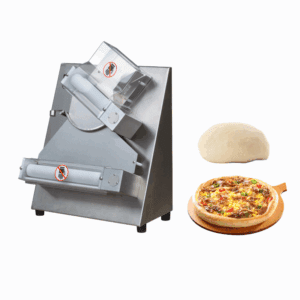
The pizza dough forming machine is equipped with an automatic flour sprinkling device, which can evenly spread flour to prevent sticking. After the dough is formed, the edges are neat, the surface is smooth, and the thickness is uniform.
SKU: n/a -
Central Kitchen Food Processing Machines
800L Stainless Steel Pressure Cooking Pot for Sauce, Soup, and Meat Processing
Central Kitchen Food Processing Machines800L Stainless Steel Pressure Cooking Pot for Sauce, Soup, and Meat Processing
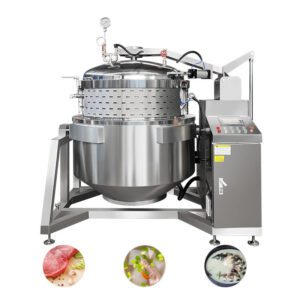
The Stainless Steel Pressure Cooking Pot for Sauce, Soup, and Meat Processing is designed for efficient, large-scale food production. Made of food-grade 304 stainless steel, it features a steam heating jacket that provides fast and uniform heating. The pressure-resistant design shortens cooking time while preserving flavor and nutrients. Equipped with automatic temperature and pressure control, it ensures safety and consistency.
SKU: n/a