Automatic Brush Peeling Washer for Root Vegetables
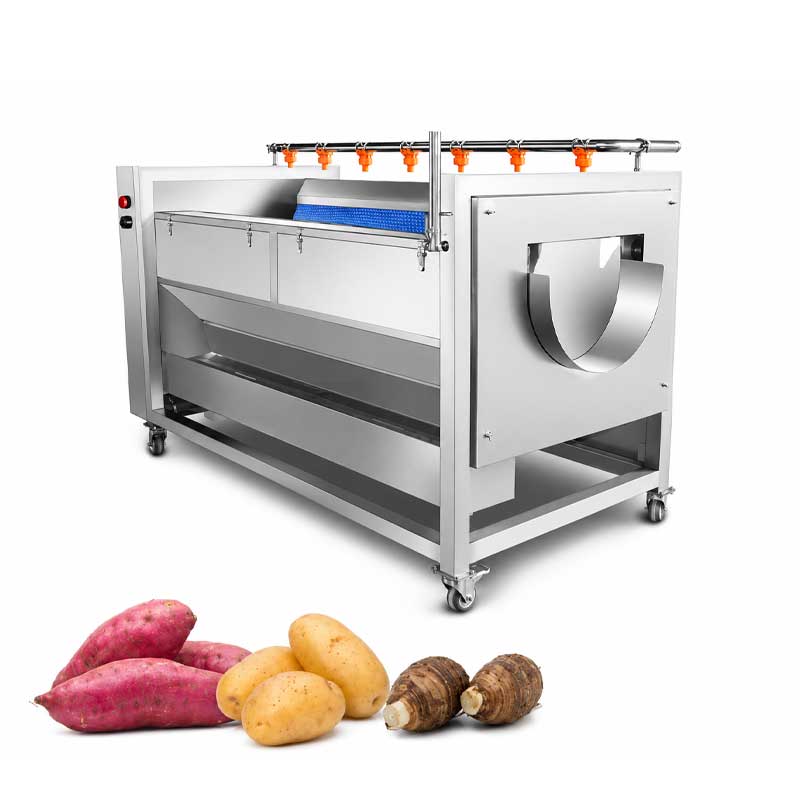
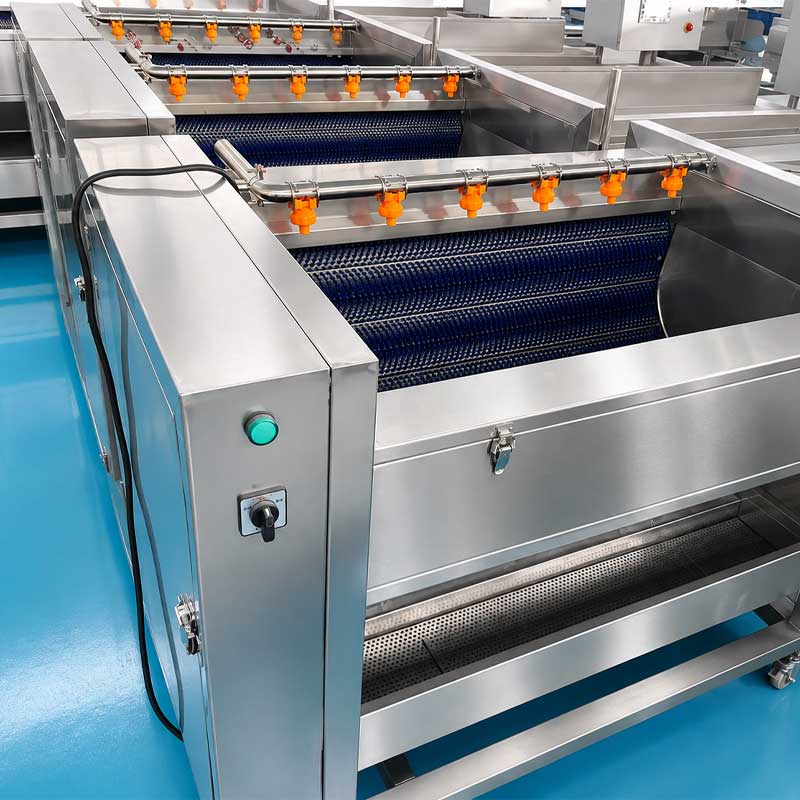
The Automatic Brush Peeling Washer uses rotating brush rollers and water spray to wash, peel, and polish potatoes, carrots, sweet potatoes, taro, yams, and other root vegetables. Different brush hardness and density can be selected according to the required processing effect. With SUS304 construction, continuous operation, residue filtration, and an 800–1000 kg/h reference capacity, it is ideal for vegetable preparation and food processing lines.
Compare
Product Introduction
The Automatic Brush Peeling Washer for Root Vegetables combines washing and mechanical surface treatment in one compact processing machine.
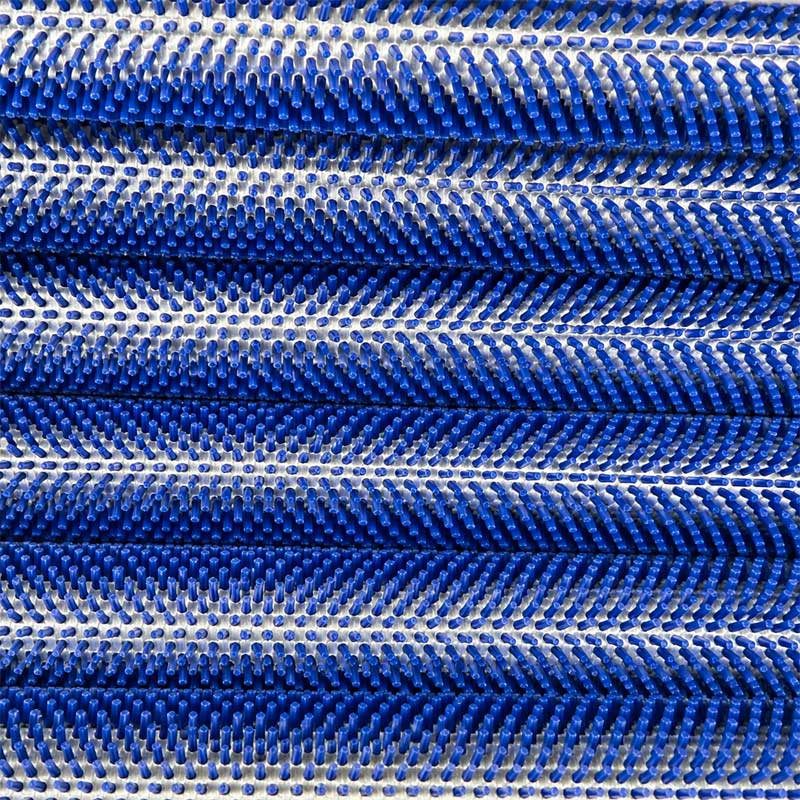
Unlike conventional vegetable washers that rely mainly on water movement, bubbles, or spray pressure, this machine uses the friction generated between rotating brush rollers and the product surface. As root vegetables move and tumble over the rollers, soil, surface impurities, and outer skin are progressively removed. Water sprays simultaneously rinse the product and carry loosened residues away from the processing area.
The reference configuration uses 8 brush rollers and can process approximately 800–1000 kg/h. Different brush types can be selected to perform washing, peeling, or polishing according to the raw material and required finished-product condition.This makes the machine particularly suitable for processors handling potatoes, carrots, sweet potatoes, taro, yams, and similar root crops.
How the Brush Peeling Washer Works
1. Product Feeding
Root vegetables are introduced into the processing chamber above the brush rollers.
Depending on the production setup, feeding can be performed manually or connected with upstream conveying equipment.
2. Brush Roller Rotation
Multiple brush rollers rotate continuously beneath the product.The rotating brushes cause the vegetables to roll and change position while creating controlled friction against their surfaces.
3. Surface Cleaning and Peeling
Repeated contact between the brushes and product loosens adhered soil and, when harder brushes are used, removes the outer skin.Because the vegetables continue to tumble, different sides are exposed to the brushes instead of only one surface being treated.
4. Water Spray Rinsing
Water is sprayed over the vegetables during processing.The spray assists the brushes by carrying away soil, peel fragments, and other loosened material. The reference equipment specifically combines brush cleaning with water spraying.
5. Residue Separation
Peel fragments and other residues fall away from the product and enter the lower collection and filtration section.The reference design includes a filter trough specifically intended to remove peeling residues.
6. Product Discharge
After reaching the required degree of washing or peeling, the processed vegetables are discharged and can proceed to inspection, cutting, blanching, cooking, frying, freezing, or other downstream processes.
Technical Specifications
| Parameter | Specification |
|---|---|
| Product Name | Automatic Brush Peeling Washer |
| Application | Root vegetables and suitable firm produce |
| Processing Capacity | 800–1000 kg/h |
| Overall Dimensions | 1800 × 950 × 1000 mm |
| Main Material | SUS304 Stainless Steel |
| Power | 1.5 kW |
| Voltage | 220V / 380V |
| Number of Rollers | 8 pcs |
| Working Method | Brush + Water Spray |
| Main Functions | Washing, Peeling, Polishing |
| Approx. Weight | 300 kg |
| Brush Configuration | Selectable according to application |
| Operation | Continuous |
| Customization | Available |
How the Brush Peeling Washer Works
1. Product Feeding
Root vegetables are introduced into the processing chamber above the brush rollers.
Depending on the production setup, feeding can be performed manually or connected with upstream conveying equipment.
2. Brush Roller Rotation
Multiple brush rollers rotate continuously beneath the product.The rotating brushes cause the vegetables to roll and change position while creating controlled friction against their surfaces.
3. Surface Cleaning and Peeling
Repeated contact between the brushes and product loosens adhered soil and, when harder brushes are used, removes the outer skin.Because the vegetables continue to tumble, different sides are exposed to the brushes instead of only one surface being treated.
4. Water Spray Rinsing
Water is sprayed over the vegetables during processing.The spray assists the brushes by carrying away soil, peel fragments, and other loosened material. The reference equipment specifically combines brush cleaning with water spraying.
5. Residue Separation
Peel fragments and other residues fall away from the product and enter the lower collection and filtration section.The reference design includes a filter trough specifically intended to remove peeling residues.
6. Product Discharge
After reaching the required degree of washing or peeling, the processed vegetables are discharged and can proceed to inspection, cutting, blanching, cooking, frying, freezing, or other downstream processes.
Advantages for Root Vegetable Processors
The machine combines several processing steps in a relatively compact system:
- Washing and peeling in one machine
- 8 rotating brush rollers
- Continuous water spray rinsing
- Different brushes for different materials
- Washing, peeling, and polishing functions
- Suitable for multiple root vegetables
- Continuous processing
- Reduced manual peeling requirements
- Peel residue collection and filtration
- Compact installation footprint
- SUS304 stainless-steel construction
- Easy integration with downstream equipment
- Customizable configuration
Suitable Root Vegetables
Potato
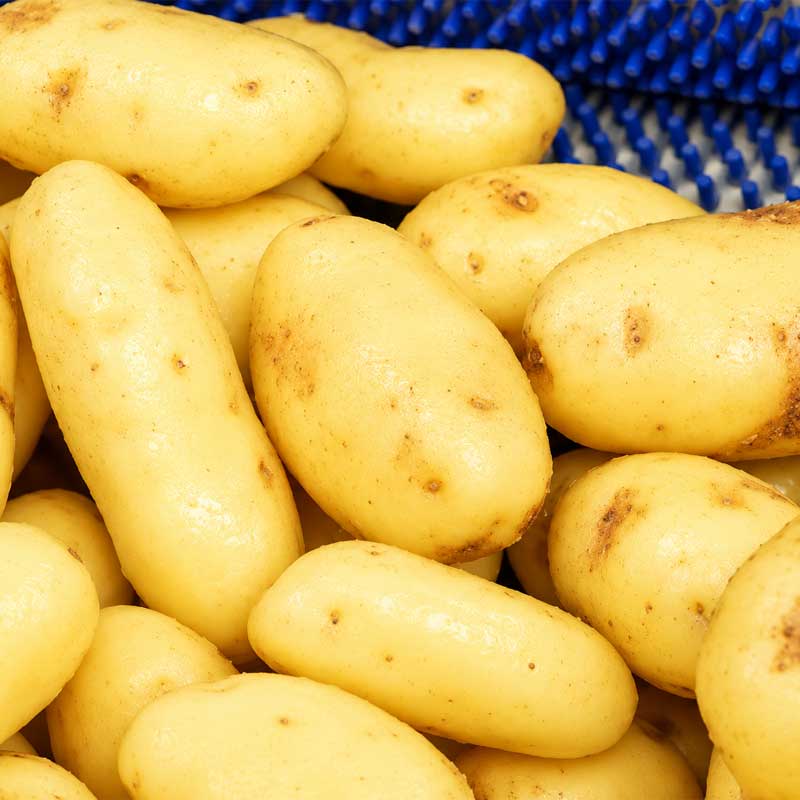
Potatoes are one of the main applications for brush peeling equipment.Rotating brushes scrub the irregular potato surface while water spray carries away loosened soil and peel.Depending on brush hardness and processing conditions, the machine can be configured for either washing or peeling.
Sweet Potato
Sweet potatoes often contain soil around surface depressions and irregular areas.Brush contact helps clean these surfaces and can remove the outer skin when peeling is required.
Carrot
The rotating action allows carrots to roll over multiple brush rollers, providing repeated surface contact during washing or peeling.
Taro
Hard brushes can be used for surface peeling of taro where the raw material is suitable for mechanical brush treatment.
Yam
The combination of brush friction and spray rinsing can be used for yam preparation before subsequent cutting or cooking processes.
FAQ
What is a brush peeling washer?
A brush peeling washer uses rotating brush rollers to create friction against the product surface while water spray rinses away soil, peel, and loosened residues. It can be configured for washing, peeling, or polishing.
What is the standard capacity?
The reference model has a processing capacity of approximately 800–1000 kg/h.
How many brush rollers does the machine have?
The standard reference configuration uses 8 brush rollers.
Can it peel potatoes?
Yes. Potatoes are one of the primary applications. Hard nylon brushes can be used to remove the outer skin of suitable root vegetables.
Can the same machine only be used for peeling?
No. By selecting different brush hardness and density, the equipment can perform cleaning, peeling, and polishing functions.
Can it process sweet potatoes and taro?
Yes. The reference application specifically includes sweet potatoes and taro among the root vegetables suitable for peeling.
Is water used during peeling?
Yes. The standard working method is listed as Brush + Water Spray
Contact us to get your quotation now.
Get in touch with our engineering team.
Related products
-
Fruit And Vegetable Processing Line
Brush Washer Peeler Machine Automatic Commercial Avocado Kiwi Fruit Yam Cassava Taro Potatoes Peeling Machine
 Fruit And Vegetable Processing Line
Brush Washer Peeler Machine Automatic Commercial Avocado Kiwi Fruit Yam Cassava Taro Potatoes Peeling Machine
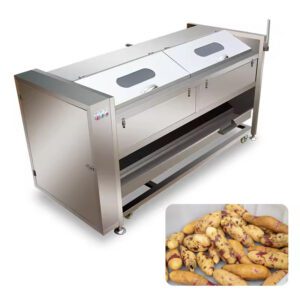
The Sealed cover peeling machine issuitable for cleaning and peeling round and ovalfruits and vegetables such as ginger, carrot, taro, potato, sweet potato and other root vegetables.
The cleaning brush is a nylon cord rolledmaterial treated by a special process, and thepeeling is a hardened material, which has verygood wear resistance.
The whole machine is made of high-quality stainless steel material, and the materi-al can rotated outside. The bottom of the machine is equipped with an isolation filternetwork to effectively separate waste residue and waste water.
SKU: n/a -
Fruit And Vegetable Processing Line
Aloe Vera Peeler Machine Multifunctional Automatic Aloe Peeler
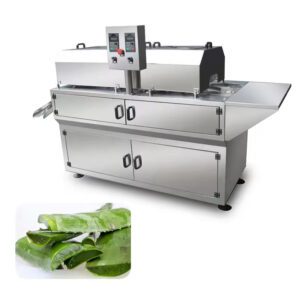
Aloe peeling machine is mainly used for peeling aloe and cactus. The frame and hood are made of high-quality stainless steel, the conveyor belt is a food-grade light sanitary conveyor belt, and the motor adopts a frequency converter to control stepless speed change, which can freely control the production speed.
Mechanical features, good peeling effect, high output, convenient control, etc. After the cactus, aloe and other materials are manually cut off the head and tail, they are placed on the conveyor belt of the peeling machine, and the conveyor belt moves forward. The pressing conveyor belt presses the material downwards. After passing through the upper and lower peeling knives, the skin of the material is peeled off, The pulp passes through the middle of the upper and lower knives, so as to achieve the purpose of peeling.
SKU: n/a -
Fruit And Vegetable Processing Line
Automatic Ozone Bubble Vegetable Washing Machine Date Washing Fruit Washer Salad Washing machine
Fruit And Vegetable Processing LineAutomatic Ozone Bubble Vegetable Washing Machine Date Washing Fruit Washer Salad Washing machine
Application fields:Snack food factory, Commercial catering, Dairy products factory, Fruit processing plant, Cooking oil factory, Vegetable processing plant, Cannery, Beverage Factory, Seasoning plant, Frozen food Factory
SKU: n/a