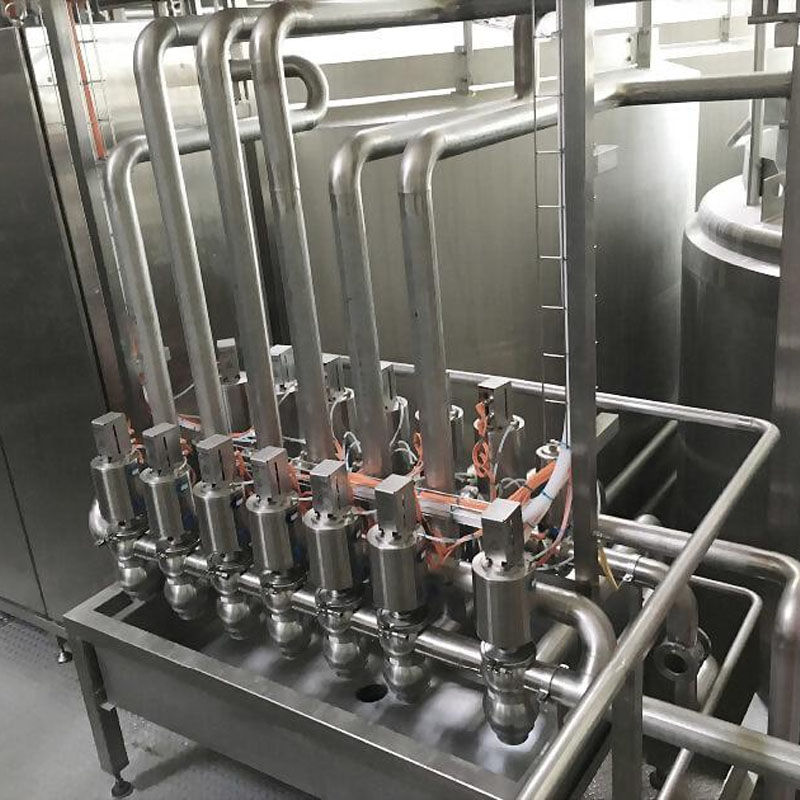
Continuous Cream Pasteurization System for Dairy Processing
The continuous cream pasteurization system provides controlled thermal treatment for cream used in dairy and food production. A sanitary heat exchanger rapidly raises the product to the required pasteurization temperature, followed by controlled holding and efficient cooling. Automated temperature monitoring helps maintain stable processing conditions, while stainless steel product-contact components support hygienic operation. Designed for continuous production, the system improves processing efficiency, product safety, thermal consistency, and integration with downstream cream handling equipment.
Compare
Product introduction of Cream Pasteurization System
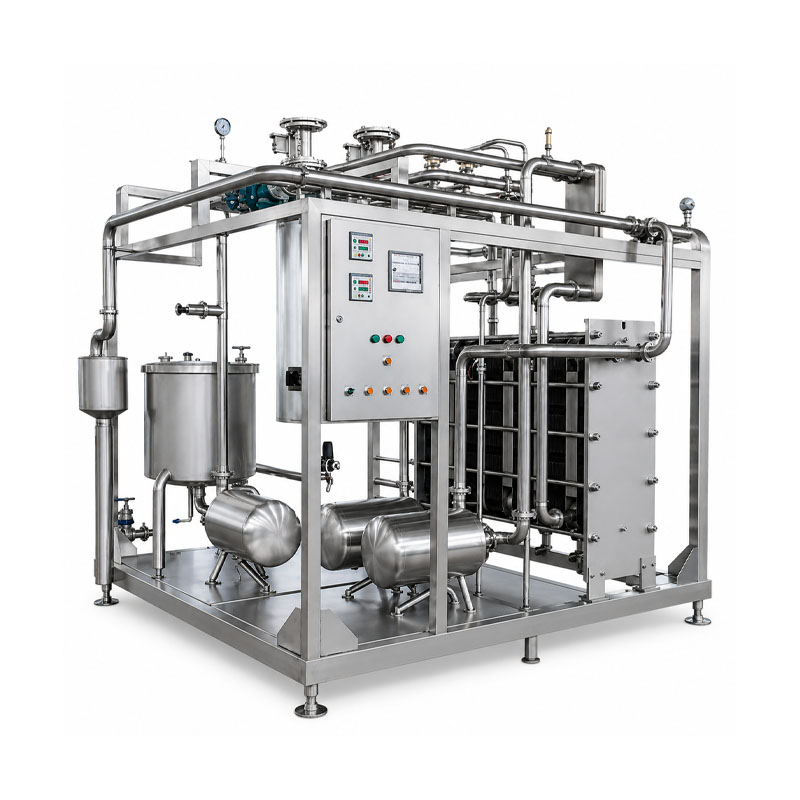
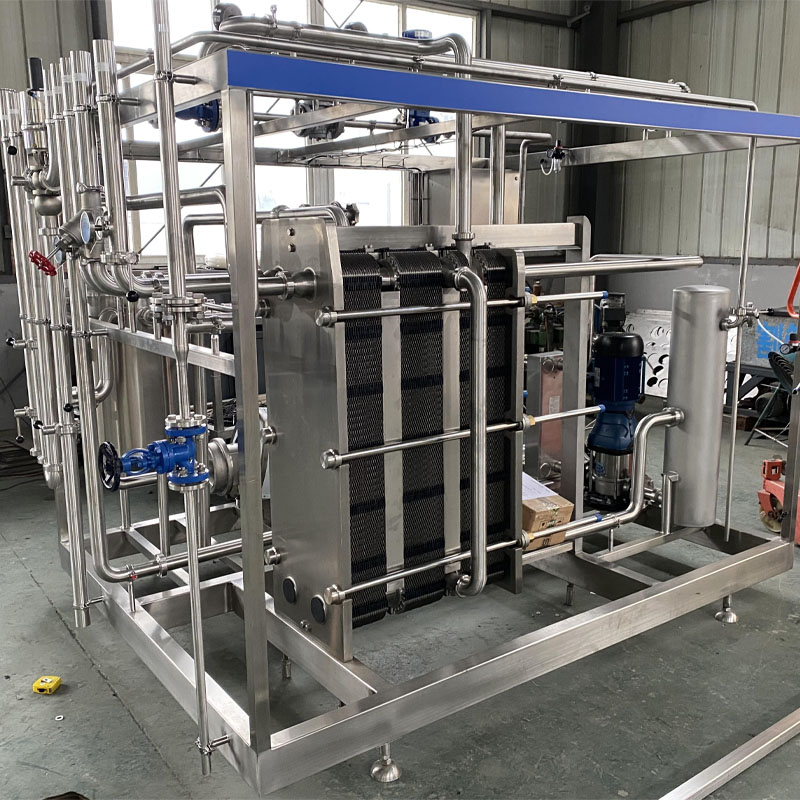
The continuous cream pasteurization system is engineered for hygienic thermal processing of cream before storage, filling, or further dairy production. Cream is continuously pumped through a sanitary heat exchanger, where controlled heating rapidly brings the product to the required pasteurization temperature. A holding section maintains the specified temperature for the necessary treatment period before the cream enters the cooling stage. Precise temperature and flow control help maintain repeatable processing conditions while protecting the product from unnecessary thermal exposure. Depending on production requirements, the system can incorporate plate or tubular heat exchange technology, automatic controls, sanitary pumps, valves, temperature sensors, and heat recovery sections. Stainless steel product-contact surfaces simplify cleaning and support hygienic operation. The equipment can be integrated with cream separators, storage tanks, butter processing equipment, filling machines, and other dairy systems, providing an efficient solution for continuous cream production with flexible capacity and process configurations.
Continuous Pasteurization Process
The system processes cream through a controlled sequence rather than treating individual batches. Product enters continuously and moves through each thermal stage at a regulated flow rate.
A typical process includes:
Cream Feeding → Regenerative Preheating → Final Heating → Temperature Holding → Heat Recovery → Final Cooling → Storage or Further Processing
This continuous arrangement helps maintain consistent operating conditions and is particularly suitable for dairy plants requiring stable output over extended production periods.
Efficient Plate Heat Exchange
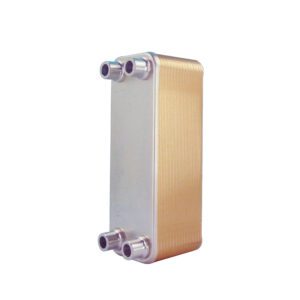
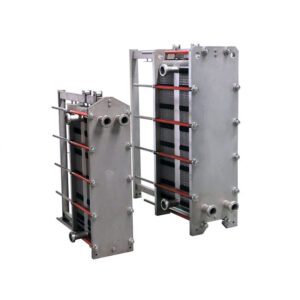
A plate heat exchanger provides a large heat-transfer surface within a compact equipment footprint. Cream and heating or cooling media travel through separate channels, allowing thermal energy to pass through the stainless steel plates without direct contact between the fluids.
This arrangement enables rapid temperature changes and supports efficient heating and cooling. For applications involving higher viscosity or specific product characteristics, a tubular heat exchanger can also be considered.
Controlled Heating and Holding
Pasteurization effectiveness depends on both temperature and holding time. The system first raises the cream to the required process temperature and then maintains the product under controlled conditions for a defined period.
Typical cream pasteurization processes may operate within approximately 72–85°C, although the actual temperature and holding conditions should always be determined according to the formulation, fat content, downstream application, and required process standard.
Typical Technical Specifications
| Parameter | Specification |
|---|---|
| Processing Method | Continuous pasteurization |
| Product | Cream and liquid dairy product |
| Pasteurization Temperature | Typically 72–85°C, process dependent |
| Heat Exchanger | Plate or tubular type |
| Heating Method | Hot water / steam-assisted system |
| Cooling Method | Chilled water / cooling water |
| Product Contact Material | Food-grade stainless steel |
| Temperature Control | Automatic |
| Working Mode | Continuous operation |
| Cleaning System | CIP compatible |
Key Features
- Continuous Thermal Processing: Provides uninterrupted cream heating, holding, and cooling for efficient industrial production.
- Precise Temperature Control: Automated monitoring helps maintain the required pasteurization conditions throughout continuous operation.
- Rapid Heat Transfer: Plate or tubular heat exchanger configurations provide efficient thermal exchange with short product residence time.
- Controlled Holding Section: Maintains cream at the required processing temperature for a defined period before cooling.
- Rapid Product Cooling: Quickly reduces cream temperature after pasteurization to prepare it for storage or downstream processing.
- Sanitary Stainless Steel Construction: Food-contact components provide smooth, corrosion-resistant surfaces suitable for hygienic dairy applications.
- Heat Recovery Capability: Regenerative heat exchange can recover thermal energy from processed cream to improve overall energy efficiency.
- Automated Process Control: Pumps, valves, temperatures, and processing sequences can be centrally monitored and controlled.
Applications
- Pasteurized Cream Production: Provides continuous thermal treatment for cream intended for direct filling, storage, or further processing.
- Butter Production: Pasteurizes cream before it enters subsequent cooling, maturation, and butter-making stages.
- Ice Cream Manufacturing: Processes cream used as a dairy ingredient in ice cream and frozen dessert formulations.
- Cultured Cream Processing: Prepares cream under controlled hygienic conditions before cooling and subsequent culture addition.
- Dairy Dessert Production: Treats cream used in custard, pudding, dessert filling, and other dairy-based formulations.
- Food Ingredient Processing: Pasteurizes cream intended for sauces, soups, bakery fillings, and prepared food applications.
Integration into Dairy Processing Lines
The system can operate as an independent pasteurization skid or form part of a larger dairy production line. Depending on the final product, it can be connected with:
Cream Separator → Balance Tank → Cream Pasteurizer → Cooling Tank → Aging or Maturation Tank → Storage / Butter Processing / Filling
This modular arrangement makes it easier to configure the processing line according to production capacity and final product requirements.
Advantages of Continuous Cream Pasteurization
Continuous processing provides several advantages compared with repeatedly heating and cooling individual batches. Product flow, temperature, and residence time can be maintained under more consistent conditions, supporting repeatable production quality.
Heat regeneration can reduce energy consumption, while automatic control minimizes operator intervention. Compact skid-mounted configurations also simplify installation and allow pumps, valves, heat exchanger sections, and control components to be integrated into one processing unit.
FAQ
Q1: What is a continuous cream pasteurization system?
A: It is a thermal processing system that continuously heats cream to a specified pasteurization temperature, maintains the required holding conditions, and then cools the product before downstream processing.
Q2: What pasteurization temperature can the system use?
A: Cream processing may typically use temperatures within approximately 72–85°C, but the exact temperature and holding time depend on the formulation and required process.
Q3: Can a plate heat exchanger be used for cream?
A: Yes. Plate heat exchangers are widely suitable for pumpable cream products because they provide rapid and efficient heat transfer. Tubular systems can also be selected for specific viscosity or processing requirements.
Q4: Does the system provide both heating and cooling?
A: Yes. A complete continuous pasteurization system can include regenerative preheating, final heating, heat recovery, and final cooling sections.
Q5: What happens if the required pasteurization temperature is not reached?
A: The system can be configured with temperature monitoring and an automatic flow-diversion function so inadequately treated product does not proceed directly to the finished-product stage.
Q6: Can the equipment recover heat during processing?
A: Yes. A regenerative heat exchange section can use heat from outgoing pasteurized cream to preheat incoming cold cream, reducing external energy requirements.
Q7: Is the cream pasteurizer suitable for CIP cleaning?
A: Yes. Product-contact piping, heat exchanger sections, pumps, and valves can be configured for circulation cleaning as part of a CIP system.
Q8: Can the pasteurizer connect directly to a cream aging tank?
A: Yes. After pasteurization and cooling, the cream can be transferred directly to a refrigerated storage, aging, or maturation tank depending on the final production process.
Contact us to get your quotation now.
Get in touch with our engineering team.
Related products
-
Heat Exchangers
Plate Heat Exchanger For Industrial Heating And Cooling Applications
High-efficiency plate heat exchanger designed for industrial heating and cooling applications, offering compact structure, stainless steel plates, low pressure drop, and reliable thermal performance for HVAC, chemical, food, and energy systems.
SKU: n/a -
Heat Exchangers
Dairy Plate Heat Exchanger 0.5-50㎡ Pasteurization Yogurt Line
Plate heat exchangers are ideal for liquid-liquid and liquid-gas heat exchange.
They offer high thermal efficiency, minimal heat loss, a compact structure, a small footprint, easy installation and cleaning, a wide range of applications, and a long service life.SKU: n/a -
Heat Exchanger & Accessories, HVAC & Refrigeration
Plate Heat Exchanger, 5″x 12″ 40 Plates Water To Water Heat Exchanger, Copper/SS316L Stainless Steel Brazed Plate Heat Exchanger For Floor Heating, Water Heating, Snow Melting
 Heat Exchanger & Accessories, HVAC & Refrigeration
Plate Heat Exchanger, 5″x 12″ 40 Plates Water To Water Heat Exchanger, Copper/SS316L Stainless Steel Brazed Plate Heat Exchanger For Floor Heating, Water Heating, Snow Melting
- 【Premium Quality】Our plate heat exchanger is made of high quality 316L stainless steel which are brazed together by 99.9% copper at the edges for a reliable and rugged part to form a durable, integral piece that can resist leakage and withstand high pressure and temperature.
- 【Convenient For Use And Energy Saving】Smooth Thread makes a easy, quick, flexible hookup. Highly conductive and super-thin stainless steel plates make good performance and economy for heating transfer and cooling without electricity consumption and oxygen consumption.
SKU: n/a -
Cream Pasteurizers
Dairy Cream Pasteurizer – Food Processing – 304 Steel
This Cream Pasteurizer mainly pasteurizes milk, cream and various liquids. It ensures pasteurization effect through high-accuracy thermal regulation while retaining the original flavor of ingredients. It is widely suitable for batch processing in food & beverage factories, daily use in restaurants and fresh dairy processing on farms, meeting needs of different scales. Made of 304 stainless steel with a 1200W energy-efficient motor, the machine is durable and easy to maintain, and can complete pasteurization efficiently.
SKU: n/a