Vacuum Powder Transfer Solution Stainless Steel Conveyor
Vacuum powder transfer system is a highly efficient enclosed conveying solution designed for safe and dust-free transport of powders, granules, and bulk materials. It uses vacuum suction technology to move materials through stainless steel pipelines with gentle handling and minimal degradation. Equipped with buffer hopper and optional vibrator, it enhances conveying stability and capacity, making it ideal for food, chemical, and pharmaceutical industrial applications requiring clean and automated material transfer.
Compare
Vacuum Powder Transfer Product Introduction
Vacuum powder transfer system is an advanced pneumatic conveying solution that uses vacuum pressure to transport bulk materials through sealed pipelines. It is designed for flexible, efficient, and hygienic material handling across multiple industries.
The system supports continuous or batch feeding with rotary valve integration. It is suitable for powders, granules, slurries, and even viscous materials. With stainless steel 304 as standard and optional SS316 or coated surfaces, it ensures durability and corrosion resistance.
The system is widely used in food processing, chemical manufacturing, pharmaceutical production, and industrial bulk material handling applications.
Working principle
Step 1: Vacuum Generation
The vacuum pump creates negative pressure inside the system pipeline.
Step 2: Material Feeding
Powder or bulk materials are fed into the system through hopper or rotary valve.
Step 3: Suction Transfer
Vacuum airflow draws materials into the stainless steel pipeline.
Step 4: Pipeline Conveying
Materials are transported through enclosed pipelines with controlled airflow.
Step 5: Buffer Stabilization
Buffer hopper regulates flow and increases system capacity.
Step 6: Material Separation
At the discharge point, air and materials are separated efficiently.
Step 7: Material Discharge
Final materials are delivered to receiving bin or production equipment.
Product Parameter Table
| Parameter | Specification |
| Specification | Φ1100×2600 mm |
| Capacity | ≤4500 kg/h |
| Power | 11 kW |
| Filter Area | 2.7 m² |
| Material | 304/316L |
Decision Table
| Feature | Vacuum Powder Transfer System | Screw Conveyor | Belt Conveyor |
|---|---|---|---|
| Material Type | Powder, granules, slurry | Powder, granular | Bulk solids |
| System Type | Fully enclosed vacuum system | Mechanical screw system | Open mechanical system |
| Dust Control | Excellent (sealed transport) | Medium | Low |
| Material Damage | Very low (gentle handling) | Medium | Medium |
| Flexibility | Very high (pipeline routing) | Low | Medium |
| Automation Level | High (PLC integration ready) | Medium | Medium |
| Cleaning Requirement | Easy, hygienic design | Difficult | Medium |
| Application Range | Food, pharma, chemical, industrial | Industrial bulk handling | Logistics, mining |
Main Features
- Continuous or batch vacuum conveying system operation
- Buffer hopper increases material conveying capacity
- Stainless steel 304 standard, SS316 optional material
- Optional PTFE or ceramic coating for special materials
- Optional vibrator for sticky or viscous materials
- Fully enclosed pipeline prevents dust leakage
- Supports fragile material gentle handling transport
- Flexible pipeline routing for complex plant layout
- Compatible with rotary valve continuous feeding system
Why Choose This System
- Gentle conveying reduces material breakage and degradation
- Fully enclosed system ensures dust-free environment
- Supports multi-material including powder, slurry, granules
- High flexibility for complex industrial pipeline layouts
- Can handle continuous or batch production modes
- Stainless steel structure ensures hygiene and durability
- Easy integration with automated production lines
- Improves production efficiency and reduces labor cost
Application Scenarios
- Food industry: flour, sugar, milk powder, starch
- Chemical industry: powder additives, pigments, polymers
- Pharmaceutical industry: fine powder and active ingredients
- Plastic industry: resin pellets and powder materials
- Agricultural industry: grain, feed, fertilizer powder
- Cement and building materials transport systems
- Slurry and semi-fluid material conveying
- Industrial production line automation systems
Buying Guide
When selecting a vacuum powder transfer system, consider:
- Material type (powder, granule, slurry, viscous)
- Required conveying capacity per hour
- Pipeline distance and layout complexity
- Feeding method (batch or continuous)
- Stainless steel grade (304 or 316L)
- Requirement for vibration or anti-blocking system
- Automation level and control system integration
- Industry hygiene and safety standards
FAQ
Q1: What is a vacuum powder transfer system used for?
A: It is used for dust-free and efficient transfer of powders, granules, and bulk materials in industrial production lines.
Q2: How does vacuum powder conveying system work?
A: It uses vacuum suction to move materials through sealed stainless steel pipelines safely and efficiently.
Q3: Can vacuum conveyor handle sticky or viscous materials?
A: Yes, optional vibrator and coating systems help handle viscous or difficult materials.
Q4: What industries use vacuum powder transfer systems?
A: It is widely used in food, chemical, pharmaceutical, and agricultural industries.
Q5: Is vacuum conveying system suitable for fragile materials?
A: Yes, it provides gentle handling with minimal material damage.
Q6: What is the advantage of enclosed vacuum transfer system?
A: It reduces dust emission and improves workplace safety and cleanliness.
Q7: Can the system support continuous feeding operation?
A: Yes, it can operate continuously when configured with a rotary valve system.
Q8: What materials can be transported by vacuum conveyor?
A: It can transport powders, granules, slurries, and bulk solids.
Conclusion
The vacuum powder transfer system is a highly efficient, dust-free, and automated material handling solution designed for modern industrial production. With its flexible pipeline design, stainless steel construction, and gentle conveying technology, it significantly improves production efficiency while reducing material loss and contamination risk.
It is an ideal solution for industries requiring hygienic, reliable, and scalable bulk material transfer systems.
Contact us to get your quotation now.
Get in touch with our engineering team.
Related products
-
Pneumatic Conveying Equipment/Pneumatic Conveyor
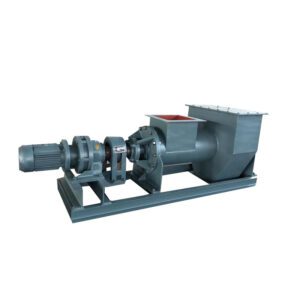
Spiral Pneumatic Conveying Pump Screw Feeder Elevator Conveyor
 Pneumatic Conveying Equipment/Pneumatic Conveyor
Spiral Pneumatic Conveying Pump Screw Feeder Elevator Conveyor
Product name: Spiral pneumatic conveying pump
Support customization
Product features: thickened materials, compact structure, simple operation and easy installation
Scope of application: Electric power, machinery, metallurgy, chemical industry and other industriesSKU: n/a -
Pneumatic Conveying Equipment/Pneumatic Conveyor
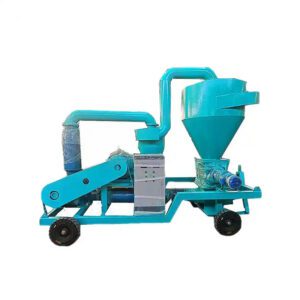
10T 50T Corn Suction Machine, Pneumatic Vacuum Particle Feeder, Conveyor, Best-Selling Wheat Or Sawdust Particle Suction Machine
Pneumatic Conveying Equipment/Pneumatic Conveyor10T 50T Corn Suction Machine, Pneumatic Vacuum Particle Feeder, Conveyor, Best-Selling Wheat Or Sawdust Particle Suction Machine
Pneumatic vacuum conveyor, also called suction grain machine. It is the 1 kind of advanced material handling machinery, that can handle and unload grain and other bulk particles, such as wheat, rice, peanuts, soybeans, corn, rapeseed, cottonseed, feed, etc., and can also be used for non-food bulk particles, such as Plastic particles, etc.
SKU: n/a -
Pneumatic Conveying Equipment/Pneumatic Conveyor
Pneumatic Conveyor Transport System Loading And Unloading Conveying Machinery
Pneumatic Conveying Equipment/Pneumatic ConveyorPneumatic Conveyor Transport System Loading And Unloading Conveying Machinery
Application
Pneumatic conveyor is widely used in handling materials in bulk loading, bulk conveying, bulk unloading, silo to silo, stack to stack in grain, farm depots, railway stations, docks, grain processing and brewing industries,agriculture, forestry, animal husbandry, fishery, medicine, health, metallurgy, minerals, petrochemicalsSKU: n/a