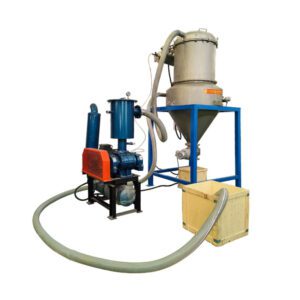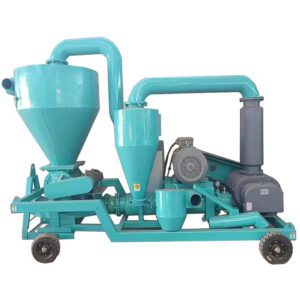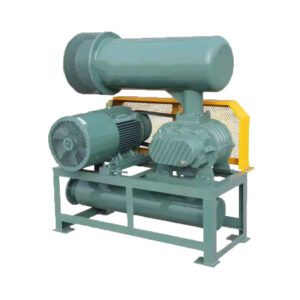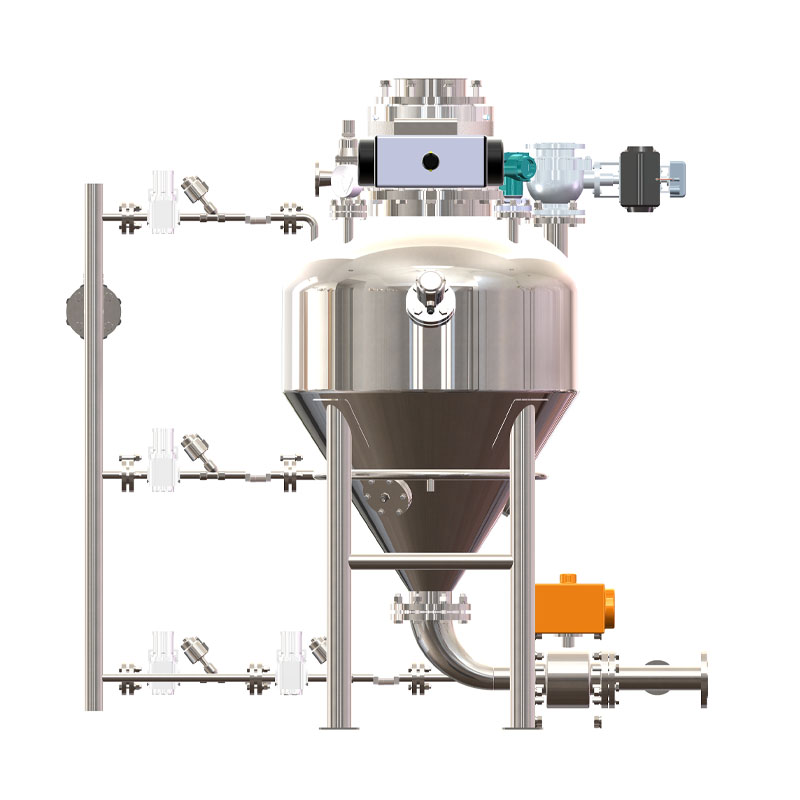

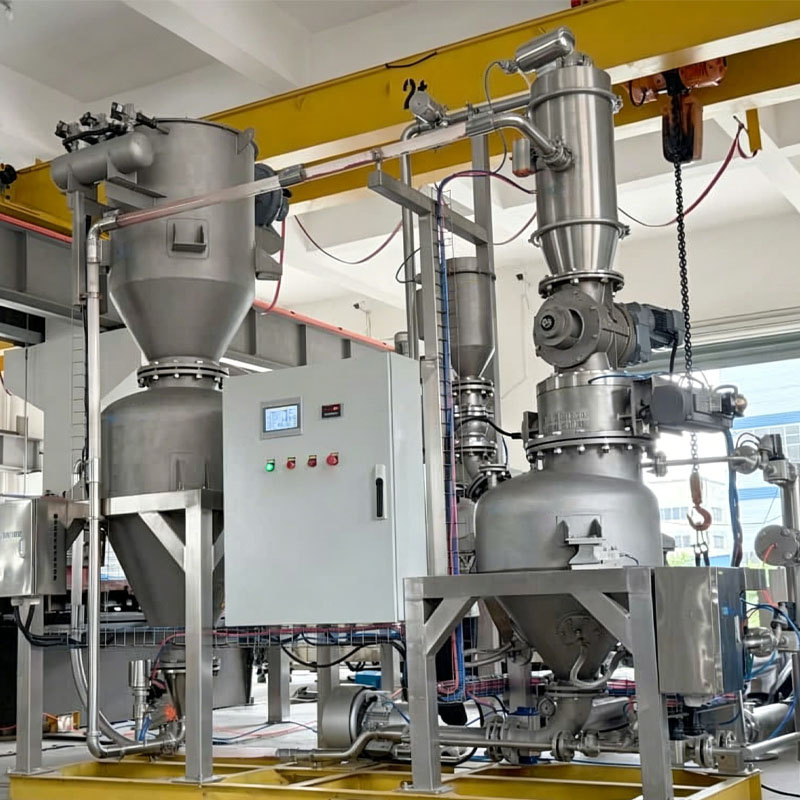
Low Velocity Pneumatic Conveyor Solution for Fragile Materials
Low velocity pneumatic conveyor is a dense phase material handling system designed for gentle and damage-free transport of powders, granules, and bulk solids. It uses compressed air or gas to move materials through sealed stainless steel pipelines with controlled low-speed airflow. This system reduces material degradation, dust emission, and energy consumption, making it ideal for fragile, abrasive, or high-value materials in industrial production environments.
Compare
Product introduction for Low Velocity Pneumatic Conveyor
The low velocity pneumatic conveying system is an advanced bulk material transport solution that uses compressed air to transfer materials through enclosed pipelines. Unlike high-speed dilute phase systems, it operates at low air velocity, ensuring gentle handling of fragile materials.
It is widely used for transporting powders, grains, cement, fly ash, sugar, salt, plastic pellets, starch, and chemical materials. The system can operate under positive pressure or vacuum (negative pressure) conditions, depending on process requirements.
Made of stainless steel 304 or SS316, it is suitable for hygienic, corrosive, and industrial environments requiring reliable and continuous conveying performance.
Working principle
Step 1: Air Compression
Compressed air is generated by a blower or air compressor system.
Step 2: Material Feeding
Bulk materials are introduced into the conveying pipeline from storage silos or feeding hoppers.
Step 3: Low Velocity Flow Creation
Controlled airflow creates low-speed dense phase movement inside the pipeline.
Step 4: Pipeline Transport
Materials are pushed or pulled through enclosed stainless steel pipelines with minimal damage.
Step 5: Separation Process
At the discharge point, air and material are separated using cyclone or filter systems.
Step 6: Material Discharge
Final materials are discharged into silos, reactors, or packaging systems.
Product Parameter Table
| Parameter | Specification |
| Productivity (t/h) | 20-25 |
| Working Pressure (MPa) | 0.6-0.8 |
| Tank Volume (m³) | 1.6 |
| Horizontal Conveying Distance (m) | ≤120 |
| Vertical Conveying Height (m) | ≤12 |
Decision Table
| Feature | Low Velocity Pneumatic Conveyor | Dilute Phase Conveyor | Mechanical Conveyor |
|---|---|---|---|
| Material Handling | Fragile & sensitive materials | General bulk materials | Heavy solid materials |
| Flow Speed | Low velocity | High velocity | Mechanical movement |
| Product Damage | Very low | Medium to high | Medium |
| Dust Control | Fully enclosed system | Moderate | Low |
| Energy Consumption | Low | High | Medium |
| Pipeline Flexibility | High | High | Low |
| Maintenance | Low | Medium | High |
| Hygiene Level | High (stainless steel system) | Medium | Low |
Main Features
- Low velocity dense phase conveying for fragile materials
- Minimal product degradation and particle breakage
- Fully enclosed stainless steel pipeline system
- Supports positive and negative pressure operation
- Energy-efficient compressed air conveying method
- Suitable for powder, granules, and bulk solids
- Reduced dust emission and clean working environment
- Compatible with automated industrial production lines
Why Choose This System
- Ideal for fragile and sensitive material transport
- Lower product breakage compared to dilute phase systems
- Reduced energy consumption and operating cost
- Supports long-distance and multi-point conveying
- High sealing performance prevents dust leakage
- Suitable for hygienic and industrial applications
- Flexible integration into existing production lines
- Long service life with stainless steel construction
Application Scenarios
- Cement, fly ash, and building material transport
- Food industry: sugar, salt, starch, dry milk
- Agricultural materials: grains, oats, feed, seeds
- Chemical industry: soda ash, lime, polymers
- Plastic industry: resin, pellets, powders
- Mining and minerals: sand, fine particles
- Pharmaceutical powder handling systems
- Industrial silo to silo transfer systems
Buying Guide
When selecting a low velocity pneumatic conveyor system, consider:
- Material type (fragile, abrasive, powder, granule)
- Required conveying capacity (t/h)
- Conveying distance and height
- Positive or vacuum system requirement
- Pipeline layout complexity
- Stainless steel grade (304 or 316L)
- Level of automation (PLC control system)
- Industry hygiene requirements (food / pharma grade)
FAQ
Q1: What is a low velocity pneumatic conveying system used for?
A: It is used for gentle transport of powders, grains, and fragile bulk materials with minimal damage.
Q2: How does a dense phase pneumatic conveyor work?
A: It uses low-speed compressed air to move materials through sealed pipelines in a dense flow state.
Q3: What materials can be transported by pneumatic conveyor system?
A: It can transport cement, sugar, salt, grains, plastic pellets, powders, and chemical materials.
Q4: What is the advantage of low velocity conveying system?
A: It reduces material breakage, dust emission, and energy consumption.
Q5: Is pneumatic conveying system suitable for fragile materials?
A: Yes, dense phase low velocity systems are designed specifically for fragile material handling.
Q6: What is the difference between dense phase and dilute phase conveying?
A: Dense phase uses low speed and high concentration, while dilute phase uses high speed airflow.
Q7: Can pneumatic conveyor be used in food industry?
A: Yes, stainless steel systems are widely used in hygienic food production environments.
Q8: Does pneumatic conveying system reduce dust pollution?
A: Yes, it is a fully enclosed system that prevents dust leakage during operation.
Conclusion
The low velocity pneumatic conveyor system is a highly efficient and gentle bulk material handling solution designed for modern industrial production. With its dense phase conveying technology, it ensures minimal product damage, low energy consumption, and dust-free operation.
It is widely used across agriculture, food, chemical, and industrial sectors, making it an ideal solution for fragile, high-value, and sensitive material transport applications.
Contact us to get your quotation now.
Get in touch with our engineering team.
Related products
-
Pneumatic Conveying Equipment/Pneumatic Conveyor
Grain Suction Pneumatic Conveyor Pneumatic Conveying Equipment Pneumatic Conveyor
 Pneumatic Conveying Equipment/Pneumatic Conveyor
Grain Suction Pneumatic Conveyor Pneumatic Conveying Equipment Pneumatic Conveyor
- Pneumatic vacuum conveyor, also called suction grain machine.
- It is the 1 kind of advanced material handling machinery, which can handle and unload grain and other bulk particles, such as wheat, rice, peanuts, soybeans, corn, rapeseed, cottonseed, feed, etc., and can also be used for non-food bulk particles, such as Plastic particles, etc.
- At the same time, we can also customize the powder conveyor for the handling of powdery materials, loading and unloading. such as cement, flour and so on.
- When conveying grains, it has the effect of removing impurities and dehydrating grains.
- The application scenarios mainly include loading and unloading ships at docks, warehouse entry and exit, and food processing factories.
SKU: n/a -