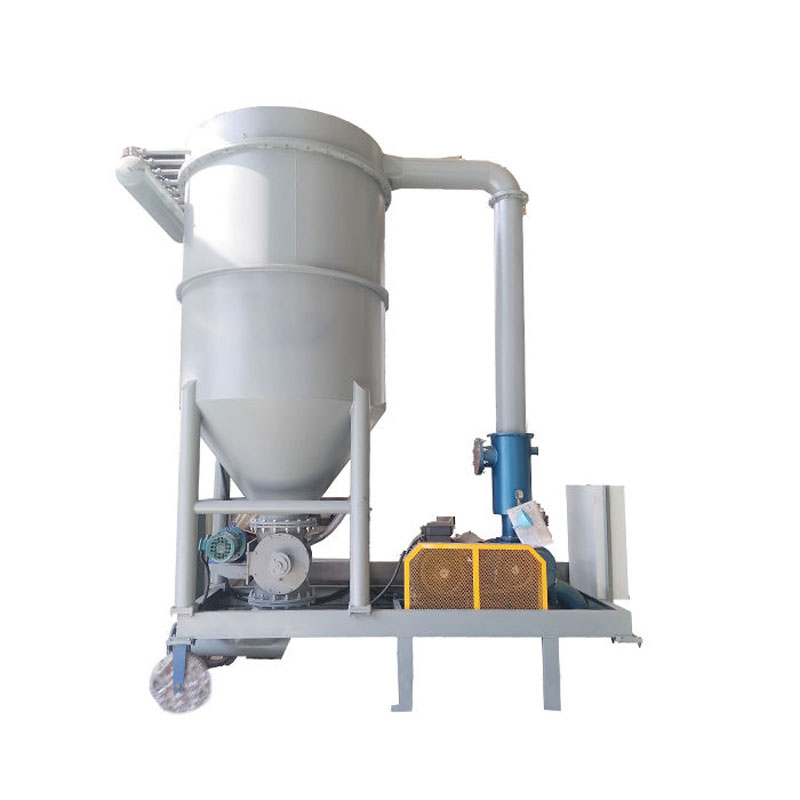
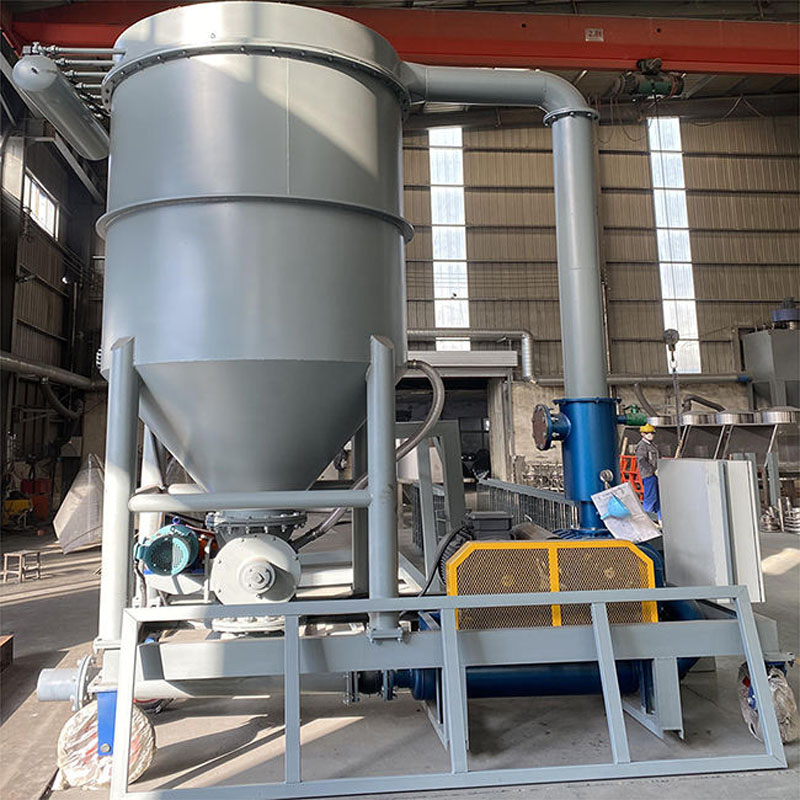
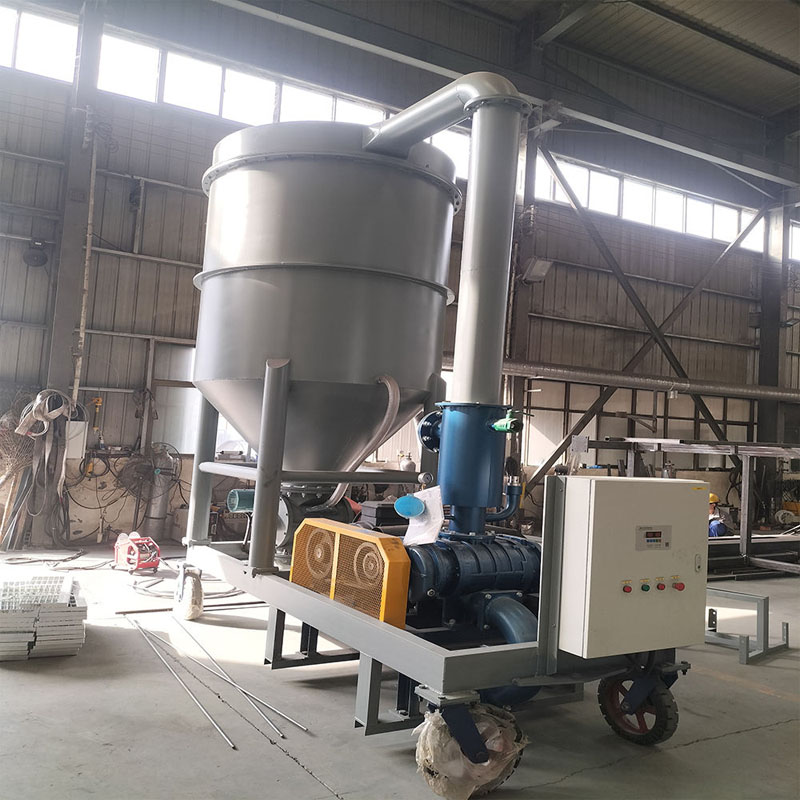
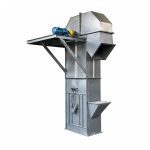
Pneumatic grain conveyor is a mobile bulk material handling system designed for efficient transport of corn, soybean, wheat and granular materials. With conveying capacity of 8–10 t/h, it supports horizontal, vertical and inclined transfer. The system integrates suction, conveying, impurity removal and partial dehydration in one compact unit. Widely used in farms, grain depots and processing industries, it ensures stable performance, low energy consumption and flexible operation for bulk loading and unloading applications.
The pneumatic grain conveyor, also known as grain suction machine, is an advanced bulk conveying system for agricultural and industrial materials. It uses high-pressure airflow to transfer grains and granular materials through pipelines over long distances.
This system is ideal for bulk loading, unloading, stacking and silo-to-silo transfer in grain depots, farms, ports and processing plants. It supports multiple conveying modes including suction, pressure conveying, and combined suction-pressure operation, offering high flexibility for different working conditions.
With integrated functions such as impurity removal and grain dehydration, the equipment improves material quality during transport while reducing manual labor and operational costs.
Working principle
Step 1: The blower generates high-pressure airflow inside the conveying pipeline. Step 2: Materials such as corn, soybean or wheat are sucked into the suction nozzle. Step 3: The air-material mixture is transported through sealed pipelines. Step 4: The separator separates air and material efficiently. Step 5: The cleaned material is discharged through the unloader to target location. Step 6: Impurities and moisture are partially removed during conveying process.
Product Parameter Table
Power
18.5–22 kW
Capacity
8–10 t/h
Horizontal Conveying Distance
20–40 m
Lift Height
2–15 m
Lift Flow
1300 m³/h
Size
2 × 1 × 2.9 m
Weight
980 kg
Decision Guide
Feature
Pneumatic Grain Conveyor
Screw Conveyor
Belt Conveyor
Conveying Distance
Long distance
Short distance
Medium distance
Flexibility
High (mobile & pipeline)
Low
Medium
Material Cleaning
Yes (impurity removal)
No
No
Moisture Reduction
Partial dehydration
No
No
Installation
Flexible pipeline layout
Fixed structure
Fixed structure
Suitable Materials
Granular, powder, grain
Powder, small particles
Bulk solid
Maintenance
Moderate
Low
Medium
Conclusion: Pneumatic conveyor is the best choice for flexible, long-distance, and clean grain transport.
Main Features
High pressure pneumatic system for long distance grain conveying
Mobile design suitable for flexible field and industrial operation
8–10 t/h stable capacity for bulk grain handling applications
Integrated impurity removal improves grain quality during transport
Supports suction, pressure and combined conveying modes system
Suitable for corn, soybean, wheat and granular materials handling
Low energy consumption with high efficiency pneumatic airflow system
Enables horizontal, vertical and inclined grain transport operation
Reduces manual labor cost in bulk loading and unloading processes
Durable structure designed for continuous industrial use environment
Application Scenarios
Grain storage depots and silo loading systems
Agricultural farms and bulk grain harvesting operations
Port terminals and dock bulk material transfer systems
Railway station grain loading and unloading systems
Feed processing and animal nutrition industries
Brewery raw material conveying systems
Agricultural logistics and distribution centers
Plastic, resin and granular industrial material handling
Buying Guide
When selecting a pneumatic grain conveyor, consider the following factors:
Conveying capacity (e.g. 8–10 t/h requirement)
Conveying distance and pipeline layout
Material type (corn, soybean, wheat or granular materials)
Working environment (farm, port, processing plant)
Mobility requirement (fixed or mobile system)
Power consumption and operational efficiency
Supplier reliability and after-sales support
Choosing the right configuration ensures optimal performance and long-term cost savings.
Why Choose This Pneumatic Grain Conveyor
Combines conveying, cleaning and dehydration in one system
Reduces labor cost compared to traditional manual handling
Improves efficiency of bulk grain transport operations
Suitable for multiple industries and material types
Flexible mobile design adapts to different site conditions
Reliable performance for continuous industrial applications
Competitive price with high cost-performance ratio
FAQ
Q1: What is pneumatic grain conveyor used for? A: It is used for bulk grain transport including corn, soybean, wheat and agricultural materials.
Q2: What is the capacity of pneumatic grain conveyor system? A: Standard capacity is around 8–10 t/h depending on configuration and material type.
Q3: Is pneumatic grain conveyor suitable for long distance transport? A: Yes, it supports efficient long distance conveying through pipeline systems.
Q4: What materials can be handled by grain suction machine? A: It can handle grain, corn, wheat, soybean, plastic and granular materials.
Q5: How does pneumatic grain conveyor remove impurities? A: Airflow separation system removes dust and impurities during conveying.
Q6: What industries use pneumatic grain conveyor system? A: Agriculture, feed processing, ports, breweries and grain storage industries.
Q7: Is mobile pneumatic conveyor easy to operate? A: Yes, it is designed for simple installation and flexible mobile operation.
Q8: What is the difference between suction and pressure conveyor? A: Suction pulls material into system, pressure pushes material through pipeline.
Q9: Does pneumatic conveyor reduce labor cost? A: Yes, it replaces manual grain handling and improves efficiency.
Q10: How energy efficient is pneumatic grain conveyor? A: It uses optimized airflow system for low energy consumption operation.
Conclusion
The pneumatic grain conveyor is a highly efficient and flexible bulk material handling solution for modern agriculture and industrial applications. With features such as long distance conveying, impurity removal, and low energy consumption, it provides a reliable alternative to traditional conveying systems. Its adaptability, cost efficiency and wide application range make it an ideal choice for grain handling, processing and logistics operations.

 1T/H UHT Beer Pasteurizer Machine Tubular Beer Beverage Milk Pasteurizer
1 × $25,600.00
1T/H UHT Beer Pasteurizer Machine Tubular Beer Beverage Milk Pasteurizer
1 × $25,600.00  1T/H UHT Beer Pasteurizer Machine Tubular Beer Beverage Milk Pasteurizer
  Single Direction Plate Compactor 22 x 18" Soil 5HP B&S Engine Walk Behind Place Compactor
  3000L/H Fruit Juice Plate Pasteurizer Beverages Production Line Flash Type Flow Pasteurizer Flash Pasteurization Equipment
  Dust Extractor 2'' Floor Brush Tool
  2T/H fruit juice pasteurizer,Enzyme beverage pasteurizer, Xiaoyang Man Lactobacillus drink pasteurization machine
  Veetsan Stainless Steel Hoodtype Dishwasher 208V 3ph 60Hz
  12000Lb 12V Electric Winch for Trailer & Off Road
  Commercial Smith Machine for Fitness Center Strength Training