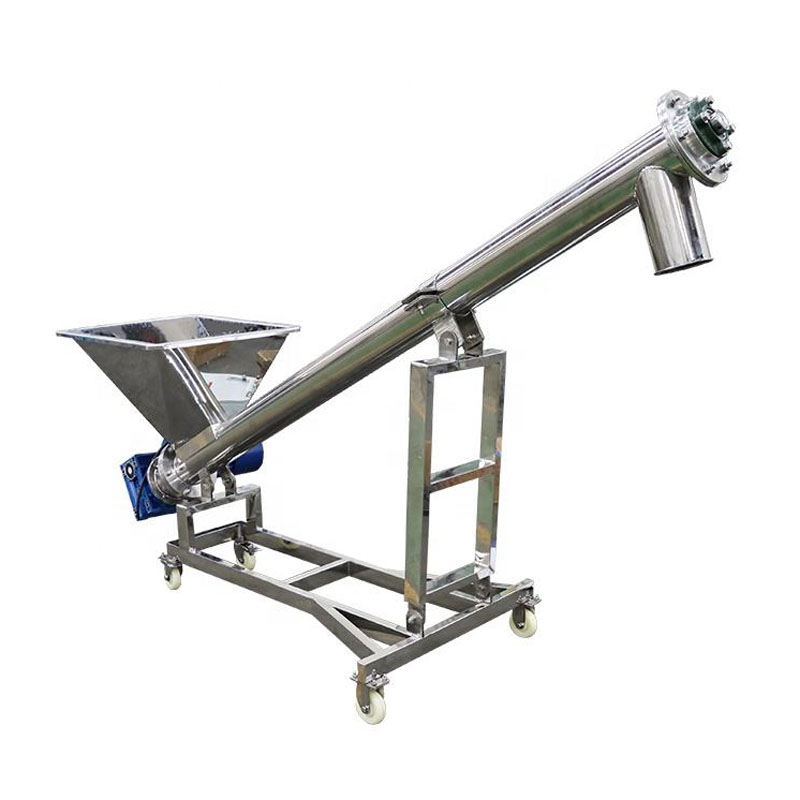
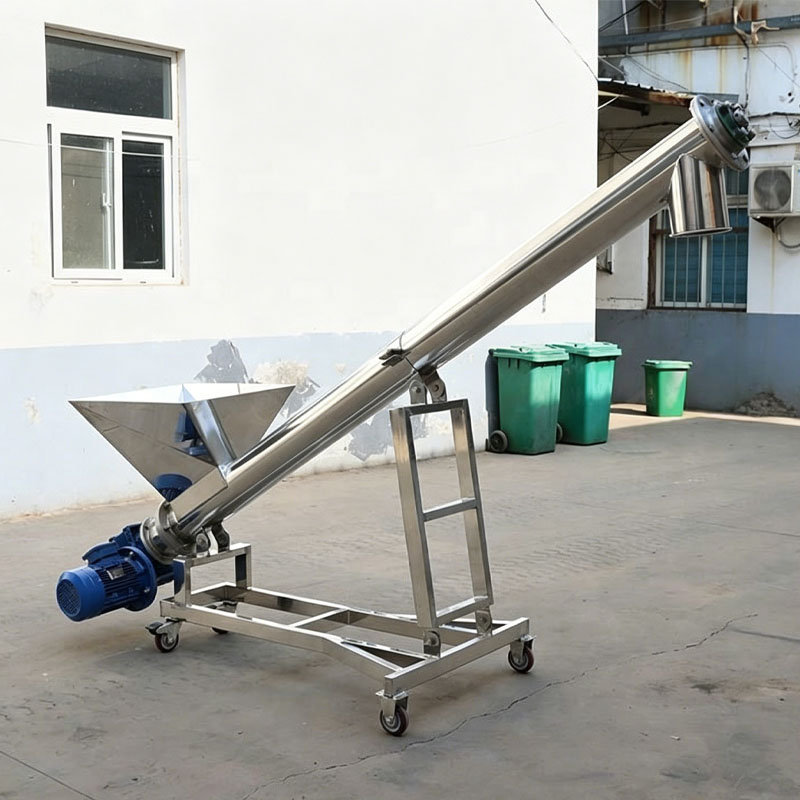
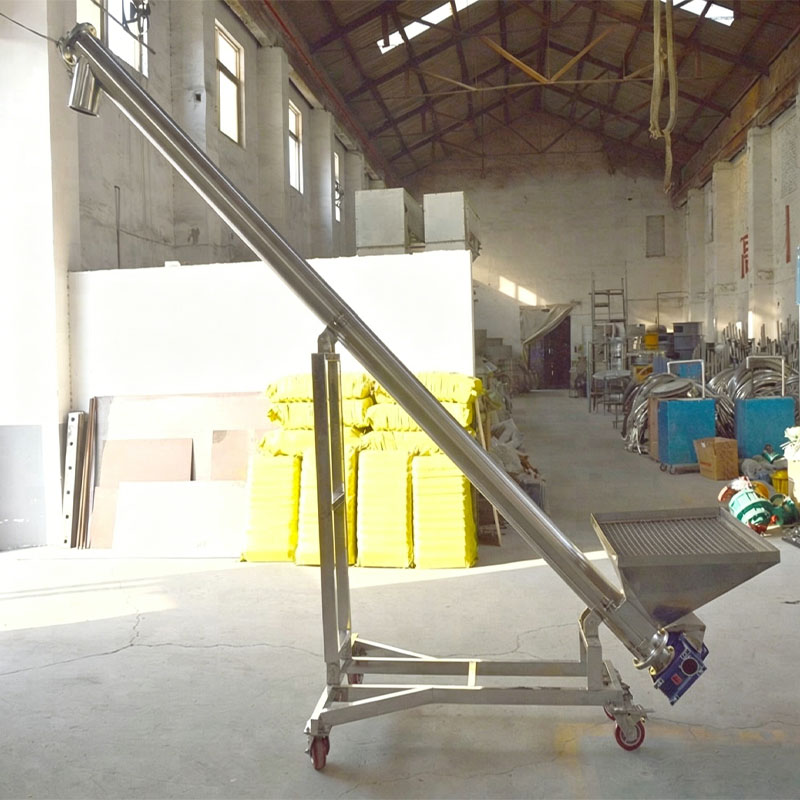
Automatic Auger Conveyor is a high efficiency bulk material handling system designed for continuous conveying, feeding, and lifting of powder, granules, pellets, and small bulk solids. Widely used in industries such as food processing, chemical production, agriculture, metallurgy, and construction materials, this screw conveyor system provides stable performance, adjustable speed control, and flexible installation options. With compact structure and reliable operation, it is an ideal solution for automated material transfer, reducing labor intensity and improving production efficiency in modern industrial processing lines.
Automatic Auger Conveyor, also known as screw conveyor or spiral conveyor system, is a widely used mechanical conveying equipment for transporting bulk materials in industrial and agricultural applications. It is designed to handle powder, granules, pellets, and small lump materials such as cement, sand, lime, coal powder, fertilizer, grain, sugar, spice, coffee, and animal feed.
The system uses a rotating screw blade inside a tube or U-shaped trough to push materials forward continuously. It can be applied for horizontal conveying, inclined feeding, and vertical lifting, making it highly flexible for different production layouts. Constructed from stainless steel 304 or carbon steel, the conveyor ensures durability, corrosion resistance, and long service life. With adjustable speed motor and customized design options, it is suitable for a wide range of industrial automation systems.
Working principle
Step 1: Material Feeding
Bulk materials enter the hopper or inlet section of the conveyor system.
Step 2: Screw Rotation Drive
The motor drives the screw shaft to rotate continuously inside the tube or trough.
Step 3: Material Pushing Movement
Rotating spiral blades push materials forward along the conveyor path.
Step 4: Continuous Conveying Process
Materials are transported steadily in horizontal, inclined, or vertical directions.
Step 5: Material Discharge
Materials are discharged through the outlet into the next processing stage.
Step 6: Continuous Operation Cycle
The system maintains stable and continuous bulk material conveying.
Product Parameter Table
Parameter
Specification
Spiral Diameter
400 mm
Pitch
355 mm
Rotating Speed
71 r/min
Capacity
64 m³/h
Power
2.2–18.5 kW (system range)
Inclination Angle
≤ 60°
Screw Conveyor vs Other Conveying Systems
Comparison Item
Auger Conveyor
Belt Conveyor
Pneumatic Conveyor
Structure Complexity
Simple
Medium
Complex
Installation Space
Small
Large
Medium
Dust Control
Good
Moderate
Excellent
Energy Consumption
Low
Medium
High
Maintenance Cost
Low
Medium
High
Material Compatibility
Powder & granule
Bulk solids
Fine powder
Flexible Layout
High
Low
High
Investment Cost
Low
Medium
High
Main Features
Multi-direction conveying design supports horizontal, inclined, and vertical transport layouts
Enclosed screw structure minimizes dust leakage and improves workplace cleanliness
Adjustable motor speed enables precise control of material feeding rate
Robust steel construction ensures long-term stable operation under industrial load
Modular design allows easy integration into existing production and packaging lines
Why Choose Our Automatic Auger Conveyor
Space-saving design fits compact factory layouts with limited installation area
Stable conveying performance reduces material blockage and production interruption
Flexible customization supports different materials, capacities, and layouts
Low maintenance requirement reduces downtime and long-term operating cost
High efficiency motor system improves productivity with lower energy consumption
Application Scenarios
Food processing lines for flour, sugar, grain, spice, and coffee powder transport
Chemical plants for fertilizer, resin, additive, and powder material handling
Construction material systems for cement, lime, sand, and dry mortar conveying
Agricultural operations for feed, seed, and grain transfer applications
Industrial automation lines including mixers, silos, and packaging equipment feeding
Buying Guide
Confirm Material Type Identify whether material is powder, granule, pellet, or lump.
Select Conveyor Length Determine horizontal or vertical conveying distance requirements.
Choose Suitable Material Select stainless steel or carbon steel based on application environment.
Confirm Capacity Requirement Define hourly conveying output based on production needs.
Check Installation Layout Ensure space availability for horizontal, inclined, or vertical design.
FAQ
Q1: What materials can an automatic auger conveyor handle?
A: It can handle powder, granules, pellets, grain, fertilizer, cement, and chemical materials.
Q2: Can the screw conveyor be used for vertical lifting?
A: Yes, it supports horizontal, inclined, and vertical conveying applications.
Q3: What industries use auger conveyor systems?
A: Food processing, chemical, agriculture, construction, and metallurgy industries.
Q4: Is stainless steel screw conveyor suitable for food use?
A: Yes, stainless steel 304 is widely used in food-grade applications.
Q5: Does the conveyor support adjustable speed control?
A: Yes, it uses a reducer motor with adjustable speed functionality.
Q6: Can the system be customized?
A: Yes, length, capacity, and material can be fully customized.
Q7: What is the main advantage over belt conveyor?
A: It has a smaller footprint and better sealing for powder materials.
Q8: Is it suitable for dusty materials?
A: Yes, it is ideal for powder and dusty bulk material handling.
Q9: How is maintenance handled?
A: The simple structure allows easy cleaning and low maintenance.
Q10: Can it integrate into production lines?
A: Yes, it is widely used in automated industrial production systems.
Conclusion
Automatic Auger Conveyor is a reliable and efficient solution for continuous bulk material handling in modern industries. With its compact structure, flexible installation, adjustable speed control, and wide material compatibility, it is widely used in food, chemical, agriculture, and construction sectors. Its stable performance, low maintenance cost, and customizable design make it an essential equipment for automated production lines, improving efficiency and reducing operational costs.

 1T/H UHT Beer Pasteurizer Machine Tubular Beer Beverage Milk Pasteurizer
1 × $25,600.00
1T/H UHT Beer Pasteurizer Machine Tubular Beer Beverage Milk Pasteurizer
1 × $25,600.00  1T/H UHT Beer Pasteurizer Machine Tubular Beer Beverage Milk Pasteurizer
  Single Direction Plate Compactor 22 x 18" Soil 5HP B&S Engine Walk Behind Place Compactor
  3000L/H Fruit Juice Plate Pasteurizer Beverages Production Line Flash Type Flow Pasteurizer Flash Pasteurization Equipment
  Dust Extractor 2'' Floor Brush Tool
  2T/H fruit juice pasteurizer,Enzyme beverage pasteurizer, Xiaoyang Man Lactobacillus drink pasteurization machine
  Veetsan Stainless Steel Hoodtype Dishwasher 208V 3ph 60Hz
  12000Lb 12V Electric Winch for Trailer & Off Road
  Commercial Smith Machine for Fitness Center Strength Training