1T/H UHT Beer Pasteurizer Machine Tubular Beer Beverage Milk Pasteurizer
 Subtotal: $25,600.00

Pneumatic Conveying Equipment/Pneumatic Conveyor
Industrial Vacuum Conveyor for Automated Powder Feeding
Vacuum Feeder is an efficient pneumatic conveying solution designed for automatic powder and granule feeding in industrial production. Using vacuum suction technology, it transfers materials through a sealed pipeline while reducing dust and contamination risks. The system provides stable feeding performance, easy operation, and flexible integration with different processing machines. It is widely used in food processing, pharmaceutical, chemical, plastic, coating, and new energy industries requiring clean and reliable material handling.
Compare
Vacuum Conveyor Product Introduction
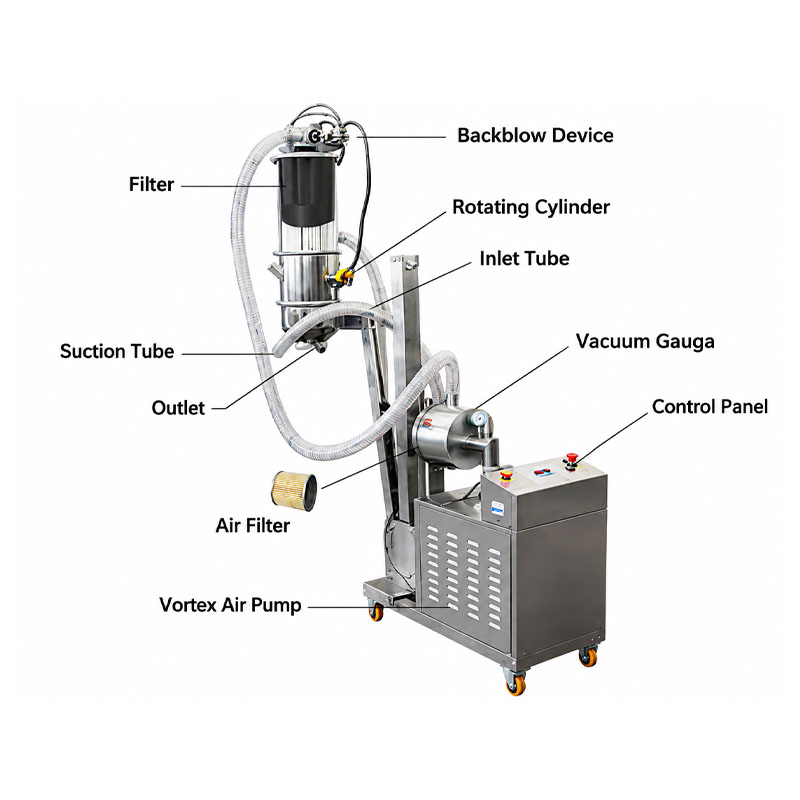
Vacuum Feeder is an advanced automatic material feeding system that uses vacuum airflow to transport powders, granules, and other dry materials efficiently. By creating a negative pressure environment through a vacuum pump, the system generates airflow that draws materials from the supply source and transfers them through a conveying pipe to the receiving equipment.
During operation, material and air enter the suction nozzle together and move through the pipeline to the hopper. The internal separation system separates the material from the conveying air, allowing the material to enter the next processing stage while filtered air is discharged safely.
Compared with traditional manual feeding methods, the Vacuum Feeder improves production efficiency, reduces labor requirements, and provides cleaner material transfer. Its fully enclosed conveying process helps prevent dust leakage, material contamination, and product loss, making it suitable for industries with strict hygiene and safety requirements.
The system can be connected with various production machines, including mixers, packaging machines, injection molding machines, tablet presses, and other processing equipment. With flexible configuration options, it provides an effective solution for automated powder feeding and bulk material handling.
Working Principle
The Vacuum Feeder works by using a vacuum pump to create negative pressure inside the conveying system.
The working process includes:
- The vacuum pump removes air from the conveying chamber to create a vacuum state.
- External air enters through the suction nozzle and carries powder or granule materials into the pipeline.
- The material-air mixture is transported to the hopper through airflow.
- The separation system separates materials from air.
- Materials are discharged into the receiving equipment through controlled valves.
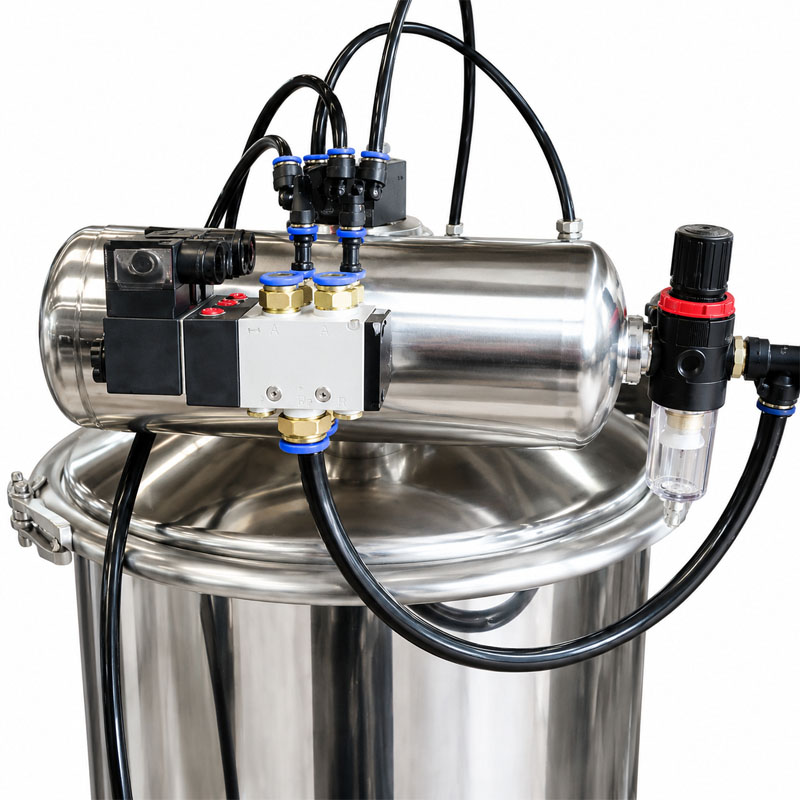
- During each discharge cycle, compressed air automatically cleans the filter surface to maintain stable suction performance.
This continuous process ensures efficient, clean, and automated material feeding.
Product Parameter Table
| Parameter | Specification |
| Motor Power | 5.5 kW |
| Conveying Capacity | 2500 kg/h |
| Material Type | Powder and granule material |
| Feeding Method | Vacuum suction conveying |
| Conveying System | Closed pipeline conveying |
| Application | Automatic powder feeding and material transfer |
Main Features
- Automatic Powder Feeding
The Vacuum Feeder automatically transfers powders and granules without manual handling, improving production efficiency and reducing labor costs.
- Dust-Free Closed Conveying
The sealed conveying structure prevents dust leakage during operation, helping maintain a cleaner working environment and reducing material contamination.
- Efficient Vacuum Suction Technology
The vacuum system creates stable airflow to transport materials smoothly over different distances and heights, ensuring reliable feeding performance.
- Automatic Filter Cleaning
The integrated compressed air back flushing system removes powder accumulated on the filter surface, maintaining continuous suction efficiency and extending filter service life.
- Flexible Machine Integration
The Vacuum Feeder can be connected with various production equipment, allowing automatic feeding for different manufacturing processes.
- Easy Operation and Maintenance
The simple structure and automatic control system make the equipment easy to operate, clean, and maintain.
- Safe Material Handling
The enclosed conveying method reduces operator exposure to dusty materials and improves workplace safety.
- Wide Material Compatibility
The system can handle various dry materials, including powder, fine particles, pellets, and granules.
Application Areas
- Food Processing Industry
The Vacuum Feeder is suitable for transporting flour, sugar, starch, milk powder, spices, and other food ingredients while maintaining hygienic production conditions.
- Pharmaceutical Industry
It provides clean and reliable feeding of pharmaceutical powders and granules for applications requiring strict contamination control and sanitary operation.
- Chemical Industry
The system can safely transfer chemical powders, additives, pigments, and fine materials through an enclosed conveying process.
- Plastic Processing Industry
It is widely used for conveying plastic pellets, resin powder, and other polymer materials to injection molding machines and processing equipment.
- New Energy Industry
The Vacuum Feeder supports the automated transfer of fine powder materials used in battery and energy-related manufacturing processes.
- Coating Industry
It provides efficient transportation of coating powders and additives while reducing dust generation and improving production cleanliness.
Matching Equipment
The Vacuum Feeder can be integrated with various processing machines, including:
- mixing machine
- packaging machine
- filling machine
- injection molding machine
- tablet press
- grinding equipment
- powder processing equipment
- production hopper
It provides automatic material supply and improves the efficiency of complete production lines.
Advantages of Vacuum Feeder
- Automatic material feeding reduces manual operation
- Fully enclosed conveying prevents dust pollution
- Suitable for powder and granule materials
- Improves production efficiency
- Reduces material waste
- Easy integration with production equipment
- Automatic filter cleaning ensures stable operation
- Flexible installation according to factory layout
- Suitable for hygienic and industrial applications
FAQ
- What materials can a Vacuum Feeder transport?
The Vacuum Feeder can transport various dry materials, including powder, granules, pellets, and fine particles. Typical materials include food ingredients, pharmaceutical powders, plastic pellets, and chemical additives.
- How does a Vacuum Feeder work?
The equipment uses a vacuum pump to generate negative pressure. Airflow draws materials into the suction pipe and transports them to the receiving hopper, where material and air are separated.
- Is the Vacuum Feeder suitable for food and pharmaceutical applications?
Yes. The enclosed conveying structure helps prevent contamination and dust leakage, making it suitable for industries requiring clean and hygienic material handling.
- Can the Vacuum Feeder connect with other machines?
Yes. The system can be customized to connect with different processing equipment, including mixers, packaging machines, injection molding machines, and production hoppers.
- How does the system clean the filter?
The equipment uses compressed air pulse back flushing to remove powder particles from the filter surface, ensuring stable suction and continuous operation.
- What are the advantages compared with manual feeding?
Compared with manual feeding, the Vacuum Feeder improves efficiency, reduces labor requirements, minimizes dust exposure, and provides more consistent material supply.
- Can the Vacuum Feeder handle different production capacities?
Yes. Different configurations can be selected according to material characteristics, conveying distance, feeding height, and production requirements.
Contact us to get your quotation now.
Get in touch with our engineering team.
Related products
-
-
Pneumatic Conveying Equipment/Pneumatic Conveyor
Pneumatic Vacuum Feeder Portable Vacuum Conveyor For Powder
 Pneumatic Conveying Equipment/Pneumatic Conveyor
Pneumatic Vacuum Feeder Portable Vacuum Conveyor For Powder
Features:
The electric vacuum feeder is a new product developed on the basis of extensive absorption of similar foreign products. At present, it is the most advanced, ideal and complete vacuum conveying equipment for powder, granular, and powder-grain mixtures in China. It reduces the labor intensity of workers and solves the problem of dust spillover during feeding.SKU: n/a