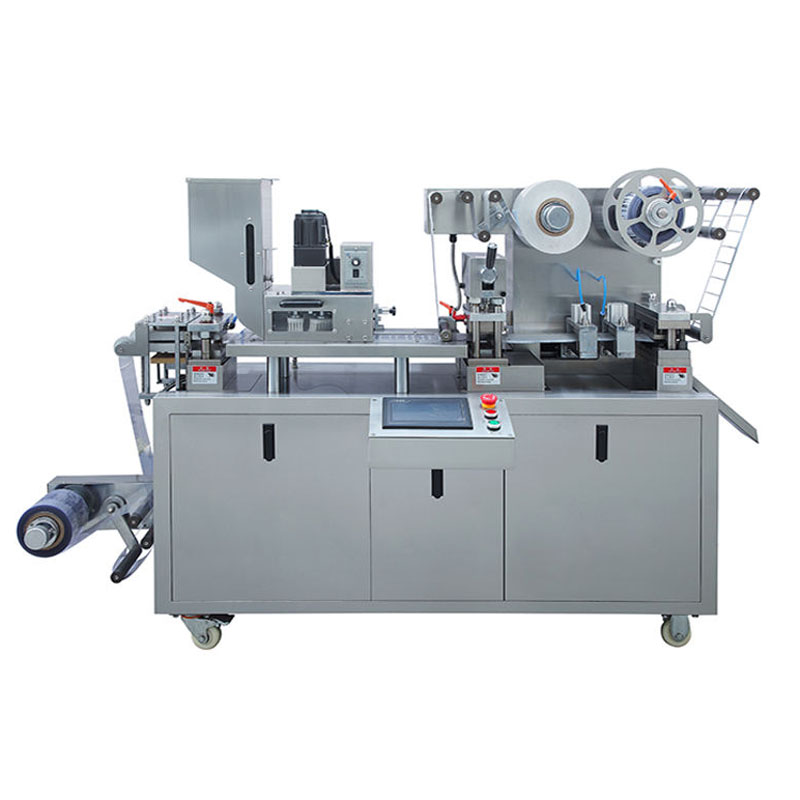
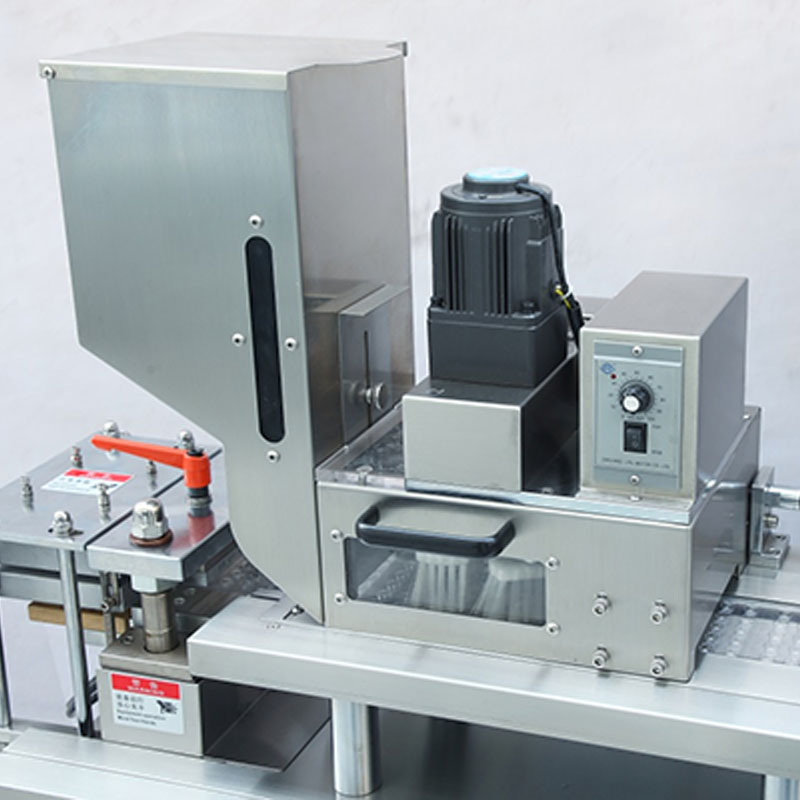
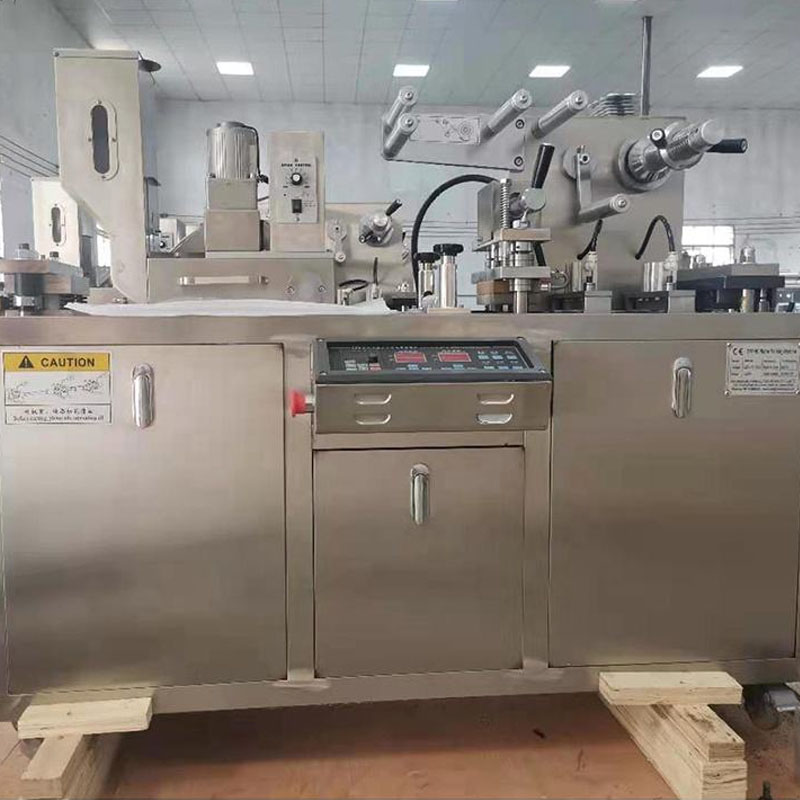
Single Head Blister System is a high-efficiency automatic blister packaging solution designed for food, cosmetic, electronic, pharmaceutical, and light industrial applications. Combining optical, mechanical, electrical, and pneumatic technologies, the machine ensures stable forming, feeding, sealing, and punching performance. It supports aluminum-plastic, paper-aluminum, and aluminum-aluminum blister packaging for liquid, solid, and irregular products with precise sealing quality and continuous production efficiency.
Single Head Blister System is an intelligent automatic packaging machine developed for high-precision blister sealing applications. Equipped with PLC programmable control or PC-based operation, the system offers flexible automation and stable packaging performance for multiple industries.
Its four-station structure integrates PVC forming, product feeding, heat sealing, and punching into one continuous workflow. With servo traction technology, photoelectric registration, and frequency conversion speed control, the machine delivers accurate positioning, low noise operation, and improved packaging consistency for food, cosmetic, electronic, and healthcare products.
Working principle
How does a single head blister system work?
Step 1: Material Feeding PVC, aluminum foil, or paper-aluminum materials are automatically fed into the machine.
Step 2: Blister Forming The forming station creates blister cavities through thermal pressure forming technology.
Step 3: Product Loading Chocolate, butter, sauce, cosmetic items, or electronic components are placed into formed cavities.
Step 4: Heat Sealing Upper sealing material is heat sealed under controlled temperature and pressure conditions.
Step 5: Registration Printing Photoelectric positioning ensures accurate graphic and text alignment during printing.
Step 6: Punching & Cutting Finished blister sheets are punched and cut into final packaging units.
Step 7: Defect Detection Optional shortage detection system removes defective or incomplete packages.
Step 8: Product Output Finished products are automatically discharged for collection and secondary packaging.
Product Parameter Table
Parameter Name
Specification Value
Punch Frequency
10-38 times/min
Production Capacity
1980 Plates/h
Max Forming Area and Depth
70×105×16 mm (Alu-Plastic)
70×105×12 mm (Alu-Alu)
70×105×16 mm
70×105×12 mm
Standard Stroke Range
35-75 mm (Can be designed as per user’s requirement)
Standard Plate Size
80×57 mm (Can be designed as per user’s requirement)
Air Pressure
220 V/380 V 50-60 Hz 2.2 kW
Air Demand
≥0.2 m³/min
Power Supply
220 V 50 Hz 3 kW
PVC Hard Film
0.15-0.5×120 mm
PTP Aluminum Film
0.02-0.035×120 mm
Dialysis Paper
50-100 g×120 mm
Mould Cooling
Tap water or recycling water
Overall Dimensions
1996×592×1229 mm
Weight
About 500 kg
Manual Packaging vs Single Head Blister System
Feature
Manual Packaging
Single Head Blister System
Production speed
Slow and inconsistent
Continuous automatic production
Packaging precision
Operator dependent
Servo controlled stable accuracy
Labor requirement
High labor cost
Reduced manpower requirement
Packaging quality
Inconsistent sealing
Uniform airtight sealing quality
Product flexibility
Limited packaging range
Supports multiple product formats
Industrial scalability
Difficult to expand
Suitable for mass production
Main Features
Integrated optical, electrical, pneumatic, and mechanical control system
PLC programmable controller with variable frequency speed adjustment
Optional material shortage detection and automatic rejection system
Servo motor traction for accurate positioning and stable movement
Photoelectric registration system improves printing alignment quality
Four-station structure for forming, feeding, sealing, and punching
Supports aluminum-plastic, paper-aluminum, and aluminum-aluminum packaging
Suitable for liquid, solid, and irregular shaped products
Stable heat sealing system ensures strong airtight packaging quality
Why Choose This System?
Why is a single head blister system suitable for food packaging production? Because it provides stable sealing, hygienic packaging, and continuous automatic production efficiency.
What makes this blister machine suitable for multiple industries? It supports food, pharmaceutical, cosmetic, electronic, and hardware blister packaging applications.
Why is servo traction important in blister packaging systems? Servo traction improves positioning accuracy and packaging consistency during high-speed operation.
What advantage does four-station structure provide? It improves production stability by separating forming, feeding, sealing, and punching processes.
Can this machine package irregular shaped products? Yes, it supports customized blister molds for special and irregular product packaging.
Application Scenarios
Chocolate and candy blister packaging production
Butter, sauce, and liquid food cup sealing applications
Cosmetic sample blister packaging solutions
Pharmaceutical injection blister packaging systems
Electronic component protective blister sealing
Hardware accessory blister packaging lines
Light chemical product packaging applications
Irregular shaped product blister sealing production
Consumer goods retail blister packaging
Food factory automated blister packaging systems
Buying Guide
What should I consider before purchasing a blister packaging system?
Product type: liquid, solid, cosmetic, or electronic component
Packaging material compatibility requirements
Production capacity and automation level needed
Requirement for printing registration and defect detection
Mold customization for irregular shaped products
Factory space and workflow integration
Maintenance cost and spare parts availability
Long-term production scalability requirements
FAQ
Q1: What is a single head blister system used for?
A1: It is used for automatic blister packaging of food, cosmetics, electronics, pharmaceutical products, and hardware accessories.
Q2: Can this blister system package liquid and solid products?
A2: Yes, it supports chocolate, butter, sauce, injections, cosmetic items, and irregular shaped products.
Q3: What packaging materials are compatible with this blister machine?
A3: It supports aluminum-plastic, paper-aluminum, and aluminum-aluminum blister packaging materials.
Q4: How does servo traction improve blister packaging performance?
Q5: Is this blister packaging machine suitable for food industry applications?
A5: Yes, it is widely used for chocolate, candy, butter, sauce, and food blister sealing production.
Q6: Does the system support automatic defect rejection?
A6: Yes, optional shortage detection and rejection systems improve quality control efficiency.
Q7: What industries use single head blister packaging systems?
A7: Food processing, cosmetics, pharmaceuticals, electronics, hardware, and light chemical industries use this system.
Q8: Why is photoelectric registration important in blister packaging?
A8: It improves graphic and text alignment accuracy for better packaging appearance and branding quality.
Summary
Single Head Blister System is an advanced automatic blister packaging solution designed for food, cosmetic, pharmaceutical, electronic, and industrial applications. With PLC intelligent control, servo traction technology, and four-station integrated operation, it ensures stable, precise, and efficient packaging performance. Its compatibility with multiple packaging materials and support for irregular products make it an ideal choice for manufacturers seeking reliable, high-speed, and scalable blister packaging production systems.

 1T/H UHT Beer Pasteurizer Machine Tubular Beer Beverage Milk Pasteurizer
1 × $25,600.00
1T/H UHT Beer Pasteurizer Machine Tubular Beer Beverage Milk Pasteurizer
1 × $25,600.00  1T/H UHT Beer Pasteurizer Machine Tubular Beer Beverage Milk Pasteurizer
  Single Direction Plate Compactor 22 x 18" Soil 5HP B&S Engine Walk Behind Place Compactor
  3000L/H Fruit Juice Plate Pasteurizer Beverages Production Line Flash Type Flow Pasteurizer Flash Pasteurization Equipment
  Dust Extractor 2'' Floor Brush Tool
  2T/H fruit juice pasteurizer,Enzyme beverage pasteurizer, Xiaoyang Man Lactobacillus drink pasteurization machine
  Veetsan Stainless Steel Hoodtype Dishwasher 208V 3ph 60Hz
  12000Lb 12V Electric Winch for Trailer & Off Road
  Commercial Smith Machine for Fitness Center Strength Training