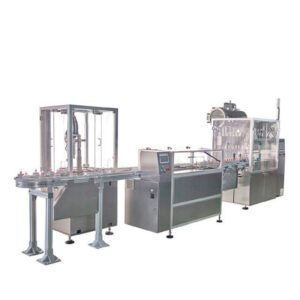
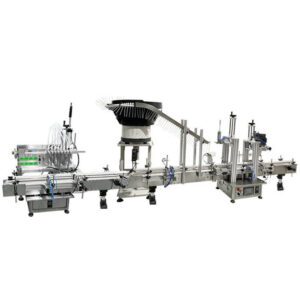
Complete Bottled Water Production Line Supplier for Factory
This bottled water production line is designed for 3–15L barrel potable water production with rinsing, filling, and capping integrated in one system. It adopts high-efficiency pressure filling technology with stable liquid level control and high automation. Equipped with Siemens, Mitsubishi, Schneider, and Omron components, the 1500–2000BPH water bottling plant ensures reliable performance, compact structure, and hygienic operation for industrial beverage and drinking water factory applications.
Compare
Bottled Water Production Line Product Introduction
The bottled water production line is a fully automatic barrel water filling system specially designed for 3–15 liter drinking water production. It integrates bottle rinsing, pressure filling, and automatic capping in a compact three-in-one structure.
The system uses multi-channel washing and disinfectant injection to ensure thorough sterilization of bottles before filling. The pressure filling principle guarantees stable liquid level and high-speed operation, making it suitable for medium-scale bottled water factories.
This water bottling plant is widely used in mineral water plants, pure water production factories, and beverage manufacturing industries requiring high hygiene standards and stable output capacity of 1500–2000BPH.
Working principle
Step 1. Bottle Feeding
Empty bottles are transported via air conveyor into the rinsing section through bottle separation system.
Step 2. Bottle Clamping & Inversion
Bottle clamps hold the neck and rotate bottles 180° for downward rinsing position.
Step 3. High-Pressure Rinsing
Special nozzles spray sterilized water or disinfectant to clean inner bottle walls thoroughly.
Step 4. Bottle Drain & Reset
After rinsing, bottles are inverted back to upright position and transferred forward.
Step 5. Pressure Filling
Bottles are lifted to filling valves; liquid is filled until stable level is reached and overflow returns through return pipe.
Step 6. Automatic Capping
Capping heads grab, place, and tighten caps using cam-controlled rotary system.
Step 7. Final Output
Finished bottles are transferred to conveyor chain for packaging and storage.
Product Parameter Table
| Parameter | Specification |
|---|---|
| Capacity (5 L) | 1500-2000 BPH |
| Filling volume | 2.5-5 L |
| Filling accuracy | ±2 % |
| Pneumatic pressure | 0.7 MPa |
| Air consumption | 800 L/min |
| Washing pressure | 0.2-0.25 MPa |
| Rinser water consumption | 2.4 L/h |
| Rated voltage | 380 V |
| Total power | 4.5 kW |
| Dimension (L×W×H) | 3350 × 2500 × 2500 mm |
| Weight | 4500 kg |
Comparison Table
| Feature | Our Bottled Water Line | Traditional Filling Machine |
|---|---|---|
| Automation Level | Fully automatic integrated system | Semi-automatic operation |
| Filling Accuracy | High precision pressure control | Less stable liquid level |
| Hygiene Standard | Multi-stage disinfectant washing | Basic rinsing only |
| Production Speed | 1500–2000BPH | 800–1200BPH |
| Space Requirement | Compact integrated design | Large separated layout |
| Labor Requirement | Low manpower needed | High labor dependency |
| Electrical System | Siemens / Mitsubishi / Schneider | Generic components |
Main Features
- Integrated rinsing, filling, and capping compact structure design
- Multi-channel disinfectant bottle washing and sterilization system
- Pressure filling technology ensures stable liquid level control
- High-speed operation capacity reaching 1500–2000 bottles per hour
- Siemens, Mitsubishi, Schneider, Omron electrical components system
- Stainless steel construction ensures hygienic and durable operation
- Automatic bottle neck clamping and inversion rinsing system
- High automation reduces labor cost and improves production efficiency
Why Choose Our Bottled Water Production Line
- High efficiency 1500–2000BPH stable production capacity
- Fully automatic system reduces manual labor dependency
- Advanced pressure filling ensures consistent product quality
- Hygienic stainless steel structure meets food-grade standards
- Global brand electrical components ensure long-term reliability
- Compact design saves factory installation space
- Easy operation and low maintenance cost
- Suitable for multiple bottle sizes 3–15L flexible production
Application Scenarios
- Bottled drinking water production factories
- Mineral water bottling plant operations
- 3–15L barrel pure water production lines
- Beverage manufacturing and packaging industries
- Industrial water purification and filling facilities
- Large-scale water bottling and distribution centers
Buying Guide
Before purchasing a bottled water production line, consider the following:
- Required capacity (1500–2000BPH or higher)
- Bottle size range (3L–15L barrel water specification)
- Water type (pure water, mineral water, drinking water)
- Factory layout space and installation planning
- Automation level requirement
- Electrical standard compatibility for your country
- After-sales service and spare parts availability
FAQ
Q1: What is a bottled water production line used for?
A bottled water production line is used for automatic rinsing, filling, and capping of 3–15L barrel drinking water in industrial factories.
Q2: What capacity does this water bottling plant support?
This production line supports 1500–2000 bottles per hour depending on bottle size and operating conditions.
Q3: Can this system produce mineral water and pure water?
Yes, it is suitable for mineral water, pure water, and drinking water bottling production.
Q4: What brands of components are used in the filling machine?
The system uses Siemens, Mitsubishi, Schneider, and Omron electrical components for stable performance.
Q5: Is the bottled water production line fully automatic?
Yes, it is a fully automatic system integrating washing, filling, and capping processes.
Q6: What bottle sizes can this production line handle?
It supports 3L to 15L barrel water bottles with adjustable configuration.
Q7: How does the filling system maintain liquid level accuracy?
It uses a pressure filling principle that ensures stable liquid level control during production.
Q8: Is this system suitable for small water factories?
Yes, it is ideal for medium and small-scale bottled water manufacturing plants.
Summary
The bottled water production line is a high-efficiency, fully automatic barrel water filling solution designed for modern beverage factories. With integrated rinsing, pressure filling, and automatic capping, it ensures stable production, hygienic operation, and high output efficiency. It is an ideal turnkey solution for industrial bottled water manufacturing businesses aiming to improve productivity and reduce operational cost.
Contact us to get your quotation now.
Get in touch with our engineering team.
Related products
-
Bottling Line
Stainless Steel Bottling Production Line – Beverage – 10000-12000 BPH, 3-in-1
The Bottling Production Line is designed for packaging sparkling water, beer, and juice into glass or PET bottles. Made of high-grade stainless steel, it integrates washing, filling, and capping functions, supports bottle sizes from 250ml to 2000ml (with easy changeover), and achieves a capacity of 10,000-12,000 BPH. Controlled by PLC with a user-friendly touch screen for easy parameter adjustments, it ensures precise and stable liquid packaging,meeting the large-scale and hygienic bottling needs of the beverage industry.
SKU: n/a -
Bottling Line
Efficient Production Line Filling Machine – Beverage – 60-80PCS/Min Capping, High Productivity
 Bottling Line
Efficient Production Line Filling Machine – Beverage – 60-80PCS/Min Capping, High Productivity
The production line bottle filling machine is designed for liquid bottling in the beverage industry. Made of stainless steel 304 for hygiene and durability, it is electric-driven and automatic, with 99.5% filling accuracy and a capping speed of 60-80 pieces per minute. Supporting customizable capacities from 5ML to 400ML, it meeting the efficient and precise large-scale bottling needs of the beverage industry.
SKU: n/a -
Bottling Line
30–40 Bottles/min Glass Bottle Capping and Filling Machine
This capping and filling machine is designed for 10–150 ml glass or plastic bottles, providing precise and efficient filling of liquids or powders with minimal foaming. It features automatic cap conveying, crimping, and height-adjustable sealing. Electromagnetic vibration ensures high capping efficiency, while the system adapts to various bottle shapes and viscosities. Suitable for pharmaceutical, cosmetic, and food production lines, it meets GMP and EU certification standards, offering stable operation and easy workflow management.
SKU: n/a -
Bottling Line
30-50 Bottles/min Bottling Filling Machine for Beverage Line
This bottling filling machine is designed for automated liquid packaging, integrating filling, capping, and labeling into one production line. It is suitable for water, juice, alcohol, oil, and other low viscosity liquids. Using a magnetic pump filling system, it ensures stable and accurate liquid dosing. The compact design supports small batch production while maintaining efficiency. It is ideal for beverage, daily chemical, and pharmaceutical manufacturers seeking reliable and flexible bottling solutions.
SKU: n/a