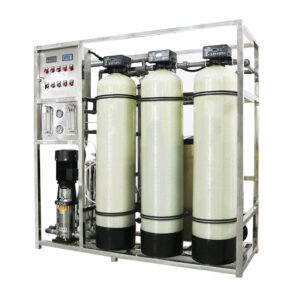
Wastewater Pretreatment Solution with Aerated Grit System
This wastewater pretreatment solution is designed for efficient removal of sand, grit, and heavy inorganic particles from municipal and industrial influent. The system integrates aeration-assisted separation, sedimentation enhancement, and mechanical solids handling to improve downstream treatment stability. With high removal efficiency and modular design, it ensures reliable operation under variable flow conditions while reducing maintenance load and protecting biological treatment processes.
Compare
Wastewater Pretreatment Solution Product Introduction
The aerated grit system is an advanced wastewater pretreatment solution designed to efficiently remove sand, grit, and heavy inorganic particles from municipal and industrial wastewater. By combining controlled aeration, hydraulic flow optimization, and mechanical separation, the system improves downstream treatment stability, reduces equipment wear, and enhances overall wastewater treatment efficiency.
It is widely used as a critical first-stage unit in modern wastewater treatment plants.
What Is an Aerated Grit System?
An aerated grit system is a mechanical pretreatment unit used in wastewater treatment plants to separate heavy inorganic particles such as sand, grit, and small stones from influent wastewater.
It is commonly used as the first stage of:
- Municipal sewage treatment plants
- Industrial wastewater treatment systems
- Food processing wastewater facilities
Its main function is to protect downstream equipment from abrasion, clogging, and sediment accumulation.
How Aerated Grit System Works
Step 1: Influent Entry
Wastewater enters the aerated channel.
Step 2: Controlled Aeration
Air is introduced to create spiral flow motion.
Step 3: Density Separation
Heavy particles (sand, grit) settle at the bottom.
Step 4: Hydraulic Stabilization
Light organic matter remains suspended for further treatment.
Step 5: Mechanical Collection
Settled grit is transported to dewatering system.
Step 6: Discharge
Separated sand is removed for disposal.
Product Parameter Table
| Length (L) | 4600 mm |
| Width (W) | 2450 mm |
| Height (H) | 4480 mm |
| Weight | 1150 kg |
| Capacity (Flow Rate) | 120 m³/h |
| Particle Removal | ≥0.2 mm |
| Efficiency | 90–98% |
| Material | SS304 stainless steel |
Aerated Grit System vs Conventional Grit Chamber
| Feature | Advanced System | Conventional System |
|---|---|---|
| Grit Removal Efficiency | 90–98% | 70–85% |
| Clogging Risk | Low | High |
| Maintenance Cost | Low | High |
| Flow Stability | High | Medium |
| Energy Efficiency | Optimized | Low |
With Pretreatment vs Without Pretreatment
| Feature | With System | Without System |
|---|---|---|
| Equipment Protection | Strong | Weak |
| System Stability | High | Unstable |
| Maintenance Frequency | Low | High |
| Operational Cost | Reduced | Increased |
Conclusion: Proper grit pretreatment significantly improves wastewater treatment performance and reduces lifecycle cost.
Main Features
1. High Grit Removal Efficiency (90–98%)
Removes particles ≥0.2 mm with stable performance.
2. Aeration-Enhanced Separation Process
Improves hydraulic flow and prevents organic settling.
3. SS304 Industrial Construction
Ensures corrosion resistance and long service life.
4. Continuous Automatic Operation
Supports 24/7 wastewater treatment plant operation.
5. Modular Pretreatment Design
Flexible installation for different plant capacities.
6. Low Maintenance System
Reduces clogging and operational downtime.
7. Energy-Efficient Design
Optimized aeration reduces power consumption.
Application Scenarios
Municipal Wastewater Treatment
For high sand content in sewage → improves grit removal efficiency → protects biological treatment tanks
Industrial Wastewater Plants
For unstable influent quality → stabilizes hydraulic load → reduces system wear and clogging
Food Processing Industry
For grease and sand mixture → enhances separation performance → improves effluent quality
Textile Wastewater Treatment
For fiber and suspended solids → improves pretreatment efficiency → reduces downstream blockage risk
Slaughterhouse Wastewater
For heavy organic and grit load → improves separation → stabilizes plant operation
Why Choose This System
This aerated grit system provides a reliable front-end protection solution for wastewater treatment plants.
Key benefits:
- Reduces downstream equipment abrasion
- Improves overall treatment plant efficiency
- Lowers maintenance and operational costs
- Enhances hydraulic stability
- Extends equipment lifespan
It is a critical component for modern wastewater pretreatment design.
FAQ
1. What is an aerated grit system used for?
It is used to remove sand, grit, and heavy particles from wastewater during pretreatment.
2. How does an aerated grit chamber work?
It uses aeration and gravity separation to separate heavy inorganic particles from wastewater.
3. What size particles can be removed?
It can effectively remove particles larger than 0.2 mm.
4. Why is aeration important in grit removal systems?
Aeration creates controlled flow patterns that improve separation efficiency.
5. What is the difference between grit chamber and sedimentation tank?
Grit chamber removes heavy inorganic particles, while sedimentation removes organic solids.
6. What industries use aerated grit systems?
Municipal, industrial, food, textile, and slaughterhouse wastewater plants.
7. Does pretreatment improve wastewater plant efficiency?
Yes, it significantly reduces downstream load and improves system stability.
8. What is maintenance requirement of grit removal system?
It requires low maintenance due to reduced clogging risk and stable operation.
9. What is the efficiency of aerated grit removal system?
Typically 90–98% depending on flow conditions.
10. Why is grit removal important in wastewater treatment?
It prevents abrasion, clogging, and damage to downstream equipment.
Contact us to get your quotation now.
Get in touch with our engineering team.
Related products
-
Industrial Water Treatment Equipment
Sand Water Separation Machine for Wastewater Treatment
Sand water separation machine is an efficient cyclone desander system designed for wastewater treatment plants to remove sand, grit, and heavy inorganic particles. Using centrifugal separation and density difference, the system rapidly separates solids from water with high efficiency and low energy consumption. It is widely used in municipal sewage treatment, industrial wastewater pretreatment, and grit removal systems, offering compact design, stable performance, and reduced equipment wear for downstream processes.
SKU: n/a -
Industrial Water Treatment Equipment
1000L/H Industrial RO Pure Water Treatment System
1000LPH Industrial RO Pure Water Treatment System designed for reliable industrial purified water production. Features multi-stage filtration, automatic control, and durable construction for long-term operation.It is widely used in industries such as food and beverage production, electronics manufacturing, pharmaceutical preparation, and laboratory water supply.
SKU: n/a -
Oily Water Separators
Industrial Oily Water Filtering And Oil Water Separation System
This high-efficiency oil-water separator is designed for industrial oily wastewater treatment, removing floating and dispersed oil effectively. Using advanced coalescing separation technology, it features a unique structure and environmentally friendly process, ensuring efficient oil recovery and water purification. Ideal for power plants, chemical, petrochemical, steel, oil refining, shipyards, and food processing industries, it reduces environmental pollution, conserves resources, and provides a reliable solution for large-volume oily wastewater management in industrial and manufacturing applications.
SKU: n/a -
Industrial Water Treatment Equipment
30 kg/h Ozone Generator with PLC Control for Water Treatment
The 30 kg/h Ozone Generator is a high-efficiency ozone production system designed for industrial water and air treatment. With advanced capacitive load ozone generation technology and a high-voltage ionization discharge mode, it provides fast and effective oxidation, killing bacteria, viruses, and removing organic compounds. Ideal for wastewater treatment, air purification, and chemical processes, it ensures high performance with low energy consumption.
SKU: n/a