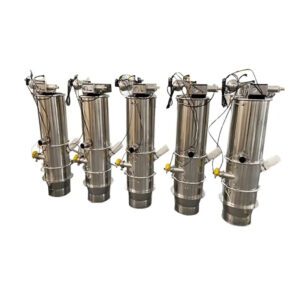
Vacuum conveyor is a high-efficiency pneumatic vacuum feeding and conveying system designed for automatic transfer of powder, granules and bulk solid materials. It uses compressed air to generate vacuum suction for dust-free, closed pipeline conveying. The system is widely used in packaging machines, mixers and injection molding equipment, improving automation, reducing labor cost and ensuring GMP-compliant hygienic operation in food, pharmaceutical and chemical production environments.
Vacuum conveyor, also known as vacuum feeder or pneumatic vacuum loader, is a high-efficiency closed conveying system that uses compressed air to generate vacuum suction for material transfer.
The system automatically feeds materials into production equipment such as packaging machines, mixers and processing machines. It is equipped with a filter back-blowing cleaning device, which ensures continuous operation by preventing powder blockage on filter surfaces.
With automatic level control, the system starts and stops intelligently based on material demand, enabling fully automated feeding and reducing manual labor in industrial production lines.
Working principle
Step 1: Compressed air enters vacuum generator to create negative pressure Step 2: Vacuum suction pulls material into conveying pipeline Step 3: Powder or granules are transported through closed pipeline system Step 4: Material enters vacuum hopper and air is separated through filter Step 5: Filter cleaning system uses compressed air pulse back-blowing Step 6: Material is discharged into receiving equipment automatically Step 7: Level sensor controls automatic start and stop operation cycle
Product Parameter Table
Delivery Capacity
About 6000 kg/h (at 10 m conveying distance)
Warehouse Volume
120 L
Operating Pressure
0.4–0.6 MPa
Motor Power
7.5 kW (Roots Fan)
Comparison Module
Feature
Vacuum Conveyor
Manual Feeding
Screw Conveyor
Automation
Fully automatic
None
Partial
Dust control
Fully sealed system
Poor
Medium
Hygiene level
GMP standard
Low
Medium
Efficiency
High
Low
Medium
Maintenance
Low
High
Medium
Material range
Powder & granules
Limited
Limited
Conclusion: Vacuum conveyor is the most efficient and hygienic solution for modern automated powder and granule feeding systems.
Main Features
GMP standard compliant vacuum conveying system
Dust-free enclosed pneumatic conveying structure
High efficiency powder and granule transport system
Compressed air pulse back-blowing filter cleaning system
Automatic material level control for intelligent operation
Low energy consumption and cost-saving design
Easy installation and simple operation system
Suitable for powder, granules and bulk solid materials
Continuous or automatic batch feeding capability
Stable performance for industrial production environments
Application Scenarios
for pharmaceutical powder contamination → ensures GMP compliant dust-free feeding into production equipment
for food powder manual handling → enables automatic and hygienic transfer into packaging machines
for plastic granule feeding inefficiency → provides stable and continuous injection molding machine feeding
for mixer loading delay → allows direct and automatic material input into mixing systems
for powder dust spillage → creates fully sealed conveying system for clean workshop environment
for bulk material handling labor cost → reduces manpower and improves automation efficiency
Why Choose Vacuum Conveyor
GMP compliant design ensures pharmaceutical and food safety standards
Fully enclosed system prevents dust pollution and contamination
Intelligent level control enables fully automatic operation
High efficiency reduces production cycle time
Compressed air system ensures stable and reliable performance
Filter back-blowing system prevents clogging and downtime
Suitable for multiple industries and production lines
Reduces labor cost and improves automation level
FAQ
Q1: What is vacuum conveyor used for in industrial production? A: It is used for dust-free automatic conveying of powder, granules and bulk materials into production equipment.
Q2: How does vacuum feeder conveyor system work? A: It uses compressed air vacuum suction to transfer materials through a closed pipeline system.
Q3: What materials can vacuum conveyor handle? A: It can handle powders, granules and bulk solid materials across multiple industries.
Q4: How does vacuum conveyor prevent filter clogging? A: It uses compressed air pulse back-blowing to clean filter surfaces automatically.
Q5: Is vacuum conveyor suitable for GMP production? A: Yes, it meets GMP standards and is ideal for pharmaceutical clean workshop use.
Q6: Can vacuum conveyor feed packaging machines automatically? A: Yes, it automatically feeds materials into packaging and processing machines.
Q7: How does level control work in vacuum conveyor system? A: Sensors detect material level and automatically start or stop the system.
Q8: What industries use vacuum conveyor systems? A: Pharmaceutical, food, chemical, plastic and manufacturing industries.
Q9: Is vacuum conveyor energy efficient? A: Yes, it uses compressed air with low energy consumption design.
Q10: What is advantage of vacuum conveyor over manual feeding? A: It improves efficiency, reduces labor cost and ensures dust-free operation.
Buying Guide
When selecting a vacuum conveyor system, consider:
Material type (powder, granules, bulk solids)
Required conveying capacity and production speed
GMP compliance requirement for food or pharmaceutical use
Filter system type and back-blowing cleaning efficiency
Level control automation and sensor configuration
Compatibility with packaging machines, mixers or injectors
Compressed air supply stability and energy consumption
Installation space and pipeline layout design
Choosing the right configuration ensures stable production and long-term cost efficiency.
Conclusion
The vacuum conveyor provides a reliable, dust-free and automated solution for powder and granule material handling. With its GMP-compliant design, high efficiency and intelligent control system, it significantly improves production performance while reducing labor cost.

 Heavy-Duty Cutting Tool Holder for CNC Milling High Clamping
2 × $98.00
Heavy-Duty Cutting Tool Holder for CNC Milling High Clamping
2 × $98.00 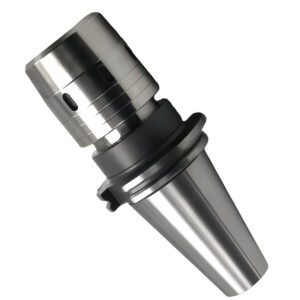 Heavy-Duty Cutting Tool Holder for CNC Milling High Clamping
 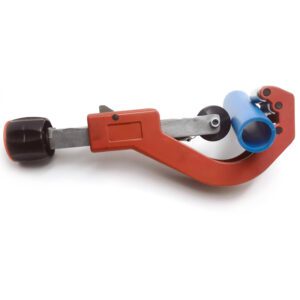 110mm PVC Cutting Tool for 4-Inch Pipe Quick Manual Operation
 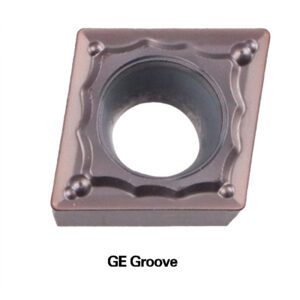 CNC blade diamond CCMT09T304 lathe stainless steel inner hole knife grain boring alloy blade
  CNC Lathe Cutting Tool for Turning Operations High Stability
  10x75mm 4-Flute Cutting Tool for CNC Milling High Rigidity
  2T/H Beer Pasteurizer Ultra-High Temperature Instant Sterilization System
  2T/H Milk Pasteurization Plant UHT Yogurt Production Line with Cryogenic Bath Pasteurizer