Two Stage Beer Wort Plate Heat Exchanger Price For Brewery
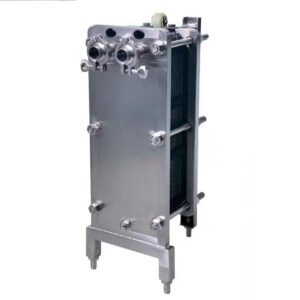
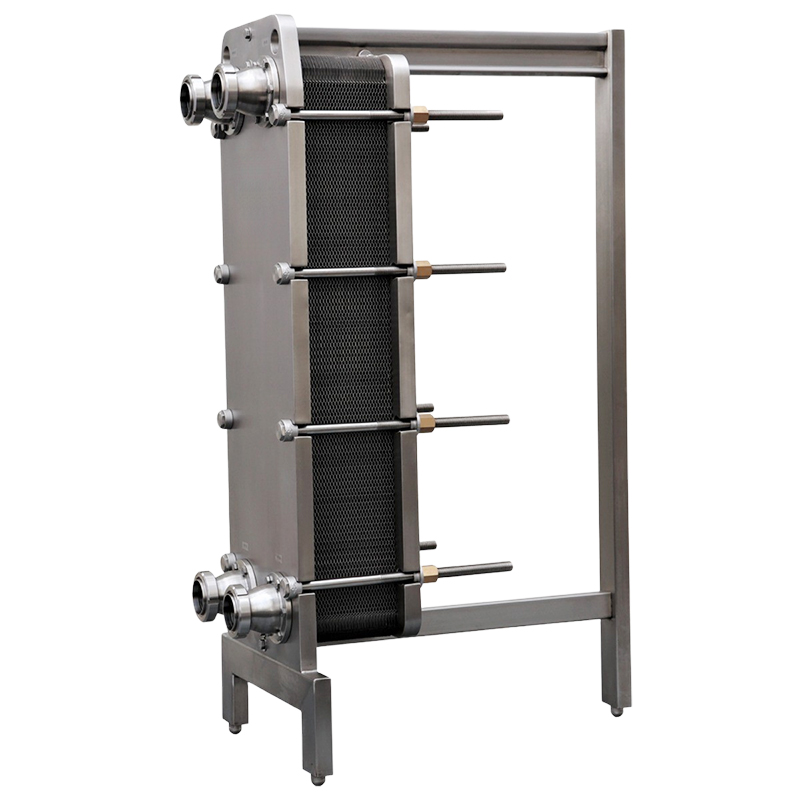
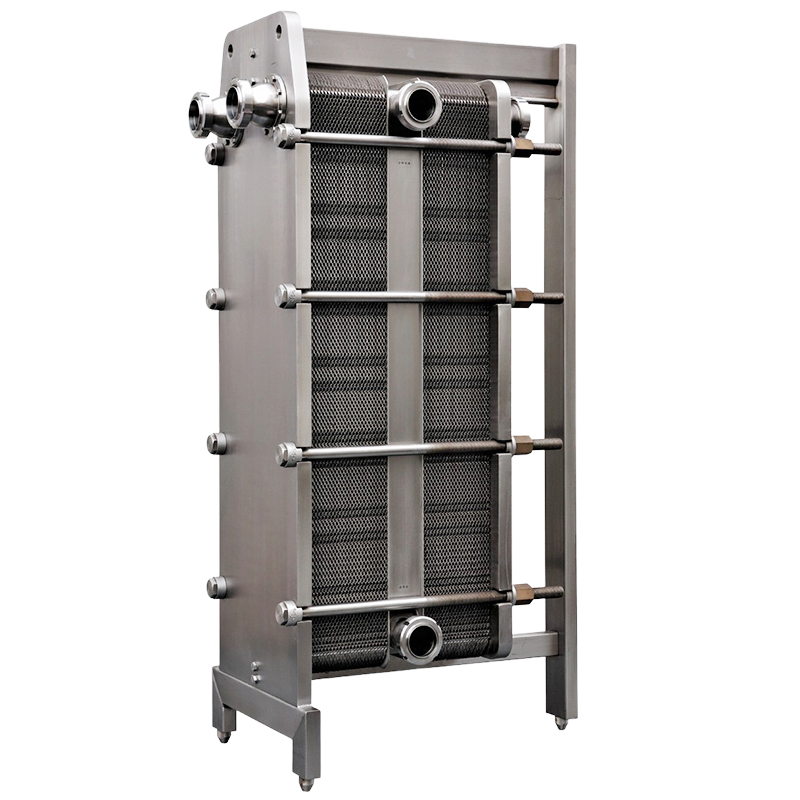
Plate heat exchanger. All sizes can be delivered with one or two stages.
The model with one stage is primarily designed for cooling with tap water.
The model with two stages are cooling with tap water in one zone and glycol from cooling system in the other zone.
Heated tap water can be reused for brewing. Different size depending on demand.
$2,999.00 $3,500.00
Heat transfer is the core function of a heat exchanger. The laws of thermodynamics provide the basic rules for heat-exchanger design:
1st Law of Thermodynamics: A heat exchanger cannot destroy or create energy, but there is always a balance between the hot and cold sides.
2nd Law of Thermodynamics: Heat flows from a hot medium to a cold medium to equalise the temperature difference.
Heat transfer is the exchange of heat between hot and cold bodies. There are three fundamental modes by which this occurs:
- Conduction
- Radiation
- Convection
Heat transfer in a heat exchanger is a combination of conduction and convection. Conduction and convection are calculated in each heat-transfer case.
Calculating heat transfer
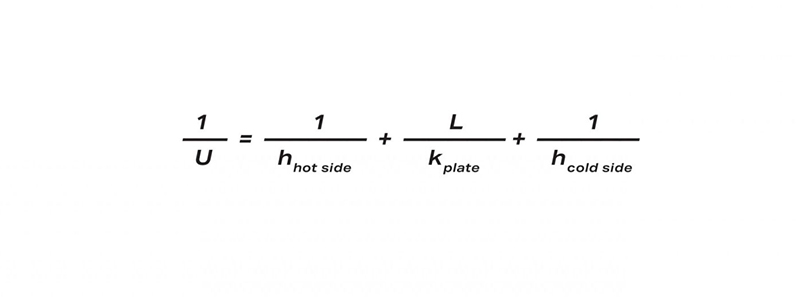
The total heat-transfer coefficient U is calculated by the sum of the convective heat transfer from both sides (hhot and hcold) of the heat-transfer surface and conduction (k) through the heat-transfer plate.
Description
- High efficiency plate frame heat exchanger
- Sanitary grade
- Stage: Single or Double as preferred
- Tri clamp connection
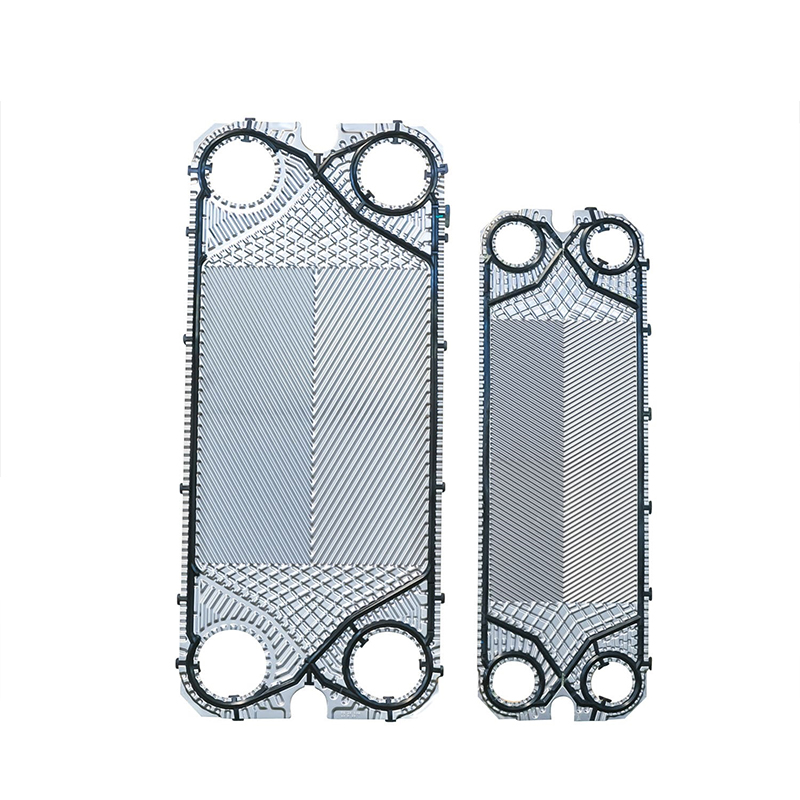
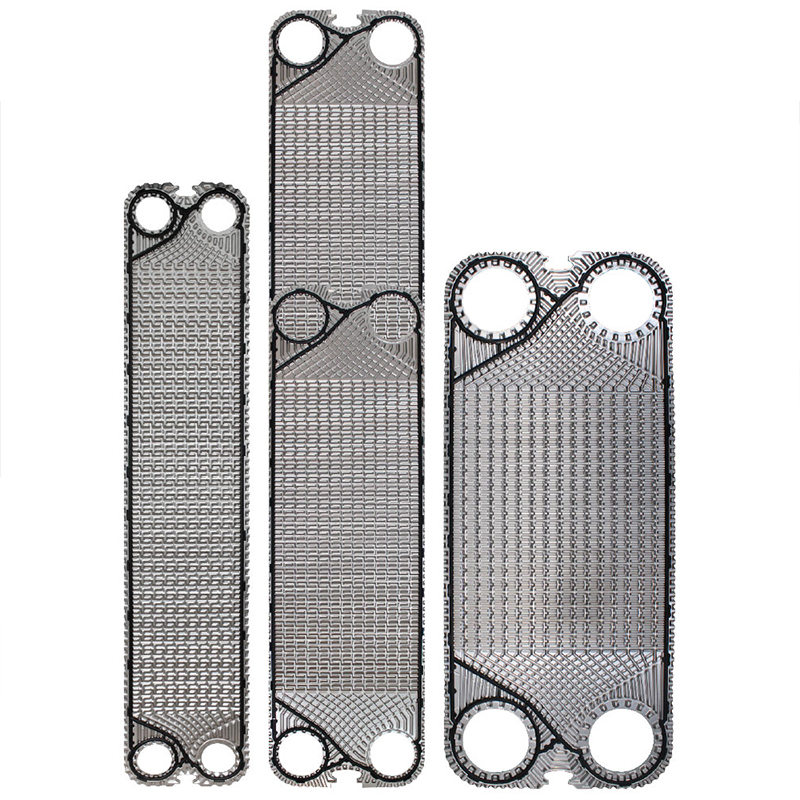
- EPDM gasket
- With thermometer for checking wort temp
- With aeration unit for oxygenation.
- Including: wort inlet/outlet, cold water inlet/outlet temp, flow rate etc
- The second stage is an option, in case customer use glycol for cooling.
- Triclamp connection
| Model | Capacity L/H | Max piping connection |
| 2M2 | 300 | 32mm |
| 3M2 | 500 | 32mm |
| 4M2 | 600 | – |
| 5M2 | 830 | – |
| 6M2 | 1,000 | 38mm |
| 8M2 | 1,300 | 38mm |
| 10M2 | 1,600 | 51mm |
| 12M2 | 2,000 | 51mm |
| 15M2 | 2,500 | 51mm |
| 18M2 | 3,000 | 51mm |
| 20M2 | 4,000 | 63mm |
| 25M2 | 5,500 | 63mm |
| 30M2 | 7,000 | 76mm |
| 40M2 | 8,000 | – |
Related products
-
Heat Exchanger & Accessories, HVAC & Refrigeration
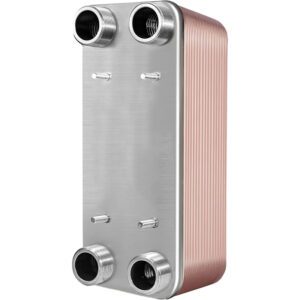
Plate Heat Exchanger, 5″x 12″ 40 Plates Water To Water Heat Exchanger, Copper/SS316L Stainless Steel Brazed Plate Heat Exchanger For Floor Heating, Water Heating, Snow Melting
 Heat Exchanger & Accessories, HVAC & Refrigeration
Plate Heat Exchanger, 5″x 12″ 40 Plates Water To Water Heat Exchanger, Copper/SS316L Stainless Steel Brazed Plate Heat Exchanger For Floor Heating, Water Heating, Snow Melting
- 【Premium Quality】Our plate heat exchanger is made of high quality 316L stainless steel which are brazed together by 99.9% copper at the edges for a reliable and rugged part to form a durable, integral piece that can resist leakage and withstand high pressure and temperature.
- 【Convenient For Use And Energy Saving】Smooth Thread makes a easy, quick, flexible hookup. Highly conductive and super-thin stainless steel plates make good performance and economy for heating transfer and cooling without electricity consumption and oxygen consumption.
SKU: n/a -
Pressure Transmitters
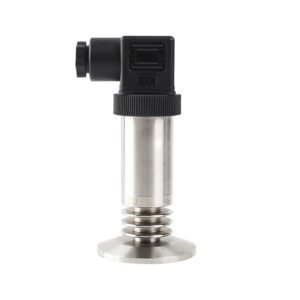
Pressure Transmitter Sanitary Atmospheric Pressure Transmitter 4-20mA Vacuum Pressure Transducer Oil Pressure Transducer
Pressure TransmittersPressure Transmitter Sanitary Atmospheric Pressure Transmitter 4-20mA Vacuum Pressure Transducer Oil Pressure Transducer
- Adopt 316L stainless steel diaphragm and full 316 stainless steel shell. Standard 316L stainless steel, compatible with a variety of liquids and gases.
- The output is stable and the accuracy is high. Low voltage power supply and low power consumption, the digital output can be powered by 3.6V or 5V. 4-20mA can be powered by 7V.
- Wide working temperature range, -30~125ºC working temperature range.
- Wide range of applications: Different accessories can be used to perform functions for different tasks, which can effectively improve work efficiency and completion results.
NOTE: Prices may vary by product model and material.
SKU: n/a -
Heat Exchangers
220v Plate Heat Exchanger – Industrial – High Safety, Custom Dimension
The Plate Heat Exchanger is suitable for industrial, HVAC, and other scenarios, featuring high-accuracy heat exchange. Made of 304/316 stainless steel, titanium, etc., it supports 220V voltage, with customizable flow and dimensions. It has high safety and eco-friendly features.
SKU: n/a -
Heat Exchangers
Heat Exchangers Efficient Plate Heat Exchanger, Energy Saver
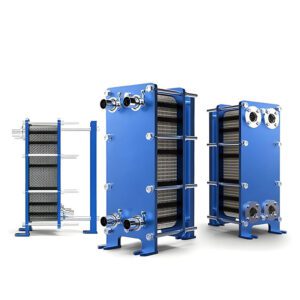
This Plate Heat Exchanger is a highly effective Heat Exchanger solution optimized for thermal management and energy saver purposes. Functionally, it uses corrugated metal plates assembled together to create channels, allowing two fluid streams to exchange heat rapidly without mixing. This configuration achieves extremely high thermal efficiency and a compact footprint. It is widely used in diverse scenarios, including optimizing central heating and HVAC systems, conducting pasteurization in the Food and Beverage industry, and performing process cooling and waste heat recovery in the Chemical and Power Generation sectors. Technologically, it features a gasketed or brazed plate structure, uses SUS304/316 stainless steel or specialized alloys for the plates, and relies on the narrow, turbulent flow created by the chevron pattern for efficient heat transfer.
SKU: n/a