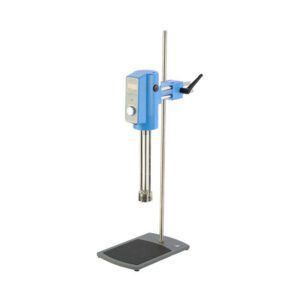
The Stainless Steel High Pressure Homogenizer is an advanced liquid processing machine designed for nano-level homogenization, emulsification, and dispersion. By forcing materials through a specially designed high-pressure homogenization chamber under ultra-high pressure, it effectively reduces particle size, improves product stability, and enhances texture. It is widely used in dairy, beverage, food ingredients, cosmetics, and pharmaceutical industries.
The Stainless Steel High Pressure Homogenizer is an advanced liquid processing machine designed for efficient homogenization, emulsification, and particle refinement. Using ultra-high-pressure technology, it forces liquid materials through a specially designed homogenization chamber to achieve uniform dispersion and improved stability. The machine effectively reduces particle size, prevents separation, and enhances product texture and quality. With hygienic stainless steel construction, it is widely used in dairy, beverage, food ingredient, cosmetic, and pharmaceutical industries for processing milk, juice, sauces, emulsions, and other liquid products.
Working principle
The Stainless Steel High Pressure Homogenizer works through ultra-high-pressure fluid processing technology. 1. Material Feeding
The liquid or suspension material enters the homogenizer through the inlet system and is prepared for high-pressure treatment. 2. High-Pressure Acceleration
The internal pump system increases the material pressure and forces the product into the specially designed homogenization chamber. 3. Nano Homogenization Process
When the material passes through the narrow area inside the chamber at high velocity, it is exposed to:
Strong shear forces
High-frequency turbulence
Collision impact
Pressure release effects
These forces break down larger particles and droplets into much smaller sizes. 4. Structural Modification
The processed material achieves:
More uniform particle distribution
Improved dispersion stability
Enhanced emulsification performance
Better product texture
5. Final Product Output
The homogenized product leaves the machine with improved quality characteristics and enhanced storage stability.
• Suitable for liquid, suspension, emulsion, and semi-liquid material processing.
• Improves product stability by reducing separation and sedimentation.
• Enhances texture, mouthfeel, and appearance of finished products.
• Provides consistent homogenization results during continuous operation.
• Flexible pressure adjustment allows adaptation to different material characteristics.
• Compact structure requires less installation space compared with traditional processing systems.
• Easy cleaning and maintenance design supports sanitary production environments.
• Suitable for high-value liquid products requiring advanced homogenization technology.
Application Scenarios
1. Dairy Products Processing
Used for milk, cream, yogurt, and dairy beverages to reduce fat globules, improve smoothness, and prevent separation during storage. 2. Beverage Production
Applied in juice, functional drinks, and nutritional beverages to improve suspension stability, color uniformity, and taste quality. 3. Sauce and Emulsion Manufacturing
Suitable for tomato sauce, salad dressing, mayonnaise, and seasoning products to achieve finer texture and better emulsification. 4. Plant-Based Beverage Production
Used for soy milk, oat milk, almond milk, and other plant-based drinks to improve stability and reduce sedimentation. 5. Food Ingredient Processing
Applied in liquid food ingredients, additives, and functional formulations requiring uniform particle distribution and improved consistency. 6. Cosmetics and Pharmaceutical Applications
Used for creams, lotions, nano emulsions, and other products requiring precise particle size control.
Why Choose This Equipment
✓ Provides advanced high-pressure homogenization for improved product quality.
✓ Achieves finer particle size and better material uniformity.
✓ Helps prevent separation and extends product stability.
✓ Improves taste, texture, and visual appearance of liquid foods.
✓ Designed with stainless steel hygienic construction for food applications.
✓ Suitable for a wide range of liquid and suspension materials.
✓ Supports modern production requirements with reliable continuous processing.
✓ Provides an efficient solution for high-value liquid product development.
FAQ
Q1: What is a high-pressure homogenizer used for?
A: A high-pressure homogenizer is used to refine particles, improve emulsification, and enhance stability of liquid and suspension materials.
Q2: How does ultra-high-pressure homogenization work?
A: The machine forces materials through a specially designed homogenization chamber at high pressure, creating shear, impact, and turbulence effects.
Q3: What products can be processed by this homogenizer?
A: It can process milk, beverages, sauces, emulsions, plant-based drinks, nutritional products, and other liquid materials.
Q4: What are the benefits of homogenization?
A: Homogenization improves product uniformity, reduces separation, enhances texture, and increases storage stability.
Q5: Is the equipment suitable for food production?
A: Yes. Stainless steel construction and hygienic design make it suitable for food and beverage processing.
Q6: What is the maximum working pressure of this homogenizer?
A: The equipment can be designed for ultra-high-pressure applications, with some models reaching up to 60000 psi.
Q7: Can this machine process high-viscosity products?
A: The suitable viscosity range depends on the specific model and material characteristics. Technical confirmation is recommended before selection.
Q8: What is the difference between a homogenizer and a mixer?
A: A mixer mainly combines materials, while a homogenizer uses high pressure to reduce particle size and improve dispersion stability.
Q9: Can the homogenizer be customized?
A: Yes. Capacity, pressure level, material configuration, and control system can be customized according to production requirements.
Q10: Which industries use high-pressure homogenizers?
A: They are widely used in food, dairy, beverage, cosmetics, pharmaceutical, and biotechnology industries.

 Heavy-Duty Cutting Tool Holder for CNC Milling High Clamping
2 × $98.00
Heavy-Duty Cutting Tool Holder for CNC Milling High Clamping
2 × $98.00 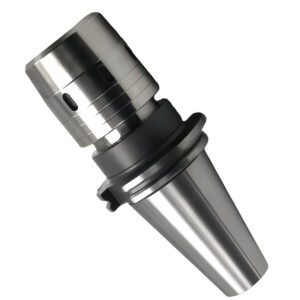 Heavy-Duty Cutting Tool Holder for CNC Milling High Clamping
 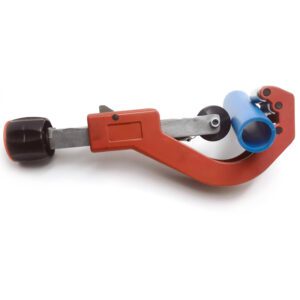 110mm PVC Cutting Tool for 4-Inch Pipe Quick Manual Operation
  2T/H Beer Pasteurizer Ultra-High Temperature Instant Sterilization System