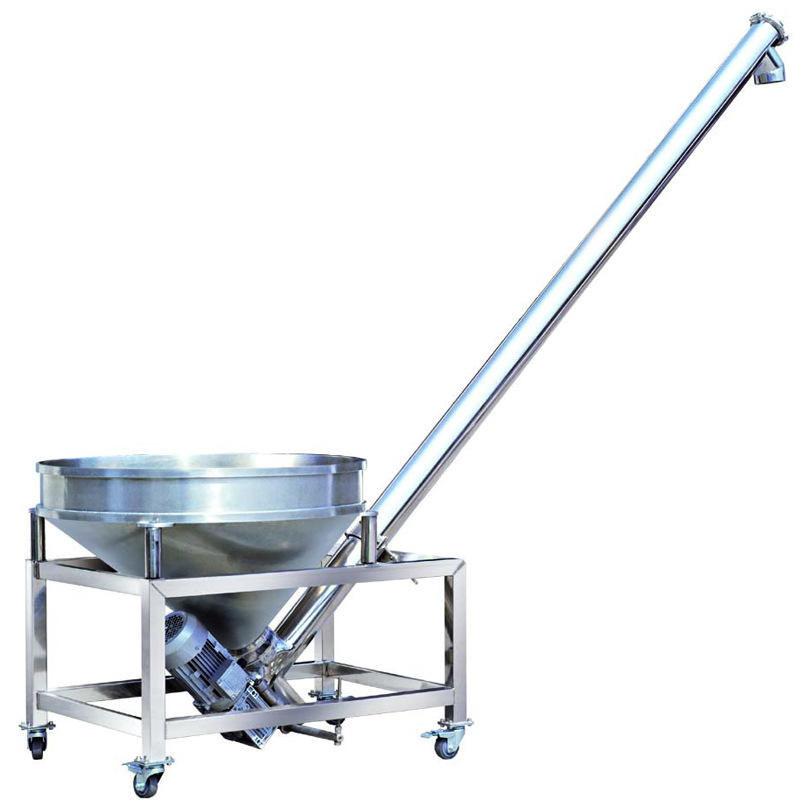
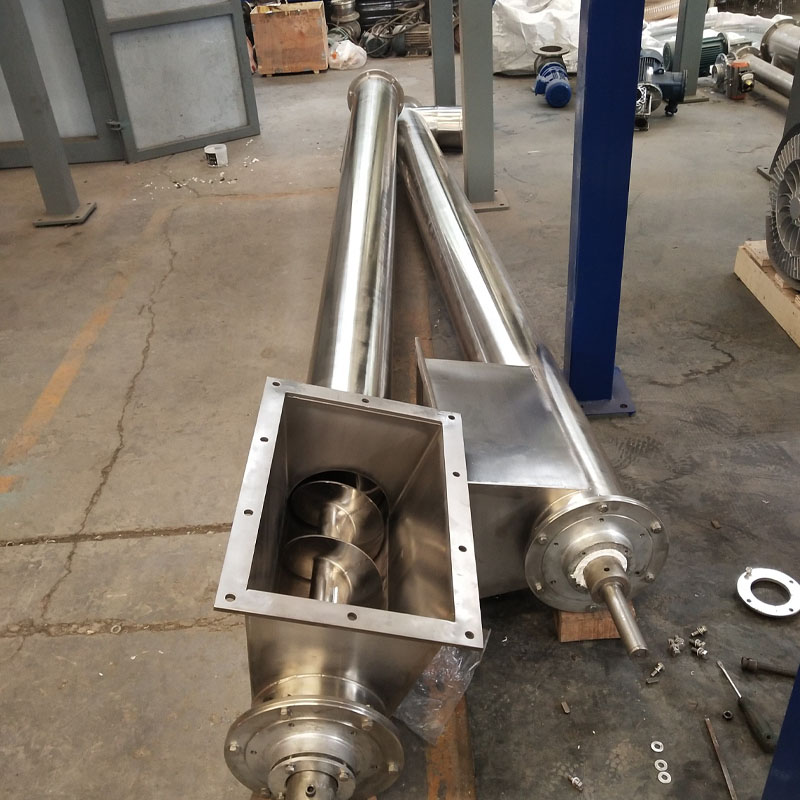
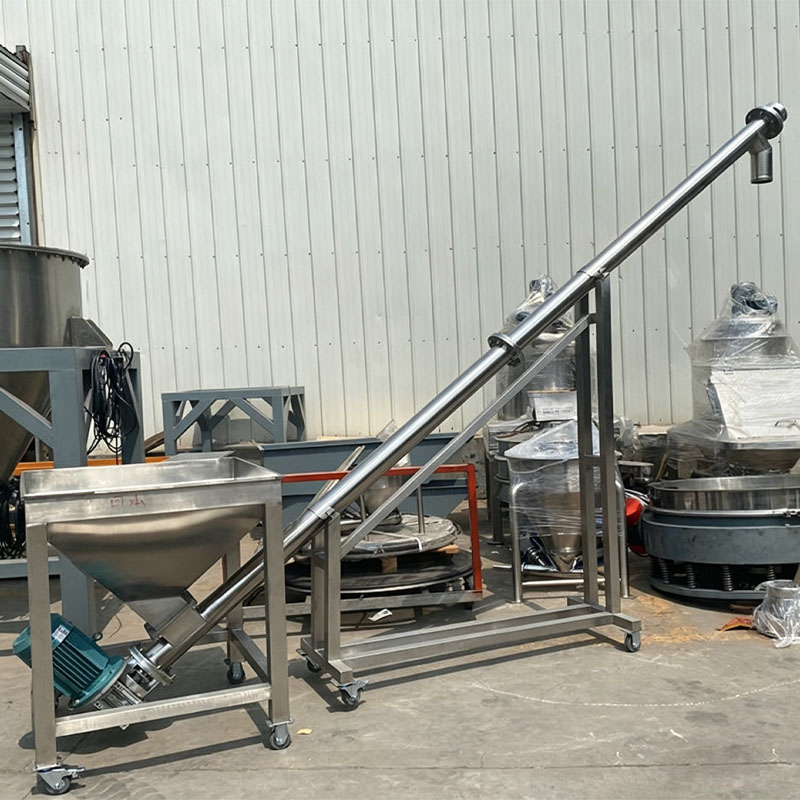
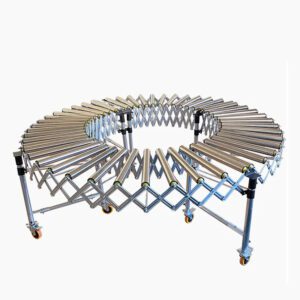
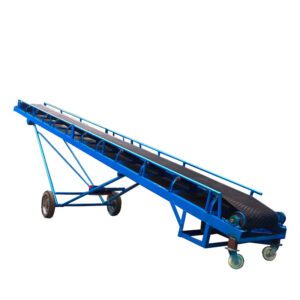
Screw conveyor is an efficient material handling system designed for conveying powder, granules and small bulk materials through horizontal, inclined or vertical transport. Driven by motorized screw rotation, it ensures stable and continuous feeding performance regardless of material flowability. With a compact structure, reliable operation and flexible installation, this conveyor is widely used in food, pharmaceutical, chemical and plastic industries for automated material transfer and vertical lifting applications.
Screw conveyor, also known as spiral conveyor or screw feeder, is a widely used bulk material conveying equipment driven by motorized screw rotation. It transports materials by pushing them forward along the screw blade inside a closed or semi-closed trough.
This system supports horizontal, inclined and vertical conveying, making it highly adaptable for different production layouts. It is suitable for handling powders, granules, small blocks and loose materials in continuous or batch processes.
Due to its simple structure, stable performance and wide material compatibility, it is commonly used in food processing, pharmaceuticals, chemicals, plastics and industrial production systems.
Working principle
Step 1: Motor drives the screw shaft to rotate continuously Step 2: Screw blades push material forward along the trough Step 3: Material is compressed and moves in axial direction Step 4: Continuous rotation ensures stable material flow Step 5: Material is conveyed horizontally, inclined or vertically Step 6: Closed structure prevents dust leakage during conveying Step 7: Material reaches discharge outlet at the end Step 8: System maintains continuous feeding for production process
Product Parameter Table
Conveying Tube Diameter
273 mm
Power
2.2–4 kW
Hopper Volume
200 L or customized
Angle
30–60 °
Why Choose Screw Conveyor
Provides reliable and continuous bulk material conveying
Suitable for various materials regardless of flow characteristics
Supports flexible installation for different production layouts
Enables vertical feeding and height lifting in compact spaces
Reduces manual handling and improves production efficiency
Easy to integrate into automated production systems
Low maintenance with durable mechanical structure
Widely used across multiple industries
Main Features
Motor-driven screw rotation ensures continuous and stable material conveying
Suitable for powder, granules, small blocks and loose bulk materials
Supports horizontal, inclined and vertical conveying configurations
Not affected by material density or flowability characteristics
Compact structure for easy installation in limited spaces
Enables vertical feeding and height lifting in production lines
Reduces conveying distance and simplifies process layout
Reliable operation with low maintenance requirements
Compatible with closed design for dust control and hygiene
Flexible integration with upstream and downstream equipment
Comparison Module
Feature
Screw Conveyor
Pneumatic Conveyor
Belt Conveyor
Conveying method
Mechanical screw
Airflow suction
Belt transport
Material type
Powder, granules
Powder, light bulk
Bulk solid
Vertical conveying
Yes
Yes
Limited
Dust control
Good (closed type)
Excellent
Medium
Energy consumption
Medium
Low–medium
Low
Maintenance
Low
Medium
Low
Cost
Moderate
Higher
Lower
Conclusion: Screw conveyor is ideal for stable, controlled and cost-effective conveying of bulk materials.
Application Scenarios
for powder conveying → ensures stable and continuous transport of fine materials with reduced dust leakage
for vertical feeding → enables efficient material lifting to higher equipment levels in limited space
for food processing → provides hygienic conveying of flour, sugar and powdered ingredients
for chemical industry → handles granular and powder materials with reliable and consistent flow
for plastic processing → transports resin particles and granules efficiently in production lines
for automated production → connects multiple machines for continuous material feeding and transfer
FAQ
Q1: What is screw conveyor used for in industrial production? A: It is used for conveying powder, granules and bulk materials in automated systems.
Q2: Can screw conveyor transport materials vertically? A: Yes, it can be designed for vertical feeding and lifting applications.
Q3: Is screw conveyor affected by material flowability? A: No, it can handle materials regardless of flow characteristics.
Q4: What industries commonly use screw conveyors? A: Food, pharmaceutical, chemical and plastic industries widely use it.
Q5: What materials are suitable for screw conveyor systems? A: Powder, granules, small blocks and loose bulk materials are suitable.
Q6: Does screw conveyor reduce conveying distance in production lines? A: Yes, it helps optimize layout and reduce material transport distance.
Q7: Can screw conveyor be used in enclosed systems? A: Yes, closed designs are available for dust-free and hygienic conveying.
Q8: Is screw conveyor suitable for automated production lines? A: Yes, it integrates easily with upstream and downstream equipment.
Buying Guide
When selecting a screw conveyor, consider:
Material type (powder, granules, small blocks)
Required conveying capacity and distance
Installation type (horizontal, inclined or vertical)
Need for dust control (open or closed design)
Required discharge method and number of outlets
Space limitations and plant layout
Material temperature and environmental conditions
Integration with existing production equipment
Selecting the right configuration ensures efficient operation and long-term reliability.
Conclusion
Screw conveyor is a versatile and efficient solution for bulk material handling, offering stable and continuous conveying across horizontal, inclined and vertical applications. With its simple structure, strong adaptability and reliable performance, it is widely used in industrial production systems for powder and granular material transfer. This equipment enhances process efficiency, reduces manual labor and provides a practical solution for modern automated conveying requirements.

 Heavy-Duty Cutting Tool Holder for CNC Milling High Clamping
2 × $98.00
Heavy-Duty Cutting Tool Holder for CNC Milling High Clamping
2 × $98.00 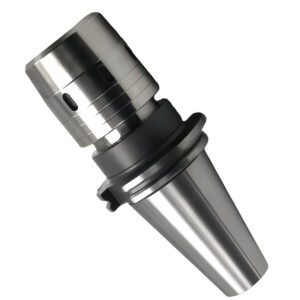 Heavy-Duty Cutting Tool Holder for CNC Milling High Clamping
 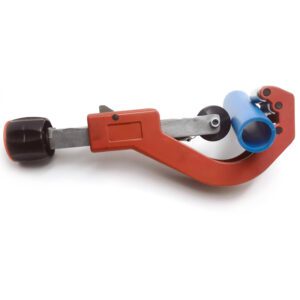 110mm PVC Cutting Tool for 4-Inch Pipe Quick Manual Operation
 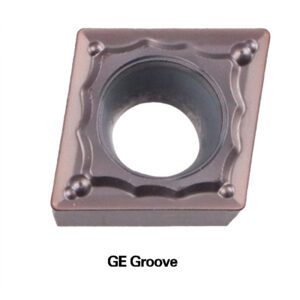 CNC blade diamond CCMT09T304 lathe stainless steel inner hole knife grain boring alloy blade
 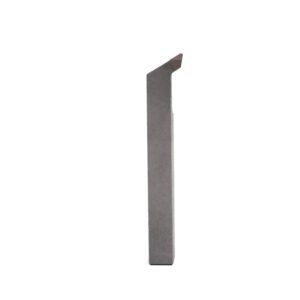 CNC Lathe Cutting Tool for Turning Operations High Stability
 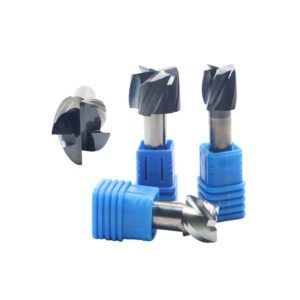 10x75mm 4-Flute Cutting Tool for CNC Milling High Rigidity
  2T/H Beer Pasteurizer Ultra-High Temperature Instant Sterilization System