Pneumatic Vacuum Conveyor Solution for Powder Feeding Process
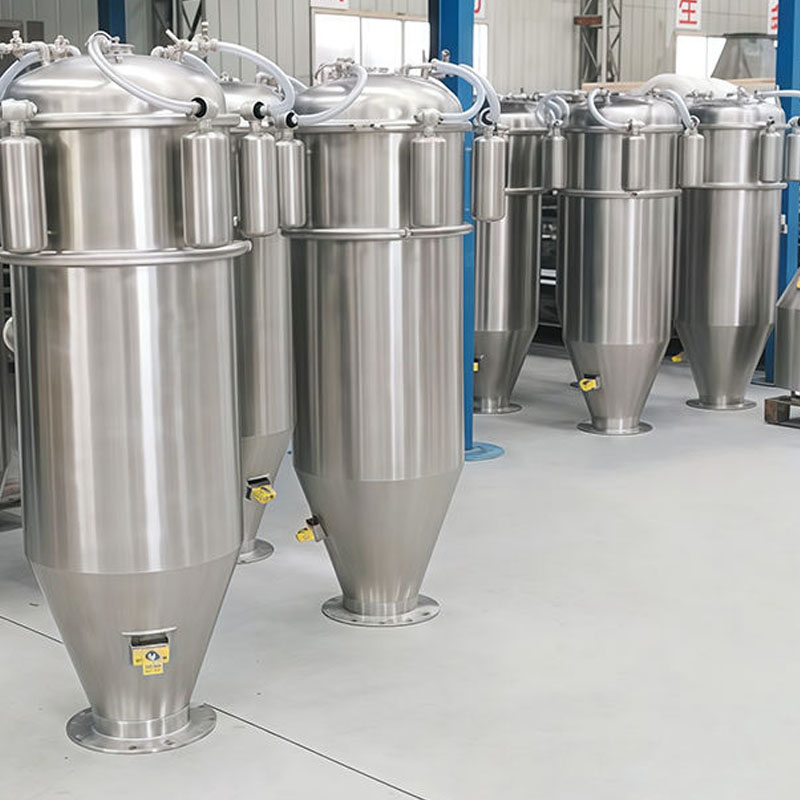
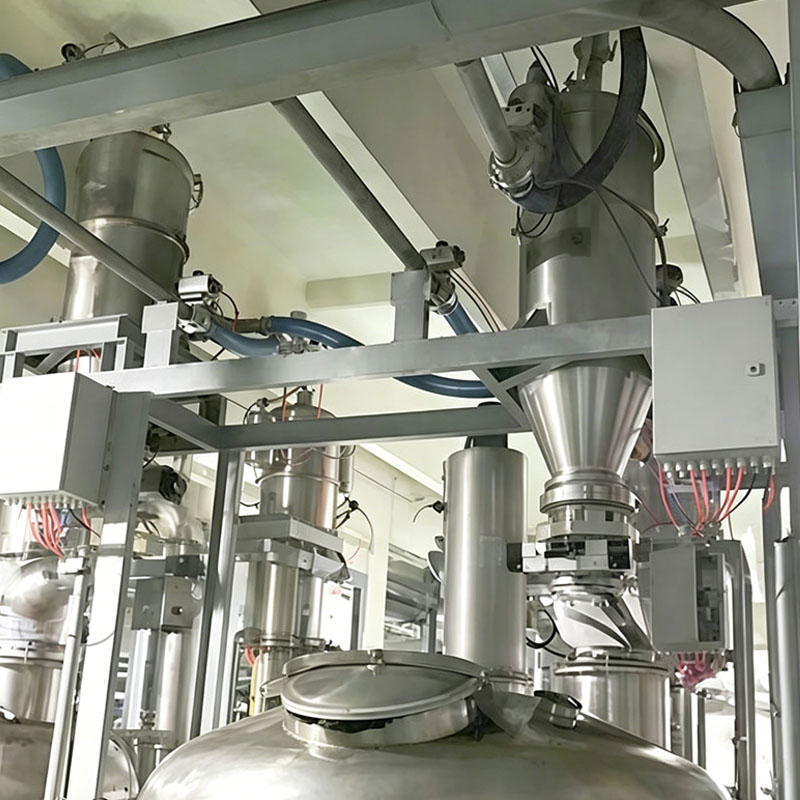
Pneumatic vacuum conveyor is a fully enclosed material handling system designed for efficient transfer of powders, granules, and small pellets. It uses negative pressure airflow to transport materials through sealed pipelines, ensuring dust-free, contamination-free, and automated conveying. Widely used in food, pharmaceutical, chemical, and plastic industries, it improves production efficiency while reducing manual labor and maintaining product purity.
Compare
Product introduction of Pneumatic Vacuum Conveyor
Working principle
Step 1: Vacuum Generation
The vacuum pump generates negative pressure inside the sealed pipeline system.
Step 2: Material Feeding
Powders or granules are introduced into the suction inlet from storage or processing equipment.
Step 3: Airflow Transport
Negative pressure airflow pulls materials into the pipeline system.
Step 4: Pipeline Conveying
Materials are transported through stainless steel enclosed pipelines safely.
Step 5: Separation Process
At the discharge unit, air and materials are separated efficiently.
Step 6: Material Discharge
Materials fall into target equipment such as mixers, hoppers, or packaging machines.
Step 7: System Reset
The system automatically resets for the next conveying cycle.
Product Parameter Table
| Parameter | Specification |
| Size | φ1400 × 3250 mm |
| Capacity | ≤6000 kg/h |
| Power | 45 kW |
| Filter Area | 22 m² |
| Material | 304/316L |
Decision Table
| Feature | Pneumatic Vacuum Conveyor | Screw Conveyor | Belt Conveyor |
|---|---|---|---|
| Material Type | Powder, granules, pellets | Powder, granular | Bulk solids |
| System Type | Fully enclosed vacuum system | Mechanical screw system | Open mechanical system |
| Cleanliness | Excellent (dust-free) | Medium | Low |
| Material Safety | High (no contamination) | Medium | Medium |
| Automation Level | High (PLC controlled) | Medium | Medium |
| Flexibility | Very high (multi-point feeding) | Low | Medium |
| Maintenance | Low | High wear parts | Medium |
| Industry Suitability | Food, pharma, chemical, plastic | Industrial bulk handling | Logistics, mining |
Main Features
- Vacuum-driven transport ensures stable, controlled material movement without exposure
- Modular conveying layout adapts easily to multi-machine production environments
- Integrated filtration and cyclone separation improves powder recovery efficiency
- Automatic start-stop cycle reduces energy waste during idle production phases
- Optional anti-bridging vibration system supports sticky or cohesive powders
- Fully sealed pipeline design eliminates dust escape and cross-contamination risk
- Intelligent control system synchronizes feeding, conveying, and discharge operations
- Stainless steel construction supports hygienic and corrosion-resistant industrial use
Why Choose This System
- Reduces manual handling and improves overall production automation level
- Maintains material purity by eliminating external environmental exposure
- Supports complex factory layouts with flexible pipeline routing capability
- Enhances production continuity with stable vacuum-based conveying control
- Low maintenance design reduces downtime and operational service cost
- Handles a wide range of materials from fragile powders to granular solids
- Improves workplace safety by minimizing dust exposure and contamination risks
- Integrates seamlessly with modern industrial automation and control systems
Application Scenarios
- Automated feeding systems in food production lines such as flour and sugar processing
- Pharmaceutical manufacturing for active ingredient and fine powder transfer operations
- Chemical processing plants handling pigments, additives, and resin powders
- Plastic production facilities conveying pellets, flakes, and polymer powders
- Packaging industry material supply systems for high-speed filling machines
- Mixing and blending systems requiring consistent batch material feeding
- Cement and mineral processing plants transporting fine dry bulk materials
- Multi-floor factory layouts requiring flexible vertical and horizontal transfer
Buying Guide
When selecting a pneumatic vacuum conveyor system, consider:
- Material type (powder, granule, pellet, fragile or sticky)
- Required conveying capacity (kg/h or t/h)
- Distance and height of conveying pipeline
- Number of feeding and discharge points
- Automation level and PLC integration requirement
- Stainless steel grade (304 or 316L)
- Hygiene requirements for food or pharmaceutical use
- Compatibility with existing production equipment
FAQ
Q1: What is a pneumatic vacuum conveyor used for?
A: It is used for dust-free and automated transfer of powders, granules, and pellets between industrial processing equipment.
Q2: How does a vacuum conveying system work?
A: It uses negative pressure airflow to suck materials through sealed pipelines and deliver them to target equipment.
Q3: Can pneumatic vacuum conveyor handle plastic pellets?
A: Yes, it is widely used for plastic resin pellets and powder material transfer.
Q4: Is pneumatic conveyor suitable for food industry?
A: Yes, stainless steel enclosed design ensures hygienic and contamination-free conveying.
Q5: What industries use pneumatic vacuum conveyors?
A: Food, pharmaceutical, chemical, and plastic industries commonly use it.
Q6: Does vacuum conveyor reduce dust pollution?
A: Yes, the fully enclosed system eliminates dust leakage during operation.
Q7: Can it connect to multiple machines?
A: Yes, it can be integrated with mixers, grinders, and packaging machines.
Q8: Is pneumatic vacuum conveyor fully automated?
A: Yes, it supports automatic feeding, conveying, and discharge cycles.
Conclusion
The pneumatic vacuum conveyor system is a highly efficient, automated, and dust-free material handling solution designed for modern industrial production. With its sealed conveying structure, intelligent control system, and flexible integration capability, it significantly improves production efficiency while ensuring product purity and operational safety.
It is an ideal solution for food, pharmaceutical, chemical, and plastic industries requiring reliable and scalable material transfer systems.
Contact us to get your quotation now.
Get in touch with our engineering team.
Related products
-
Pneumatic Conveying Equipment/Pneumatic Conveyor
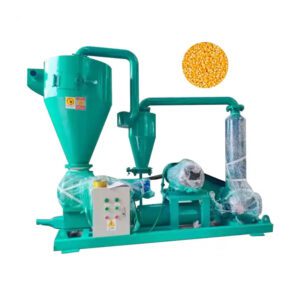
Farm Conveying Equipment Vacuum Corn Rice Soybean Unloading Truck Loading Conveyor Pneumatic Dust Conveyor
 Pneumatic Conveying Equipment/Pneumatic Conveyor
Farm Conveying Equipment Vacuum Corn Rice Soybean Unloading Truck Loading Conveyor Pneumatic Dust Conveyor
A pneumatic conveyor ( grain suction machine) is an advanced material handling machinery, that can convey in all directions such as horizontally, inclined, and vertically, It can transport granular/particle materials such as rice, rice, wheat, corn, sorghum, peanuts, soybeans, plastic pellet, resin, barley, chips, and other granular..When conveying grains, it has the effect of removing impurities and dehydrating grains.
SKU: n/a -
Pneumatic Conveying Equipment/Pneumatic Conveyor
Vacuum Dry Powder Conveying Feeder Conveyor Unit Feeding Pump Machine Equipment Transporting Delivery Transfer Suction Systems
Pneumatic Conveying Equipment/Pneumatic ConveyorVacuum Dry Powder Conveying Feeder Conveyor Unit Feeding Pump Machine Equipment Transporting Delivery Transfer Suction Systems
Working principle:
The vacuum conveyor is comprised of a vacuum (no oil, no water) and, a feeding tube.PE filter, vacuum hopper, automatic control device, pneumatic discharging device compress air device, etc.SKU: n/a