Corn Processing Line Solution for Industrial Maize Shelling
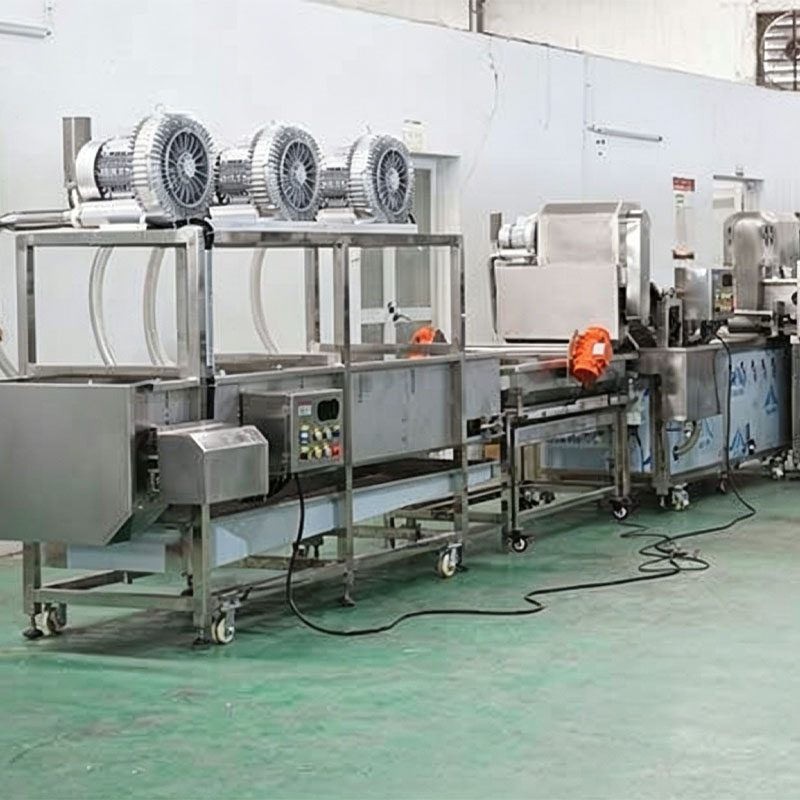
The corn processing line is a fully automatic industrial solution designed for sweet corn, maize kernels, and corn-based food production. It integrates corn threshing, blanching, washing, dewatering, and air drying in a continuous workflow. This system ensures high efficiency, low kernel damage, and stable production output. It is widely used for corn snacks, frozen corn, canned corn, and ready-to-eat corn products in food processing industries.
Compare
Corn Processing Line Product Introduction
The industrial corn processing line is a complete automated production system designed for efficient corn kernel processing. It transforms fresh sweet corn into high-quality processed products such as corn salad, frozen corn, canned corn, and corn snacks.
The system integrates multiple machines including corn thresher, conveyor system, blanching machine, bubble washing machine, vibrating dewatering unit, and air drying machine. Each stage is designed for continuous operation, ensuring stable production and hygienic processing.
This maize processing solution is widely used in food factories, agricultural processing plants, and frozen food production lines.
Working principle
Step 1: Corn feeding and threshing
Fresh sweet corn is fed into the thresher, where kernels are separated from cobs with adjustable depth control.
Step 2: Conveying system transfer
Corn kernels are transported via adjustable conveyor belt to the blanching stage.
Step 3: Blanching sterilization
Corn is processed in hot water or steam blanching machine for enzyme inactivation and sterilization.
Step 4: Cooling and washing
Bubble washing system removes impurities and rapidly cools blanched corn kernels.
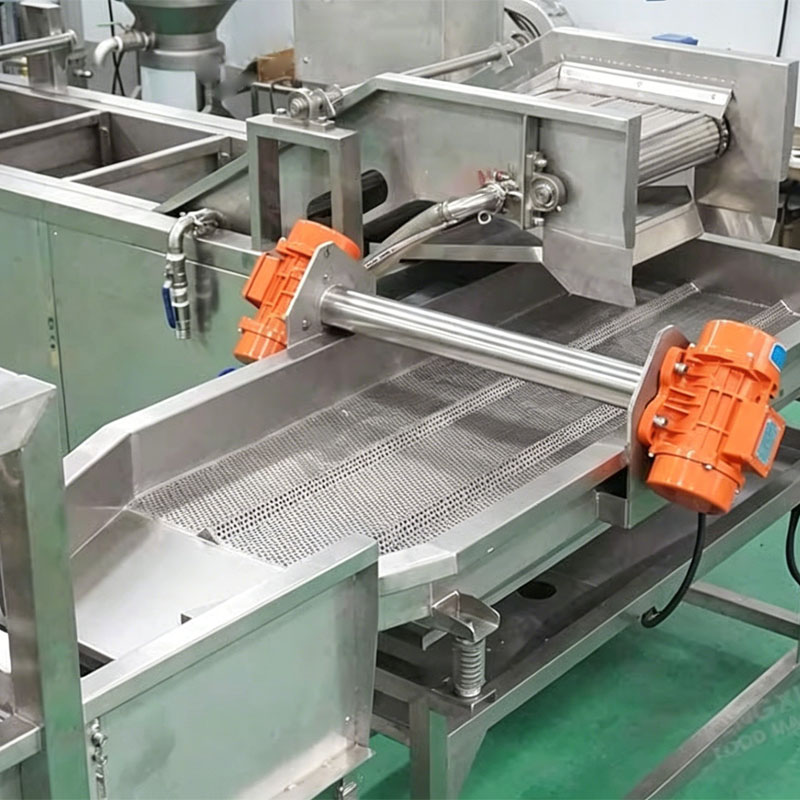
Step 5: Vibrating dewatering
High-frequency vibration removes 70–80% surface moisture efficiently.
Step 6: Air drying process
Hot air circulation reduces moisture content to below 10% for packaging or storage.
Product Parameter Table
| Machine | Dimension | Voltage | Power | Capacity |
| Corn Thresher | 4180×970×1280 mm | 220 V | 3.9 kW | 800-1500 kg/h |
| Blanching Machine | 3600×1000×1300 mm | 220 V/380 V | 3.5 kW | 500-1500 kg/h |
| Bubble Washing Machine | 2500×900×1140 mm | 220 V/380 V | 3.2 kW | 500-700 kg/h |
| Vibration Dewatering Machine | 1800×1170×1410 mm | 220 V/380 V | 0.5 kW | – |
| Air Drying Machine | 5000×810×1250 mm | 380 V | 3.85 kW | 1-2 t/h |
Buying Guide
When selecting a corn processing line, consider:
- Required production capacity (kg/h or ton/day)
- Level of automation (fully automatic or semi-automatic)
- Material selection (stainless steel 304 or 316)
- Drying and dewatering efficiency requirements
- Product type (frozen corn, canned corn, snack processing)
- Factory layout and customization needs
Corn Processing Line vs Manual Processing
- Automatic line ensures consistent output quality, manual processing varies greatly
- Industrial system reduces labor dependency, manual work requires high manpower
- Continuous processing improves efficiency, manual method causes production delays
- Automated system improves hygiene control, manual processing increases contamination risk
Corn Processing Line vs Semi-Automatic System
- Fully automatic line supports continuous operation without interruption
- Semi-automatic systems require frequent operator intervention
- Automatic system provides stable production output
- Semi-automatic system limits large-scale industrial efficiency
Main Features
- Automatic corn processing line ensures continuous industrial production efficiency
- Adjustable corn thresher reduces kernel damage and improves separation accuracy
- High-temperature blanching system preserves color and improves food safety standards
- Bubble washing machine removes impurities using air and high-pressure spraying system
- Vibrating dewatering system efficiently removes 70–80% surface moisture
- Hot air drying system reduces moisture content for long-term storage stability
- Stainless steel structure ensures hygiene and corrosion resistance
- Modular design supports customized production capacity and layout configuration
Application Scenarios
- For fresh corn post-harvest spoilage → provides fast processing and extended shelf life
- For manual corn shelling inefficiency → delivers automated high-speed kernel separation
- For food contamination risks → ensures hygienic washing and sterilization process
- For high moisture corn storage issues → enables efficient dewatering and drying
- For frozen food production demand → supports stable corn freezing preparation line
- For large-scale food factory production → ensures continuous automated processing workflow
Why Choose This Corn Processing Line
- Provides fully automated continuous corn production system
- Reduces labor cost and improves industrial processing efficiency
- Ensures consistent product quality and low kernel damage rate
- Supports multiple corn product types including frozen and canned corn
- Designed for food-grade hygiene standards and safety compliance
- Flexible customization for different production capacities and layouts
FAQ
Q1: What is a corn processing line used for in food industry?
A: It is used to process fresh corn into kernels for frozen food, snacks, and canned products.
Q2: How does a corn processing line improve production efficiency?
A: It automates shelling, washing, blanching, and drying in a continuous workflow.
Q3: What machines are included in a maize processing line?
A: It includes thresher, conveyor, blanching machine, washing unit, dewatering, and drying system.
Q4: What products can be made from corn processing line?
A: Corn snacks, frozen corn, canned corn, and corn salad products.
Q5: How does corn blanching improve product quality?
A: It inactivates enzymes, sterilizes corn, and improves storage stability.
Q6: What is the moisture level after air drying process?
A: Typically reduced to below 10% for safe packaging and storage.
Q7: Is corn processing line suitable for large factories?
A: Yes, it is designed for continuous industrial-scale food production.
Q8: What material is used in corn processing equipment?
A: Food-grade stainless steel is used for hygiene and durability.
Conclusion
The industrial corn processing line is a complete automated solution for modern maize and sweet corn processing industries. It integrates shelling, washing, blanching, dewatering, and drying into one continuous system. With high efficiency, low labor cost, and stable product quality, it is an ideal solution for food processing factories aiming for scalable and hygienic production.
Contact us to get your quotation now.
Get in touch with our engineering team.
Related products
-
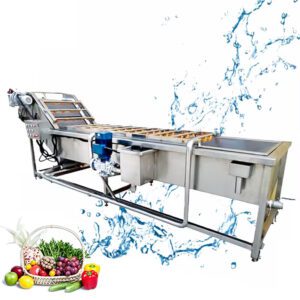
Fruit And Vegetable Processing Line
Commercial Industrial Bubble Fruit Avocado Mango Vegetable Potato Washing Machine Vegetable Production Line
 Fruit And Vegetable Processing Line
Commercial Industrial Bubble Fruit Avocado Mango Vegetable Potato Washing Machine Vegetable Production Line
Features: The seafood cleaning machine uses with arc angle with the cone bottom design, easy to clean, with a high-pressure spray, better cleaning effect, wider range.
The machine is widely used for cleaning carrots, hawthorn, apple, orange, mango, jujube,date etc. demanding shape materials, suitable for: vegetables, fruits, aquatic products and other granular, leaf, root and other products.SKU: n/a -
Food Processing Industry, Fruit And Vegetable Processing Line
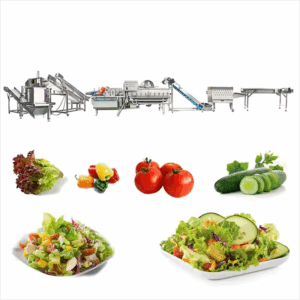
Fully automatic salad production line Fruit and vegetable processing production line
Food Processing Industry, Fruit And Vegetable Processing LineFully automatic salad production line Fruit and vegetable processing production line
Processing steps:
Vegetable cutter → lifting and feeding (to vegetable washer) → washing and decontamination → secondary cleaning → lifting and transport (to dehydrator) → dehydration → final outlet with conveyorSKU: n/a -
Fruit And Vegetable Processing Line
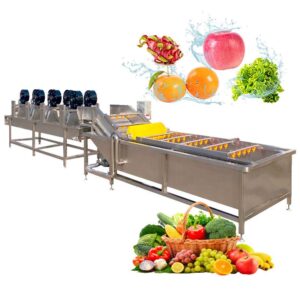
Industrial Conveyor Belt Fruit and Vegetable Washing Machine
Fruit and vegetable washers are highly efficient industrial-grade cleaning equipment that utilizes various technologies, including bubble tumbling, high-pressure spraying, and ultrasonic technology, to thoroughly remove sediment, dirt, and pesticide residue from the surfaces of fruits and vegetables. Constructed of food-grade stainless steel, the equipment is highly hygienic and durable. Its key feature is its ability to perform continuous, high-volume cleaning operations, significantly improving cleaning efficiency and preserving the freshness and integrity of fruits and vegetables to the greatest extent possible.
Fruit and vegetable washers are a critical component of modern food processing lines. They are widely used in central kitchens, vegetable processing and distribution centers, and large-scale food factories (such as frozen food plants, pickle factories, and juice and beverage plants). Whether washing leafy vegetables (such as lettuce and spinach) or root vegetables (such as potatoes and carrots), these machines meet stringent hygiene standards and high production capacity requirements, making them an essential choice for ensuring food safety and improving processing efficiency.SKU: n/a -
Fruit And Vegetable Processing Line
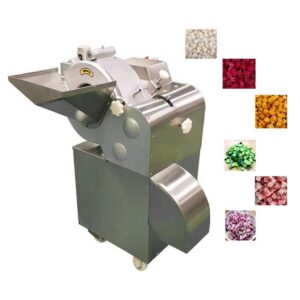
Multifunctional Automatic Vegetable and Fruit Dicing Machine
The vegetable and fruit dicer is a highly efficient food cutting machine that utilizes a three-dimensional cutting principle to precisely and quickly cut roots, tubers, and portions of fruit into uniform, aesthetically pleasing cubes or cuboids. Capable of cutting in a variety of sizes, the machine delivers smooth, high-quality cuts, resists breakage, and effectively enhances product standardization. The machine’s main body is constructed of food-grade stainless steel, making it durable and easy to disassemble and clean, meeting strict food hygiene standards.
Dicers are widely used in the food industry, which prioritizes efficiency and ingredient standardization. They are core equipment for batch processing in central kitchens, vegetable processing plants, and large-scale group catering operations, producing standardized vegetable and fruit dices, salad dices, and fillings. They are also suitable for frozen food factories, pickle and pickle factories, and preserved/canned fruit processing plants, meeting the precise shape and size requirements of various fruit and vegetable ingredients.SKU: n/a