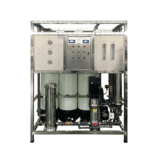
Tomato Paste Production Line for Food Processing Plant Price
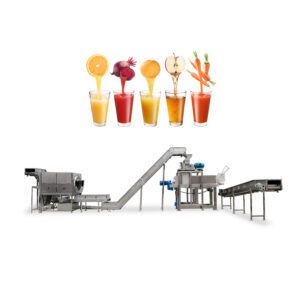
Tomato paste production line is a fully automatic industrial processing system designed to convert fresh tomatoes into high-quality tomato paste, ketchup, sauce, juice, and jam products. The system integrates washing, sorting, crushing, pulping, concentrating, sterilizing, and aseptic filling processes, ensuring high efficiency, stable quality, and large-scale production for food processing plants and beverage industries.
Compare
Product introduction from Tomato Paste Production Line
Tomato paste production line is widely used in food processing factories to transform fresh tomatoes and other fruits into concentrated products such as tomato paste, ketchup, sauces, and fruit jams.
The system supports both hot break and cold break processing technologies, allowing manufacturers to control viscosity, flavor, and color according to product requirements. It includes washing, crushing, juicing, evaporation, homogenization, sterilization, and aseptic filling systems.
With production capacities ranging from 100 kg/h to 30,000 kg/h, this line is suitable for small factories and large industrial plants requiring continuous and hygienic production.
Working principle
Step 1: Raw material receiving and washing
Fresh tomatoes and fruits are cleaned and sorted to remove impurities and defective materials.
Step 2: Crushing and preheating
Tomatoes are crushed into 3–5 mm pieces and preheated using tubular heating system.
Step 3: Juice extraction
Screw juicer or beater extracts juice while separating peel and seeds.
Step 4: Pulp processing (hot break or cold break)
Hot break increases viscosity; cold break preserves flavor and color.
Step 5: Evaporation and concentration
Vacuum evaporator removes water content to form concentrated paste.
Step 6: Homogenization and blending
Improves texture smoothness and ensures product stability.
Step 7: Sterilization (HTST process)
High-temperature short-time sterilization ensures food safety.
Step 8: Aseptic filling and packaging
Final product is filled into bags, bottles, cans, or pouches under sterile conditions.
Product Parameter Table
| Parameter | Value |
| Processing Capacity | 30 t/h (customized, based on the 0.5-50 t/h range) |
| Raw Material | Tomato |
| Final Product | Tomato paste, tomato sauce, tomato mix, ketchup, tomato juice, peeled tomato, etc. |
| Capacity Range | 0.5-50 t/h (customized on demand) |
| Yield | 95% |
| Brix | 28-30%, 36-38% (customized on demand) |
| Filling Volume | Customized on demand |
| Final Packaging | Aseptic bag, tin can, BIB, plastic bottle, glass bottle, plastic bag (customized) |
Tomato Paste Production Line vs Traditional Manual Processing vs Semi-Automatic Line
| Feature | Fully Automatic Line | Semi-Automatic Line | Manual Processing |
|---|---|---|---|
| Production efficiency | Very high | Medium | Low |
| Product consistency | Stable | Medium | Unstable |
| Hygiene level | High (aseptic) | Medium | Low |
| Labor requirement | Low | Medium | High |
| Product variety | Multiple fruits supported | Limited | Very limited |
Conclusion: Fully automatic tomato paste production line is the best solution for modern food processing factories.
Main Features
- Fully automatic tomato paste processing line from raw material to final product
- Supports multiple fruit processing including tomato, strawberry, mango, apple, and chili
- Hot break and cold break processing options for customized product quality
- Screw juicing system ensures high extraction rate up to 80%
- Vacuum evaporation system improves concentration efficiency and flavor retention
- Homogenization system ensures smooth texture and stable product consistency
- HTST sterilization ensures microbial safety and long shelf life
- Aseptic filling system supports drum, pouch, bottle, and can packaging
Application Scenarios
For fresh tomato bulk harvesting → inefficient manual processing → automated production improves yield and quality consistency
For fruit processing factories → unstable jam quality → controlled evaporation and blending ensures uniform product texture
For ketchup manufacturing plants → contamination risk → aseptic filling system ensures hygienic production
For large-scale food production → low efficiency and high labor cost → fully automated line increases output and reduces manpower
For beverage industry expansion → limited product variety → multi-fruit processing system enables diversified production
Why Choose This Tomato Paste Production Line
- Supports multiple final products from one production system
- High automation reduces labor cost and improves efficiency
- Flexible hot break and cold break technology options
- High juice extraction rate increases raw material utilization
- Aseptic processing ensures long shelf life and food safety
- Suitable for both small factories and large industrial plants
- Compatible with ketchup, sauce, juice, and jam production
FAQ
Q1: What is tomato paste production line used for in food industry?
A: It is used to process fresh tomatoes into paste, sauce, ketchup, juice, and jam products.
Q2: How does tomato processing line increase production efficiency?
A: It automates washing, crushing, evaporation, and filling processes.
Q3: What is the difference between hot break and cold break process?
A: Hot break increases viscosity, while cold break preserves flavor and color.
Q4: Can tomato production line process other fruits?
A: Yes, it can process strawberries, apples, mangoes, and more fruits.
Q5: What packaging types does tomato paste line support?
A: It supports drums, bottles, cans, stand-up pouches, and sachets.
Q6: How is tomato paste sterilized before packaging?
A: It uses HTST high-temperature short-time sterilization method.
Q7: Is aseptic filling important in tomato paste production?
A: Yes, it prevents contamination and extends product shelf life.
Buying Guide
When selecting a tomato processing line, consider:
- Production capacity (100 kg/h – 30,000 kg/h)
- Product type (paste, sauce, ketchup, jam, juice)
- Processing method (hot break or cold break system)
- Evaporation and concentration efficiency
- Sterilization type (HTST or UHT system)
- Packaging format (drum, pouch, bottle, can)
- Automation level (PLC control system required)
Choosing the right configuration ensures optimal production efficiency and product quality.
Conclusion
Tomato paste production line is a highly efficient industrial food processing solution designed for large-scale production of tomato paste, ketchup, sauce, juice, and fruit jam. With fully automated washing, crushing, evaporation, sterilization, and aseptic filling systems, it ensures stable product quality, high output capacity, and strict hygiene standards. The line supports both hot break and cold break processing technologies, making it suitable for different product requirements in food manufacturing plants. It is widely used in modern food processing factories seeking automation, product diversification, and long-term production efficiency.
Contact us to get your quotation now.
Get in touch with our engineering team.
Related products
-
Food & Beverage Processing Equipment, Fruit And Vegetable Processing Line
OC-600J Fully Automatic Root Cleaning And Peeling Machine For Food Processing Plants | Special For Carrots/Ginger/Cassava/Sweet Potatoes
 Food & Beverage Processing Equipment, Fruit And Vegetable Processing Line
OC-600J Fully Automatic Root Cleaning And Peeling Machine For Food Processing Plants | Special For Carrots/Ginger/Cassava/Sweet Potatoes
Model: OC-600J
Capacity: 200 kg/h
Dimensions: 850*1000*1100 mm
Weight: 200 kg
Power: 1.1 kW
Voltage: 380V
Machine material: All stainless steel 304
Thickness of fixing plate: 8 mm
Frame material: Industrial stainless steel 304
Brush roller: Use stainless steel solid shaft r = 280
Bearing: Use FL 304 stainless steel bearingSKU: n/a -
Food & Beverage Processing Equipment, Fruit And Vegetable Processing Line
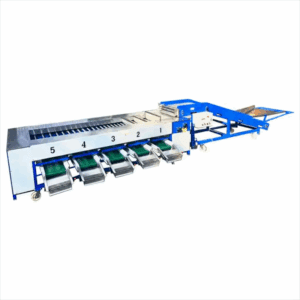
3T/H Fruit And Vegetable Sorting Machine, Food Grade Stainless Steel
Food & Beverage Processing Equipment, Fruit And Vegetable Processing Line3T/H Fruit And Vegetable Sorting Machine, Food Grade Stainless Steel
Product name: Fruit and vegetable sorting machine
External dimensions: 9530*1300*1100 mm
Weight: 1000 kg
Voltage: 220V
Power: 1.85 kW
Sorting level: 6
Capacity: 3 t/h
Use: Fruit and vegetable gradingSKU: n/a