Automatic Vegetable Washing and Cutting Processing Line
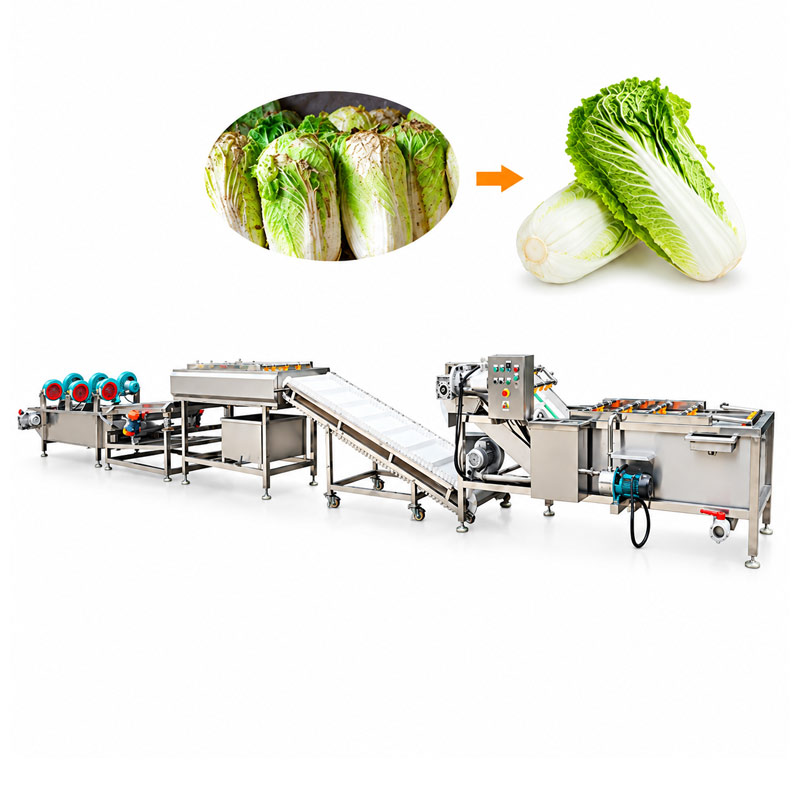
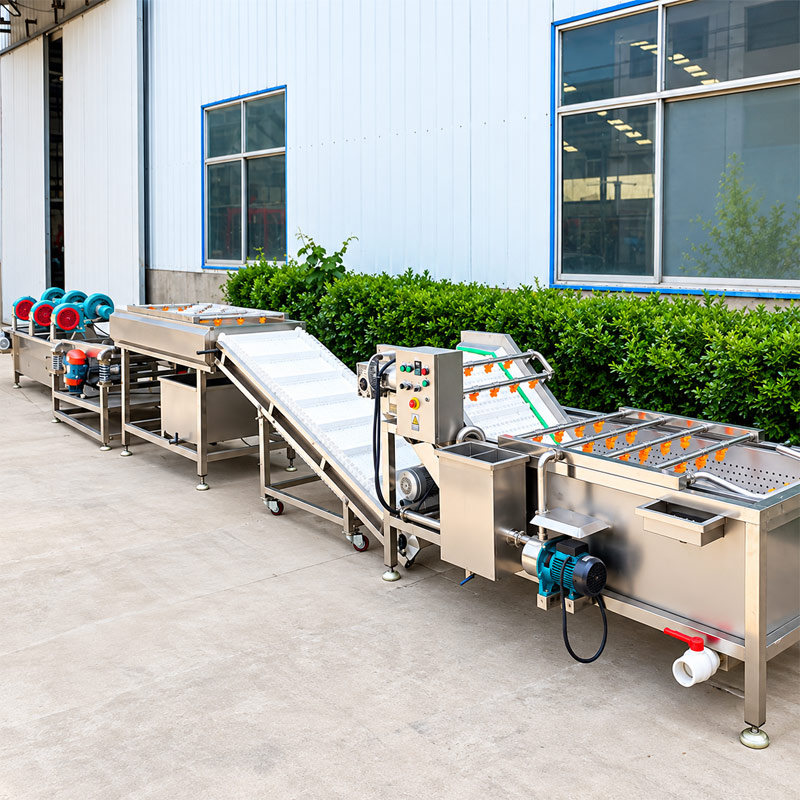
The Automatic Vegetable Washing and Cutting Processing Line is designed for continuous cleaning, dewatering, surface drying, and cutting of fresh vegetables. The integrated system combines bubble washing, conveying, secondary cleaning, vibrating dewatering, air drying, and cutting into a streamlined process. With stainless steel construction and customizable configurations, it is suitable for cabbage, onion, carrot pieces, leafy vegetables, and other fresh produce used in food processing plants, central kitchens, freezing facilities, and fresh-cut vegetable production.
Compare
Vegetable Processing Line Product Introduction
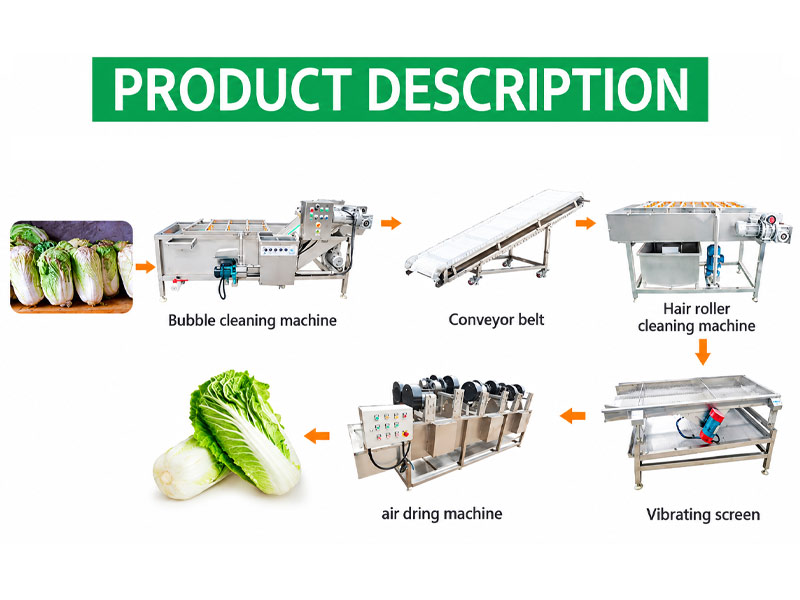
The Automatic Vegetable Washing and Cutting Processing Line provides an integrated solution for preparing fresh vegetables for cutting, packaging, freezing, drying, or other downstream processing.Fresh vegetables first enter the bubble washing machine, where water circulation and air agitation help loosen and remove soil and surface impurities. After the initial washing stage, a conveyor continuously transfers the product to a secondary cleaning section.
Depending on the raw material, a hair roller cleaning machine can provide additional surface cleaning. The washed vegetables then pass through a vibrating dewatering machine to drain free water before entering the air drying section for further surface moisture removal.Finally, suitable cutting equipment can be configured according to the required finished product, including slices, strips, cubes, sections, or other forms.According to the reference configuration, the washing section has a processing capacity of 500–1000 kg/h and consists of a bubble washing machine, hoisting machine, hair roller cleaning machine, vibrating machine, and air drying machine. The published specifications are conventional configurations and can be customized according to production requirements.
Main Equipment
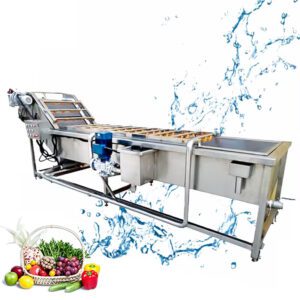
Bubble Washing Machine
The bubble washing machine provides the first cleaning stage of the processing line.Air agitation, water circulation, and optional spray rinsing help remove loose soil and surface impurities while continuously conveying the product toward the next process.
Reference Specifications
| Parameter | Specification |
|---|---|
| Power | 3.75 kW |
| Power Supply | 380 V / 50 Hz |
| Dimensions | 4000 × 1200 × 1300 mm |
Hoisting Conveyor
The hoisting conveyor transfers washed vegetables between processing stages and helps maintain continuous material flow.
Reference Specifications
| Parameter | Specification |
|---|---|
| Power | 0.75 kW |
| Power Supply | 380 V / 50 Hz |
| Dimensions | 2000 × 1000 × 1900 mm |
Hair Roller Cleaning Machine
The hair roller cleaning machine provides secondary surface cleaning for suitable vegetables.
Rotating rollers provide additional mechanical contact after the initial washing process. The roller configuration should be selected according to the vegetable being processed.
Reference Specifications
| Parameter | Specification |
|---|---|
| Power | 2.0 kW |
| Power Supply | 380 V / 50 Hz |
| Dimensions | 2000 × 1000 × 1300 mm |
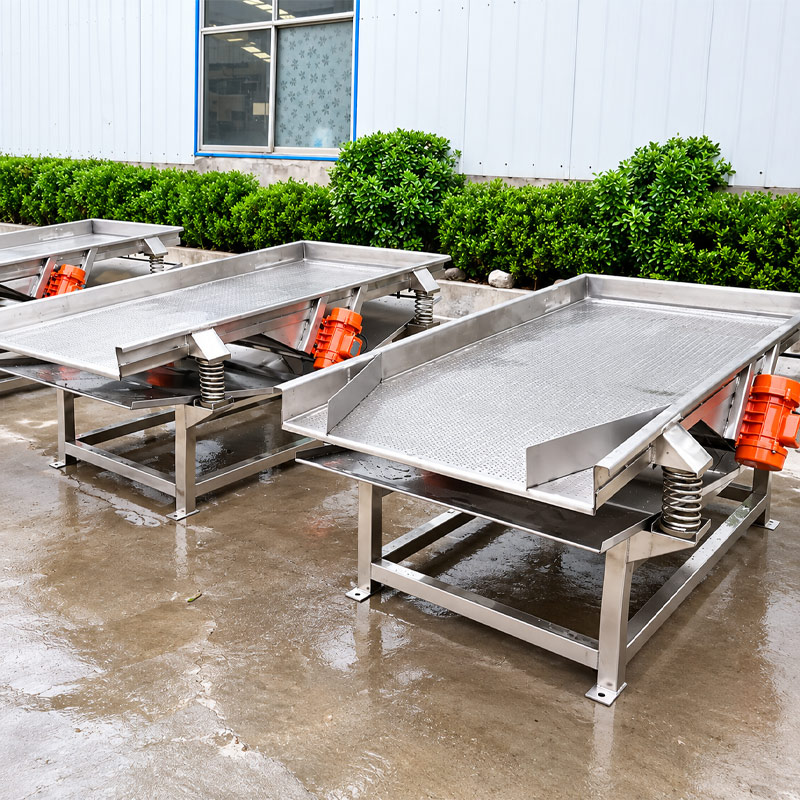
Vibrating Dewatering Machine
The vibrating machine helps separate free surface water carried by vegetables after washing.It provides an intermediate dewatering stage before the product enters the air drying section.
Reference Specifications
| Parameter | Specification |
|---|---|
| Power | 1.5 kW |
| Power Supply | 380 V / 50 Hz |
| Dimensions | 1500 × 1000 × 1300 mm |
Air Drying Machine
The air drying machine uses forced airflow to further reduce surface moisture after washing and vibrating dewatering.
Reference Specifications
| Parameter | Specification |
|---|---|
| Power | 15 kW |
| Power Supply | 380 V / 50 Hz |
| Dimensions | 4000 × 1200 × 1400 mm |
Vegetable Washing and Cutting Process
1. Bubble Washing
Fresh vegetables are introduced into the bubble washing machine for primary cleaning.Air introduced into the water creates agitation around the product, helping loosen soil and other surface impurities. Water circulation and optional spray rinsing can be combined according to the selected configuration.The process is particularly useful as the first cleaning stage before subsequent inspection, dewatering, and cutting.
2. Continuous Conveying
After primary washing, the vegetables are automatically transferred to the next processing section by conveyor.Continuous conveying connects the individual machines and helps maintain a stable product flow throughout the processing line.
3. Secondary Cleaning
The reference configuration includes a hair roller cleaning machine after the first washing stage. This provides additional mechanical surface cleaning for suitable vegetables.Because vegetables differ significantly in shape, firmness, and sensitivity, the secondary cleaning equipment should be selected according to the actual raw material. Delicate leafy vegetables may require a gentler configuration than carrots, potatoes, onions, or other firmer vegetables.
4. Vibrating Dewatering
After washing, vegetables normally carry a considerable amount of free surface water.The vibrating dewatering section helps drain and separate part of this water before the vegetables enter the air drying stage.This reduces the surface water load on subsequent equipment and prepares the vegetables for further processing.
5. Air Drying
The air drying section uses forced airflow to further reduce moisture remaining on the vegetable surface.This stage is particularly useful before cutting, packaging, freezing, or other downstream processes where excessive carried water may be undesirable.Air drying in this production line refers primarily to surface moisture removal rather than thermal dehydration of the vegetables.
6. Vegetable Cutting
After washing and surface water removal, the cleaned vegetables can be transferred to suitable cutting equipment.
Technical Specifications
| Item | Reference Specification |
|---|---|
| Product Name | Automatic Vegetable Washing and Cutting Processing Line |
| Reference Capacity | 500–1000 kg/h |
| Processing Type | Continuous |
| Bubble Washer Power | 3.75 kW |
| Bubble Washer Size | 4000 × 1200 × 1300 mm |
| Hoisting Conveyor Power | 0.75 kW |
| Hoisting Conveyor Size | 2000 × 1000 × 1900 mm |
| Hair Roller Cleaner Power | 2.0 kW |
| Hair Roller Cleaner Size | 2000 × 1000 × 1300 mm |
| Vibrating Machine Power | 1.5 kW |
| Vibrating Machine Size | 1500 × 1000 × 1300 mm |
| Air Dryer Power | 15 kW |
| Air Dryer Size | 4000 × 1200 × 1400 mm |
| Reference Power Supply | 380 V / 50 Hz |
| Washing Method | Bubble Washing + Secondary Cleaning |
| Water Removal | Vibrating Dewatering + Air Drying |
| Cutting Configuration | According to finished product |
| Line Configuration | Customizable |
Key Features
- Integrated Washing and Cutting Process
The production line combines washing, conveying, secondary cleaning, dewatering, surface drying, and cutting into a continuous processing system. - Multi-Stage Vegetable Cleaning
Bubble washing provides the initial cleaning stage, while an additional cleaning module can be configured according to the raw material.This allows the line to handle different vegetable preparation requirements rather than relying on a single washing method. - Continuous Material Handling
Conveyors transfer vegetables automatically between processing stages, helping reduce repeated manual handling and maintain continuous production. - Vibrating Surface Water Removal
The vibrating section helps drain free water remaining after washing before the product reaches the air drying section. - Air-Assisted Surface Drying
Forced airflow further reduces surface moisture, preparing the washed vegetables for cutting or other downstream operations. - Flexible Cutting Options
Different cutting equipment can be selected for slices, strips, cubes, shreds, or sections according to the required finished product. - Stainless Steel Processing Equipment
The reference manufacturer describes the washing-machine inner and outer troughs as stainless steel and positions the system for continuous food-processing applications. - Adjustable Processing Conditions
The reference page states that working time, temperature, and power can be adjusted according to the selected system and application. - Customizable Production Line
Machine dimensions, processing capacity, washing stages, cutting equipment, conveyors, and downstream modules can be configured according to different production requirements.
Vegetable Cutting Options
- Slicing
Suitable for vegetables that need to be processed into uniform slices for cooking, freezing, drying, or packaging. - Dicing
Used when vegetables need to be prepared into cubes for frozen foods, prepared meals, sauces, soups, or other applications. - Shredding
Suitable for cabbage and other vegetables used in salads, prepared foods, or further processing. - Strip Cutting
Vegetables can be processed into strips according to the required width and length. - Section Cutting
Long vegetables can be cut into sections for subsequent food processing or packaging.The exact cutting range depends on the selected cutting machine and should be confirmed separately because the reference page does not specify a cutter model or cutting dimensions.
Typical Applications
The reference page lists supermarkets, restaurants, food processing plants, freezing plants, and dried-fruit processing operations among the applications for the system.
- Central Kitchens
For continuous vegetable preparation before cooking and meal production. - Frozen Vegetable Factories
As a front-end preparation system before subsequent blanching and freezing where required. - Food Processing Plants
For integrating vegetable washing and cutting with other production equipment. - Commercial Vegetable Preparation Facilities
For handling larger quantities of vegetables than standalone manual preparation operations.
Why Choose an Integrated Vegetable Processing Line?
Using separate machines requires vegetables to be manually transferred repeatedly between washing, dewatering, and cutting operations.An integrated processing line connects these stages with conveyors, creating a more continuous production flow.
This arrangement can help reduce unnecessary material handling, simplify production organization, and make it easier to connect additional processing equipment.The modular design also means that not every project needs exactly the same configuration. A fresh-cut cabbage line, for example, may use different washing and cutting equipment from a carrot or onion line.
How to Select the Right Vegetable Washing and Cutting Line
Before configuring the production line, the following project information should be confirmed:
- Raw Material: cabbage, carrot, onion, leafy vegetable, etc.
- Required Capacity: kg/h
- Incoming Product Form: whole, trimmed, or pre-cut
- Incoming Condition: typical soil and surface contamination
- Required Washing Process: primary washing only or multi-stage washing
- Required Cut: slices, cubes, strips, shreds, or sections
- Finished Product: fresh-cut, frozen, dried, cooked, or packaged
- Downstream Equipment: blancher, freezer, dryer, packaging machine, etc.
- Power Supply: voltage / phase / frequency
- Available Factory Space: required production-line layout
FAQ
What is an automatic vegetable washing and cutting processing line?
It is an integrated production system that connects vegetable washing, conveying, surface water removal, and cutting operations into a continuous processing line.
What is the reference processing capacity?
The reference page specifies a total output of 500–1000 kg/h for the washing line. The manufacturer notes that the conventional parameters can be customized.
What machines are included?
The published configuration includes a bubble washing machine, hoisting machine, hair roller cleaning machine, vibrating machine, and air drying machine, followed by cutting according to the required product.
Can the cutting size be adjusted?
The cutting configuration can be selected according to the finished product, but the reference page does not provide a specific cutter model or cutting-size range. These specifications therefore need to be confirmed according to the selected cutting machine.
What vegetables can the line process?
The reference page identifies products including carrot pieces, cabbage, onions, and several fruits. For vegetable applications, the equipment can be configured according to the structure and processing requirements of the raw material.
Does the air drying machine completely dry the vegetables?
No. In this processing line, its primary purpose is to reduce surface moisture after washing. Producing dehydrated vegetables requires a separate thermal drying process.
Can the production line be customized?
Yes. The reference manufacturer explicitly states that the published conventional parameters can be customized according to customer needs.
Can packaging equipment be added?
Yes. The reference page identifies packaging as one of the downstream processes that can be configured according to customer requirements.
Contact us to get your quotation now.
Get in touch with our engineering team.
Related products
-
Fruit And Vegetable Processing Line
Commercial Industrial Bubble Fruit Avocado Mango Vegetable Potato Washing Machine Vegetable Production Line
 Fruit And Vegetable Processing Line
Commercial Industrial Bubble Fruit Avocado Mango Vegetable Potato Washing Machine Vegetable Production Line
Features: The seafood cleaning machine uses with arc angle with the cone bottom design, easy to clean, with a high-pressure spray, better cleaning effect, wider range.
The machine is widely used for cleaning carrots, hawthorn, apple, orange, mango, jujube,date etc. demanding shape materials, suitable for: vegetables, fruits, aquatic products and other granular, leaf, root and other products.SKU: n/a -
Fruit And Vegetable Processing Line
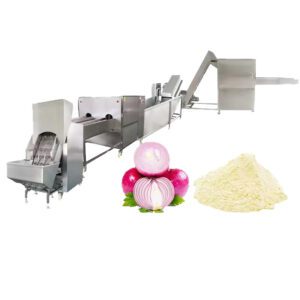
Onion Powder Making Machine Onion Dryer Machine Ginger Powder Processing Line
Fruit And Vegetable Processing LineOnion Powder Making Machine Onion Dryer Machine Ginger Powder Processing Line
Feeding Conveyor:0.75KW
Picking line:0.75KW
Onion Root Cutting Machine:1.86KW
Feeding Conveyor:0.75KW
Chain Type Onion Peeling Machine:0.75KW
Air compressor set:37KW
Feeding Conveyor:0.75KW
Onion cutting machine:0.75KW
Feeding Conveyor:0.75KW
Bubble Washing machine:6KWSKU: n/a -
Fruit And Vegetable Processing Line
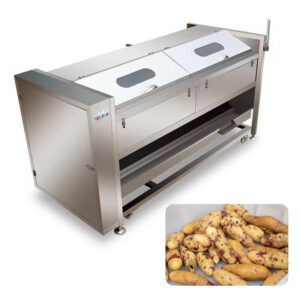
Brush Washer Peeler Machine Automatic Commercial Avocado Kiwi Fruit Yam Cassava Taro Potatoes Peeling Machine
Fruit And Vegetable Processing LineBrush Washer Peeler Machine Automatic Commercial Avocado Kiwi Fruit Yam Cassava Taro Potatoes Peeling Machine
The Sealed cover peeling machine issuitable for cleaning and peeling round and ovalfruits and vegetables such as ginger, carrot, taro, potato, sweet potato and other root vegetables.
The cleaning brush is a nylon cord rolledmaterial treated by a special process, and thepeeling is a hardened material, which has verygood wear resistance.
The whole machine is made of high-quality stainless steel material, and the materi-al can rotated outside. The bottom of the machine is equipped with an isolation filternetwork to effectively separate waste residue and waste water.
SKU: n/a