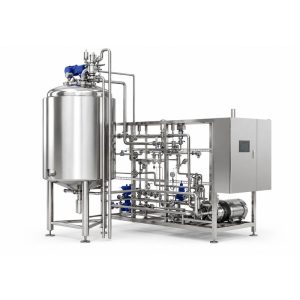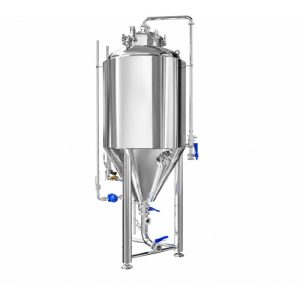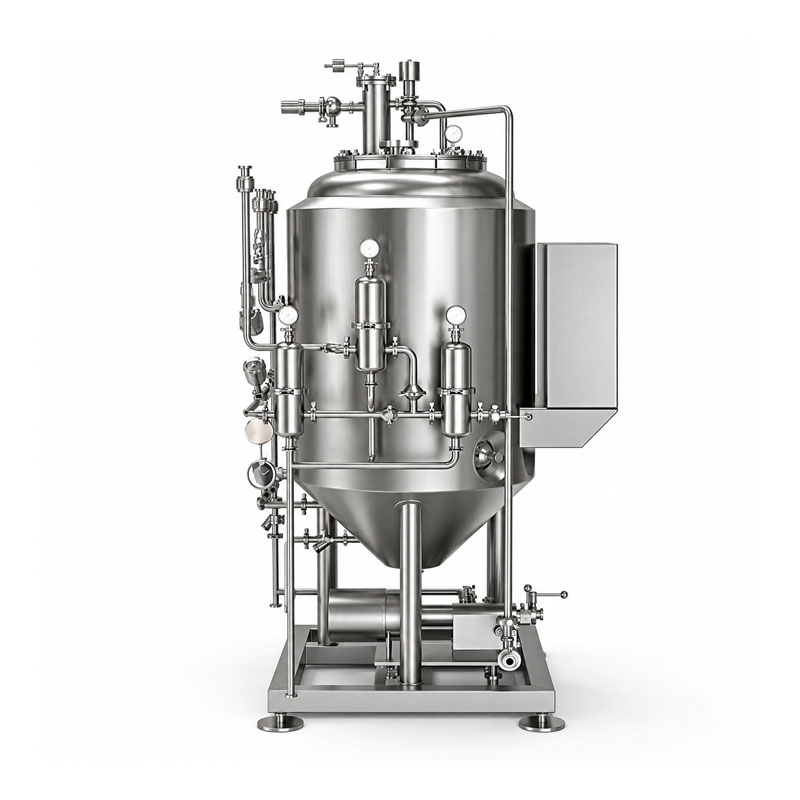
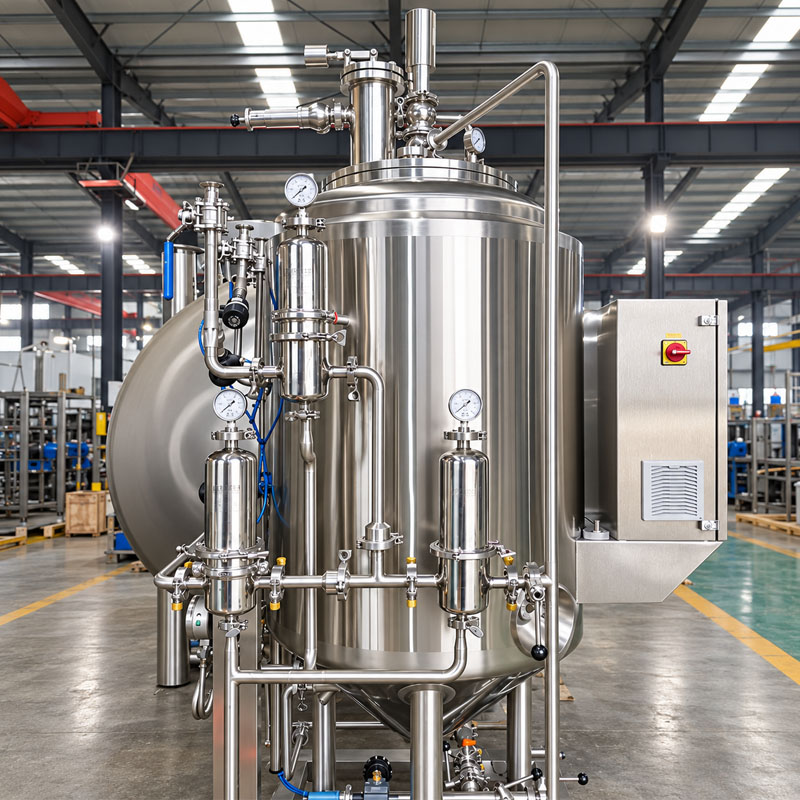
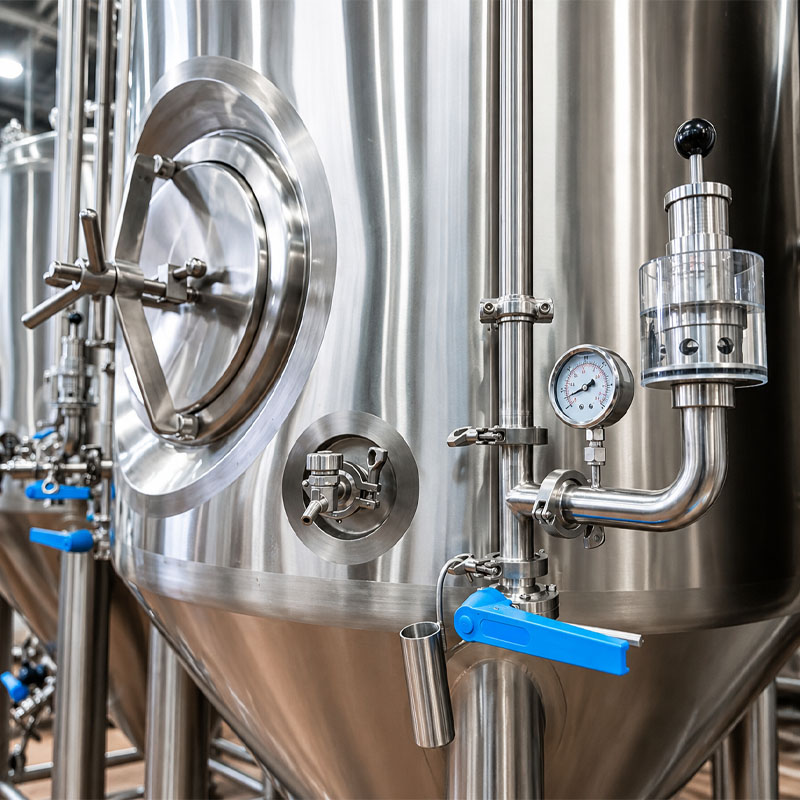
Industrial Yeast Propagation Tank for Brewery Fermentation
This industrial yeast propagator enables breweries and distilleries to cultivate, maintain, and recover yeast for repeated production cycles. The system features a 250-liter working volume, controlled aeration, glycol-based temperature regulation, and automated process management. Its hygienic tank design supports cleaning and steam sterilization, while filtered air supply promotes controlled yeast growth. Optional dissolved oxygen monitoring, internal mixing, and yeast circulation help optimize propagation conditions, reduce yeast purchasing costs, and improve fermentation consistency across different production batches.
Compare
Product Introduction: Yeast Propagation Tank
An industrial yeast propagation tank provides a controlled environment for multiplying yeast cultures before fermentation. By maintaining suitable oxygen availability, temperature, and nutrient distribution, it helps breweries develop healthy yeast populations for consistent fermentation performance. The system supports yeast propagation and recovery, allowing manufacturers to reuse suitable yeast cultures and reduce reliance on frequent commercial yeast purchases.
The 250-liter working-volume configuration incorporates a jacketed stainless steel vessel, filtered aeration piping, and programmable control functions. Glycol regulation helps maintain the required cultivation temperature, while integrated cleaning and sterilization provisions support hygienic operation. The tank can accommodate single-stage propagation or staged cultivation with a suitable laboratory culture flask, depending on the production process.
Additional configurations may include dissolved oxygen sensing, automatic aeration adjustment, internal mixing, yeast circulation, load-cell weighing, and cone heating. These options allow the equipment to be adapted to different yeast strains and production requirements. With appropriate process control and sanitation procedures, the system helps improve yeast viability, reduce fermentation variability, and establish a more reliable yeast management workflow.
Working Principle
The yeast propagator creates a controlled environment in which yeast multiplies before being introduced into a production fermentation vessel. A suitable starter culture is transferred into the sanitized tank with the required nutrient medium. The cultivation temperature is regulated through the tank jacket using a glycol system.
Filtered air or oxygen is supplied through the aeration line to provide the required oxygen availability during propagation. Depending on the selected configuration, a dissolved oxygen sensor can monitor oxygen concentration and work with the control system to adjust aeration. An optional mixer helps distribute nutrients and maintain a more uniform culture environment.
The PLC manages the configured process functions, allowing operators to monitor and adjust operating conditions. After cultivation, the yeast culture is transferred for fermentation or collected for subsequent use, according to the established process. Cleaning and steam sterilization procedures prepare the equipment and connected lines for the next cycle.
Working Process
Step 1: Tank Preparation
Clean and sanitize the vessel and relevant process lines before introducing the culture.
Step 2: Starter Culture Addition
Transfer the prepared yeast starter and the required nutrient medium into the tank.
Step 3: Temperature Adjustment
Connect the cooling jacket to the glycol supply and establish the required cultivation temperature.
Step 4: Aeration and Cultivation
Supply filtered air or oxygen as required by the selected yeast strain and propagation process.
Step 5: Process Monitoring
Use the control system to manage configured parameters, with optional dissolved oxygen monitoring and automatic aeration control.
Step 6: Yeast Collection and Transfer
Collect the propagated culture and transfer it to the appropriate fermentation vessel or yeast handling stage.
Step 7: Cleaning and Sterilization
Clean and sterilize the vessel and connected process lines before the next production cycle.
Technical Specifications
| Parameter | Specification |
|---|---|
| Working volume | 250 L |
| Propagation configuration | Single-stage or staged propagation |
| Control system | PLC automation |
| Temperature control | Glycol jacket |
| Aeration system | Filtered aeration piping |
| Internal finish | Mirror-polished surface |
| Cleaning provision | CIP |
| Sterilization provision | SIP |
| Integrated safety features | Vacuum breaker and safety valve |
| Optional instrumentation | Dissolved oxygen sensor and load cells |
Key Features and Benefits
- Controlled Yeast Cultivation
Adjustable operating parameters help maintain suitable conditions for yeast multiplication, supporting healthy cultures and predictable fermentation preparation. - Automated Process Management
PLC-based control allows operators to configure process functions according to cultivation requirements, reducing routine manual intervention. - Integrated Aeration System
Filtered aeration piping supplies air or oxygen as required, while optional dissolved oxygen monitoring supports more precise aeration management. - Hygienic Tank Construction
The smooth internal finish and integrated cleaning provisions facilitate sanitation and help reduce the risk of unwanted microbial contamination. - Temperature Regulation
The jacketed vessel connects to a glycol system to regulate cultivation temperature. Optional cone heating can provide additional temperature control where required. - Yeast Recovery and Reuse
Suitable yeast can be collected and prepared for subsequent production batches, helping reduce recurring yeast procurement costs. - Expandable Configuration
Optional mixing, circulation, weighing, and oxygen monitoring functions allow the system to match different production processes and automation requirements.
Industrial Applications
Craft Brewery Yeast Management
Supports in-house yeast cultivation and preparation for regular brewing schedules.
Commercial Beer Production
Provides controlled yeast propagation for breweries managing multiple fermentation batches.
Distillery Fermentation
Helps prepare suitable yeast cultures for fermentation processes used in spirit production.
High-Gravity Brewing
Supports yeast preparation for demanding fermentation processes where sufficient viable cells are important.
Multi-Batch Fermentation
Enables breweries to plan yeast cultivation around successive production batches and reduce dependence on externally supplied cultures.
Yeast Culture Development
Provides a controlled vessel for expanding selected yeast cultures under defined process conditions.
Optional Equipment and Customization
Internal Mixing System
Provides gentle blending of nutrients and culture medium when required by the propagation process.
Dissolved Oxygen Monitoring
Measures oxygen concentration and can support automatic aeration adjustment through the control system.
Yeast Circulation Pump
Facilitates culture circulation and transfer between compatible process vessels.
Load-Cell Weighing
Monitors vessel weight to assist with batch preparation and process tracking.
Cone Heating System
Provides additional temperature regulation in the lower vessel section when required.
Customized Automation
Allows control functions and operating sequences to be configured according to the production workflow.
Frequently Asked Questions (FAQ)
Q1: What is the main purpose of a yeast propagator?
A: It provides controlled conditions for multiplying yeast before fermentation, helping prepare sufficient viable yeast for production batches.
Q2: How does the system control cultivation temperature?
A: A jacketed tank connected to a glycol system regulates the vessel temperature according to the process requirements.
Q3: Why is aeration important during yeast propagation?
A: Appropriate oxygen availability supports yeast growth and cell development. The required aeration strategy depends on the yeast strain and cultivation process.
Q4: Can the equipment automatically control dissolved oxygen?
A: An optional dissolved oxygen sensor can be integrated with the control system to support automatic aeration adjustment.
Q5: Does the system support cleaning and sterilization?
A: The specified configuration includes CIP and SIP provisions for cleaning the vessel and sterilizing compatible equipment and process lines.
Q6: Can yeast be reused after propagation?
A: Suitable cultures can be collected and reused when their viability, purity, and process suitability have been verified.
Contact us to get your quotation now.
Get in touch with our engineering team.
Related products
-
Yeast propagator
Sanitary Yeast Storage Tank for Commercial Brewing Process
The stainless steel yeast tank supports controlled yeast cultivation for breweries seeking consistent fermentation performance. Its cylindrical body, conical bottom, and insulated construction help maintain stable process conditions, while dual dimple jackets enable cooling and heating. A mirror-polished interior, aseptic sampling valve, and CIP-connected rotary spray ball support hygienic operation. Available in multiple capacities, the tank can be configured for different brewing scales and integrated with suitable yeast transfer and cleaning systems.
SKU: n/a -
Yeast propagator
2000L Yeast Propagation Tank -SS304/316, Automatic,Accurate
The yeast propagation tank is designed for bacterial yeast cell culture in manufacturing plants and food & beverage factories. With a 2000L capacity, it’s constructed from stainless steel 304/316, featuring automatic operation and PH/DO sensors (Mettler or Hamilton). It supports a pressure range of 0~0.35Mpa and 70% feeding volume. It meets the efficient and precise needs of biological culture equipment.
SKU: n/a -
Yeast propagator
80L Pressurized Yeast Storage Tank for Modern Brewing Use
This 80L yeast pressure storage tank is designed for storing, cooling, collecting, and dosing brewing yeast into fermentation tanks. Its duplex cooling jacket connects to an ice water or glycol system to maintain suitable storage conditions. Operating as a low-pressure vessel with a maximum pressure of 0.5 bar, it supports yeast transfer without a dedicated dosing pump. The tiltable tank structure facilitates drainage, helping improve yeast recovery and simplify routine handling in brewery operations.
SKU: n/a -
Yeast propagator
4000L Yeast Propagation System – Brewery – SS304-Reliable
The Yeast Propagation System is designed for breweries with a 4000L capacity. Constructed from SS304 stainless steel for hygiene and durability, it features steam heating and -5℃ glycol water cooling for precise temperature control. With automatic temperature and pressure control, it ensures consistent fermentation. It meets the efficient and compliant large-scale production needs of breweries for yeast propagation equipment.
SKU: n/a