
80L Pressurized Yeast Storage Tank for Modern Brewing Use
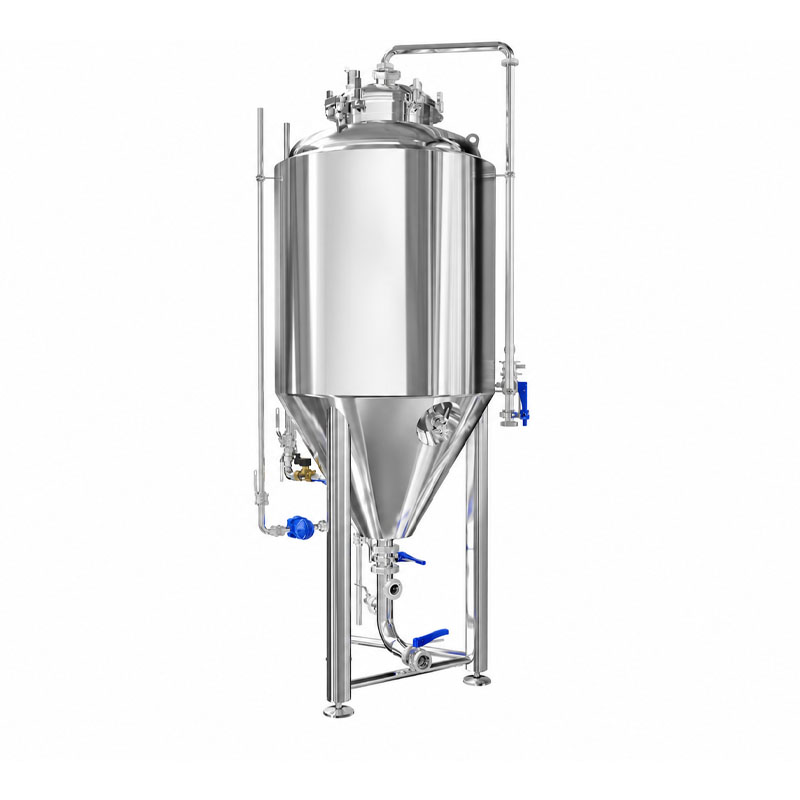
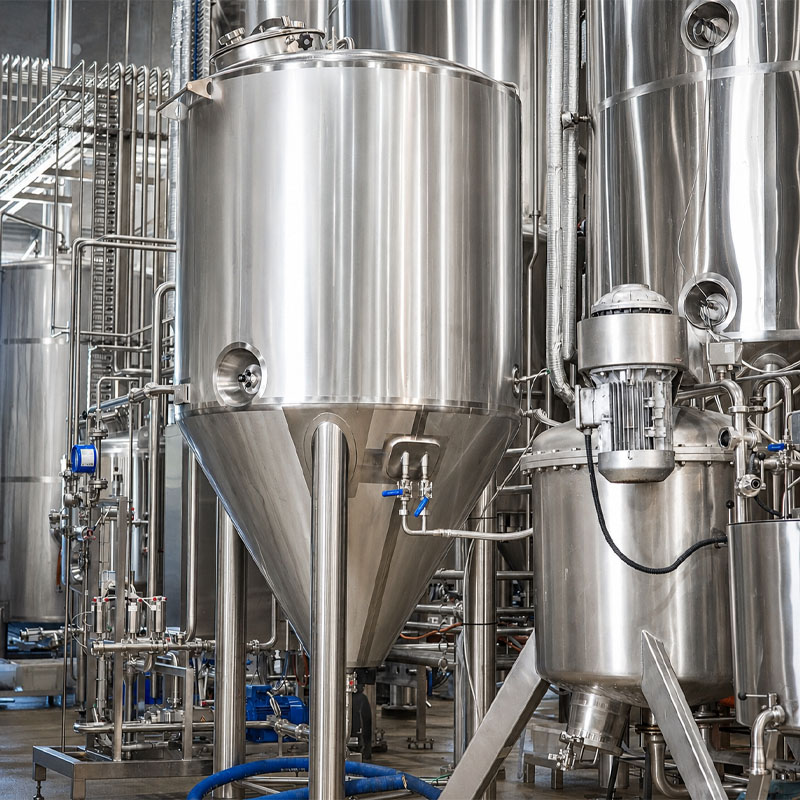
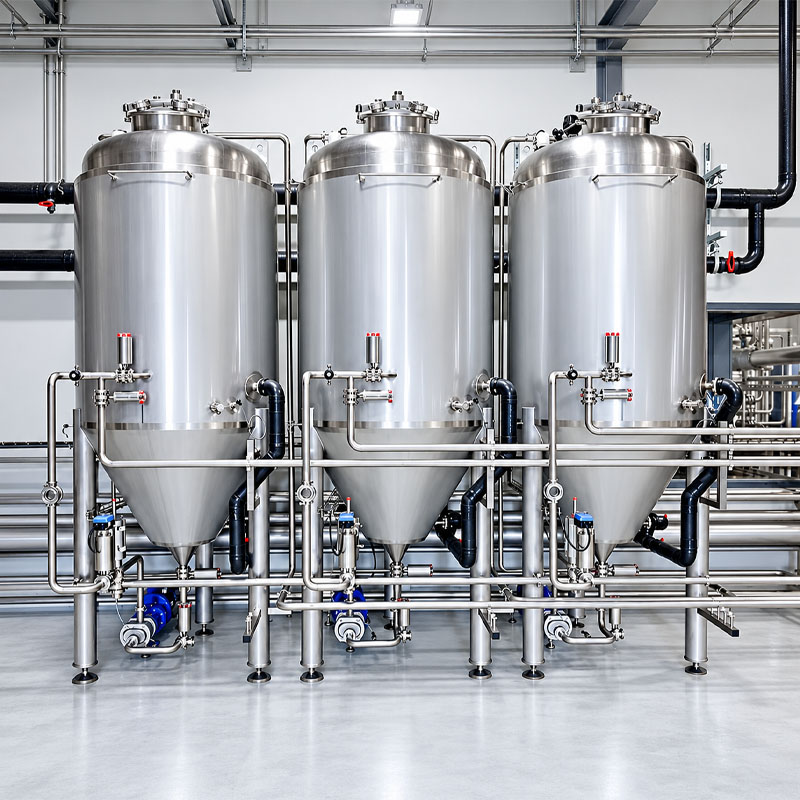
This 80L yeast pressure storage tank is designed for storing, cooling, collecting, and dosing brewing yeast into fermentation tanks. Its duplex cooling jacket connects to an ice water or glycol system to maintain suitable storage conditions. Operating as a low-pressure vessel with a maximum pressure of 0.5 bar, it supports yeast transfer without a dedicated dosing pump. The tiltable tank structure facilitates drainage, helping improve yeast recovery and simplify routine handling in brewery operations.
Compare
Product Introduction: Pressurized Yeast Storage Tank
The pressurized yeast storage tank provides a practical solution for breweries that require controlled yeast storage, collection, cooling, and accurate dosing during fermentation. With an effective working capacity of 80 liters and a total vessel capacity of 88 liters, it accommodates yeast handling requirements in compact brewing operations.
The cylindrical tank incorporates a duplex cooling jacket that can be connected to an ice water or glycol system through hoses. This arrangement supports temperature management during yeast storage and handling. A top manhole allows convenient access for inspection and sanitation, while dedicated filling, discharge, air inlet, and outlet connections support process integration.
Designed for low-pressure operation with a maximum pressure of 0.5 bar, the vessel enables yeast dosing into fermentation tanks without requiring a dedicated transfer pump under suitable installation conditions. Its tiltable support structure allows the tank to incline up to 130 degrees in both directions, facilitating drainage of residual yeast. These features help simplify yeast handling, improve operational convenience, and support consistent fermentation preparation.
Working Principle
The yeast pressure storage tank combines low-pressure operation with jacket cooling to support yeast storage and dosing. Collected yeast enters the vessel through the designated filling connection. During storage, an external ice water or glycol supply circulates through the duplex cooling jacket to help control the tank temperature.
When yeast is required for fermentation, the vessel uses a suitable pressure arrangement to assist discharge through the designated outlet. Under compatible operating conditions, this allows yeast transfer without a dedicated dosing pump. After discharge, the tank can be tilted to facilitate drainage of residual yeast. The vessel is then inspected and cleaned according to the brewery’s sanitation procedures.
Working Process
Step 1: Yeast Collection
Collected brewing yeast is introduced into the vessel through the designated filling connection.
Step 2: Cooling Connection
The duplex cooling jacket is connected to an ice water or glycol system to maintain the required storage temperature.
Step 3: Controlled Storage
The yeast remains in the vessel under suitable operating conditions until it is needed for the next fermentation batch.
Step 4: Pressure-Assisted Dosing
The designated pressure and discharge connections are used to transfer yeast into a fermentation tank, subject to the system’s approved operating limits.
Step 5: Residual Yeast Drainage
The vessel is tilted within its designed range to facilitate drainage of residual yeast.
Step 6: Cleaning and Preparation
The tank is inspected and cleaned before being prepared for the next yeast handling cycle.
Technical Specifications
| Parameter | Specification |
|---|---|
| Effective working capacity | 80 L |
| Total vessel capacity | 88 L |
| Maximum pressure | 0.5 bar |
| Cooling system | Duplex cooling jacket |
| Cooling jacket capacity | 5.4 L |
| Cooling medium | Ice water or glycol |
| Overall dimensions (H × W × D) | 1,250 × 760 × 700 mm |
| Tank inclination | Up to 130° in both directions |
| Filling and discharge connections | DN 25 |
| Air inlet and outlet | DN 15 |
Key Features and Benefits
Effective Yeast Storage Capacity
The 80-liter working capacity provides practical storage space for collected brewing yeast, while the 88-liter total vessel capacity accommodates the designed operating volume.
Integrated Cooling Jacket
The duplex cooling jacket connects to an external ice water or glycol system, helping maintain appropriate temperature conditions during yeast storage.
Low-Pressure Operation
Designed for a maximum operating pressure of 0.5 bar, the vessel supports controlled yeast handling in compatible brewery installations.
Pump-Free Yeast Dosing
The pressure-assisted design allows yeast to be dosed into fermentation tanks without a dedicated dosing pump when the installation conditions and pressure requirements are suitable.
Tiltable Tank Structure
The support arrangement enables inclination up to 130 degrees in both directions, helping drain residual yeast and reduce material left inside the vessel.
Convenient Inspection and Cleaning
A top manhole and dedicated process connections facilitate inspection, sanitation, and integration with brewery cleaning procedures.
Industrial Applications
Brewery Yeast Storage
Stores collected yeast before it is transferred to the next fermentation batch.
Yeast Collection and Recovery
Receives yeast from compatible brewing processes for subsequent handling and reuse.
Yeast Dosing into Fermentation Tanks
Supports controlled transfer of stored yeast into fermentation vessels under suitable pressure conditions.
Craft Brewery Operations
Provides a compact yeast handling solution for small and medium-sized brewing facilities.
Fermentation Process Preparation
Helps organize yeast supply before pitching, supporting consistent preparation between production batches.
Brewery Yeast Management
Integrates into yeast handling workflows that require storage, cooling, collection, and transfer in one vessel.
Important Factors for Selecting a Yeast Storage Tank
- Working Capacity: Select a vessel according to the yeast quantity required for each fermentation batch.
- Cooling Requirements: Confirm the required yeast storage temperature, available glycol or ice water supply, and cooling system capacity.
- Operating Pressure: Ensure that the vessel’s pressure rating is compatible with the brewery’s transfer arrangement and applicable safety requirements.
- Connection Compatibility: Check filling, discharge, air, and cleaning connections against the existing brewery piping.
- Cleaning and Sanitation: Verify that the vessel design and cleaning procedures meet the brewery’s hygiene requirements.
- Installation Space: Allow sufficient clearance for pipe connections, manhole access, maintenance, and the tank’s permitted tilting movement.
FAQ
Q1: What is the working capacity of the yeast pressure storage tank?
A: The effective working capacity is 80 liters, and the total vessel capacity is 88 liters.
Q2: What is the maximum operating pressure?
A: The specified maximum pressure is 0.5 bar. The vessel must be operated within its approved pressure limits.
Q3: How is the yeast tank cooled?
A: A duplex cooling jacket connects to an external ice water or glycol system through hoses.
Q4: Can yeast be transferred without a pump?
A: Yes. The pressure-assisted design supports pump-free dosing when the installation, pressure differential, and receiving vessel conditions are suitable.
Q5: Why does the tank have a tilting structure?
A: Tilting helps drain residual yeast and facilitates emptying and cleaning. The specified inclination is up to 130 degrees in both directions.
Q6: Can the tank be connected to an existing brewery system?
A: Integration depends on the existing pipework, connection sizes, pressure arrangement, and cooling supply. These details should be confirmed before installation.
Q7: Is the tank suitable for every type of yeast?
A: Suitability depends on the yeast strain, storage temperature, storage duration, and process requirements. These conditions should be reviewed before selecting the vessel.
Contact us to get your quotation now.
Get in touch with our engineering team.
Related products
-
Yeast propagator
Automatic Yeast Propagation System for Commercial Breweries
Automatic yeast propagation system designed for sterile cultivation and reliable yeast renewal in commercial beer production. The system supports batch or continuous operation, controlled temperature, sterile aeration, and hygienic wort preparation to maintain yeast vitality and consistency. Stainless steel propagation vessels, sanitary valves, level monitoring, pressure protection, and optional agitation help ensure safe operation. Configurations can be customized for different brewery capacities, yeast strains, automation levels, and CIP cleaning requirements.
SKU: n/a -
Yeast propagator
600L Yeast Propagation Reactor – Biotech-Long Life, Easy Operate
The yeast propagation tank is designed for yeast propagation and enzyme reactions in food and biotech industries. With a 600L capacity, it’s constructed from SS304/316L stainless steel with mirror-polished inner surfaces (0.2-0.4μm). It supports steam/electric heating and customizable agitators. It meets the hygienic and efficient needs of biological fermentation.
SKU: n/a -
Yeast propagator
Yeast Propagator Tank for Craft Brewery 50L 100L Beer Factory
This yeast propagator tank is designed for small and medium craft breweries, with a minimum working volume of 30L for efficient yeast expansion. The vessel features a cooling jacket compatible with brewery cooling systems to ensure precise temperature control during yeast propagation. With a polished interior and large top flange for easy cleaning, it delivers hygienic operation, convenience, and reliable performance in professional brewing environments.
SKU: n/a -
Yeast propagator
20-500L Yeast Equipment – Microbrewery – Adjustable Voltage, Energy-Efficient, Efficient
 Yeast propagator
20-500L Yeast Equipment – Microbrewery – Adjustable Voltage, Energy-Efficient, Efficient
The yeast production equipment is a beer brewing , made of SUS304/316 material, with a capacity of 20-500L, compatible with 0-80KW power and adjustable voltage, featuring a 100mm polyurethane insulation layer. It meets the energy-efficient and durable needs for yeast propagation equipment in microbreweries.
SKU: n/a


