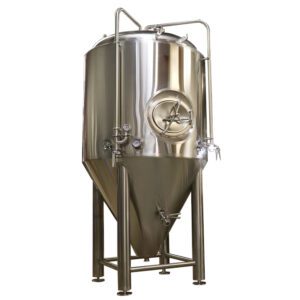
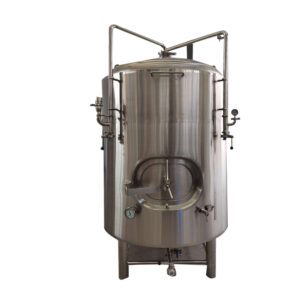
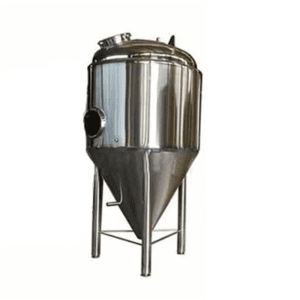
5000L Stainless Steel Wine Fermentation Tank Price Jacketed
The 5000L stainless steel wine fermentation tank with jacketed cooling is designed for precise temperature control and consistent wine fermentation. Made from food-grade SS304 or optional SS316, it ensures hygienic processing, reduces oxidation risk, and preserves natural aroma and flavor. Ideal for wineries seeking stable production, high-quality output, and scalable fermentation solutions.
Compare
5000L Stainless Steel Wine Fermentation Tank Product Introduction
The 5000L stainless steel wine fermentation tank with jacketed temperature control is engineered for wineries that demand precision fermentation, consistent wine quality, and scalable production.
Manufactured from premium food-grade SS304 (optional SS316), this tank ensures excellent corrosion resistance, hygienic processing, and long-term durability. The integrated glycol cooling jacket provides accurate temperature regulation, allowing winemakers to precisely control yeast activity and fermentation kinetics.
Compared with traditional fermentation methods, this jacketed wine fermentation tank minimizes oxidation risk, stabilizes fermentation conditions, and preserves delicate aroma compounds—making it ideal for producing high-quality red, white, and specialty wines.
Industry Pain Points
Modern wineries often struggle with:
- Unstable fermentation temperature affecting wine quality
- Loss of aroma compounds due to poor temperature control
- Oxidation risks in open fermentation systems
- Inconsistent batch-to-batch wine quality
- Limited scalability with traditional fermentation vessels
- Difficult cleaning and hygiene management
- Inefficient fermentation process control
Our Solution
Our 5000L jacketed fermentation tank provides:
- Precise temperature control for optimal yeast performance
- Closed system design to reduce oxidation risk
- Consistent fermentation results across batches
- Hygienic stainless steel structure for food-grade safety
- Efficient cooling system for stable process control
- Scalable solution for growing wineries
- Easy cleaning and maintenance
System Overview
The fermentation tank includes:
- 5000L stainless steel tank body
- Dimple or jacket cooling system
- Insulation layer for temperature stability
- Top manhole for inspection
- CIP cleaning system (optional)
- Sampling valve and thermometer
- Pressure relief valve
- Discharge outlet and piping
Fermentation Process
- Grape juice or must is transferred into the tank
- Controlled fermentation begins under regulated temperature
- Yeast converts sugars into alcohol and aroma compounds
- Temperature maintained via glycol jacket
- Monitoring and sampling during fermentation
- Stabilization and cooling stage
- Transfer to aging tanks or barrels
Why Choose This Equipment
- Ensures precise fermentation control
- Preserves aroma and flavor integrity
- Reduces oxidation and contamination risks
- Improves consistency of wine batches
- Suitable for both small and large wineries
- Scalable for future production expansion
- Hygienic and easy-to-clean design
Fermentation Quality Advantage
With a 5000L jacketed wine fermentation tank, wineries can:
- Maintain stable fermentation temperature for consistent yeast activity
- Preserve aroma compounds and flavor complexity
- Reduce batch variation and improve wine consistency
- Minimize fermentation loss and improve yield
- Produce premium-quality wine suitable for high-end markets
Temperature Control Advantage
Compared to non-jacketed tanks:
- Glycol cooling allows precise temperature adjustment
- Insulated structure maintains stable fermentation conditions
- Prevents overheating and preserves delicate flavors
- Supports different fermentation profiles for red and white wines
Technical Specifications
| Item | Specification |
|---|---|
| Capacity | 5000L |
| Material | SS304 / SS316 optional |
| Tank type | Wine fermentation tank |
| Structure | Jacketed insulated |
| Cooling method | Glycol cooling |
| Surface finish | Mirror polished interior |
| Pressure | Atmospheric |
| Cleaning system | CIP optional |
| Temperature control | Yes |
| Manhole | Top manhole |
| Outlet | Sanitary valve |
Capacity & Production
- Suitable for medium to large wineries
- Supports batch fermentation processes
- Scalable for increased production capacity
- Compatible with aging and storage systems
Engineering Advantages
- High-grade stainless steel ensures durability
- Precision welding for hygienic performance
- Efficient heat exchange system
- Stable fermentation environment
- Reduced maintenance cost
- Long service life
- Optimized for wine quality production
Application Scenarios
- Commercial wineries producing red and white wines
- Boutique wineries focusing on premium quality
- Vineyard processing facilities
- Sparkling wine base fermentation
- Organic and specialty wine production
- Export-oriented wine production
Industry Applications
- Wine production industry
- Vineyard processing facilities
- Beverage fermentation industry
- Alcohol production sector
- Food-grade fermentation applications
- Agricultural processing industry
FAQ
1. What is the price of a 5000L stainless steel wine fermentation tank?
The price depends on material (SS304 or SS316), tank thickness, jacket type, insulation, and configuration such as valves and control systems. Contact us for a customized quotation based on your winery requirements.
2. Why is a jacketed fermentation tank important for wine production?
A jacketed tank allows precise temperature control during fermentation, which directly affects yeast activity, aroma retention, and overall wine quality. It helps avoid overheating and ensures consistent fermentation results.
3. What temperature range is suitable for wine fermentation?
Typically, white wine fermentation is controlled between 12–18°C, while red wine fermentation ranges from 20–30°C. A jacketed tank allows accurate control within these ranges.
4. What is the difference between SS304 and SS316 for wine tanks?
SS304 is suitable for most wineries. SS316 offers higher resistance to acidic environments and is recommended for premium wine production or long-term use.
5. Can this tank be used for both red and white wine?
Yes, the temperature control system allows flexibility for both red and white wine fermentation processes.
6. How does stainless steel compare to oak barrels?
Stainless steel tanks provide better temperature control, hygiene, and consistency, while oak barrels are mainly used for aging and flavor development.
7. Does the tank reduce oxidation during fermentation?
Yes, the closed stainless steel design minimizes oxygen exposure, helping preserve aroma and prevent spoilage.
Contact us to get your quotation now.
Get in touch with our engineering team.
Related products
-
Beer Fermentation & Brite Tank
10BBL Pro Conical Fermenter 304 Stainless Steel
1. Butterfly valves, sample valve, PVRV, Clamps and gaskets, pressure gauge
2. Interior and exterior finish polished to a sanitary finish
3. Interior finish pickled and passivated
4. 60 degree cone bottom, with an average of 25% head space
5. Side manway door, shadowless
6. Dual zone dimple cooling jackets(3 or more on larger tanks)
SKU: n/a -
Beer Fermentation & Brite Tank
2000 Liter Beer Fermentation Vessels/Fermenters/Unitanks
2000L Beer Fermentation Tank is made of stainless steel. You may also heard some other names as conical fermenter, fermentation vessels, Unitank, or even FV, is the key part to hold wort after brewing and turns it into beers in days.
Side Manway Conical Fermenter, is built for those industrial breweries who will ferment beers with volume from 500L to 5,000L.
With the Standard fully polished 304 stainless steel material, it has all standard sanitary welded tri-clamp fittings and CIP arm. There are also some more advanced add-on features, pick up the one which suitable for your current stage.
SKU: n/a -
Beer Fermentation & Brite Tank
3000 Liter Beer Fermentation Vessels/Fermenters/Unitanks
We offers a wide array of fermenters(fermentation) and brite tanks(maturation) tanks that are designed accordingly to our customers’ specifications and their needs. Our fermenter and brite tanks come in three different generalized builds (customizable tanks are also available): single wall, un-jacketed and jacketed. All of our tanks can be pressurized (unless otherwise requested) and the fermenters have an added bonus of functioning as both a fermenter and BBT tank.
SKU: n/a