


30-35 m³/h Belt Filter Press For Sludge Thickening Process
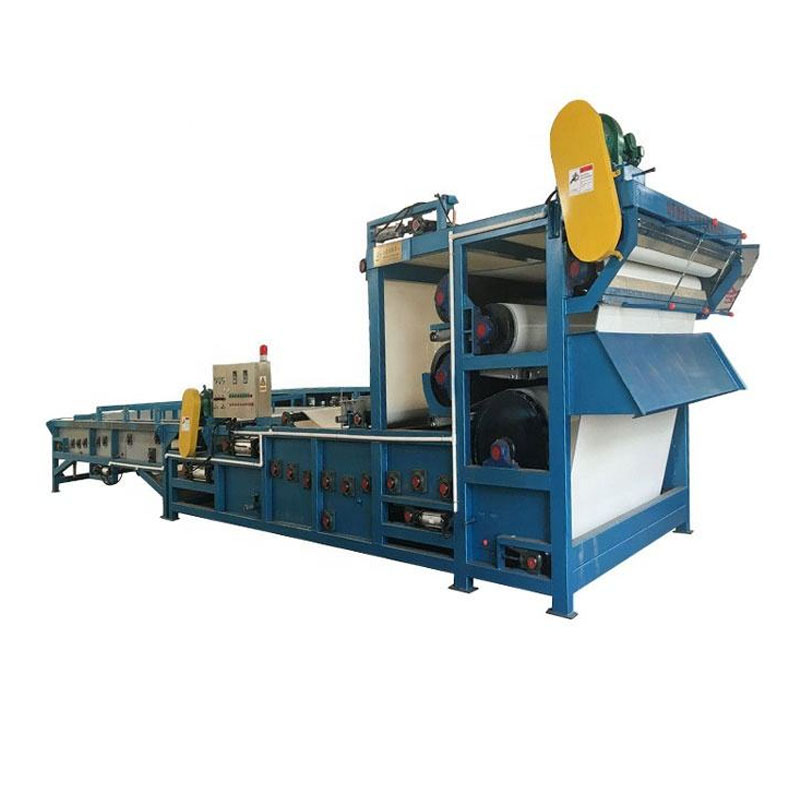
The 30–35 m³/h belt filter press is a continuous mechanical sludge dewatering system used for separating water from industrial and municipal sludge. It operates through a multi-stage process including chemical conditioning, gravity drainage, wedge pre-pressing, and high-pressure compression between tensioned belts. The system reduces sludge moisture and produces stable filter cake for disposal or reuse. It is suitable for mining, wastewater treatment plants, and industrial sludge processing requiring steady throughput and reliable solid-liquid separation.
Compare
Product introduction of 30-35 m³/h Belt Filter Press
The 30–35 m³/h belt filter press is an industrial sludge dewatering machine designed for continuous solid-liquid separation in wastewater treatment applications. It processes chemically conditioned sludge through four functional stages: flocculation conditioning, gravity thickening, wedge zone pre-dewatering, and high-pressure belt compression. The equipment is suitable for municipal, industrial, mining, and mineral processing sludge with varying solid concentrations. Built with stainless steel structural components and tensioned filter belts, it ensures stable operation, long service life, and efficient moisture reduction, making it suitable for large-scale sludge treatment and resource recovery systems.
Working principle
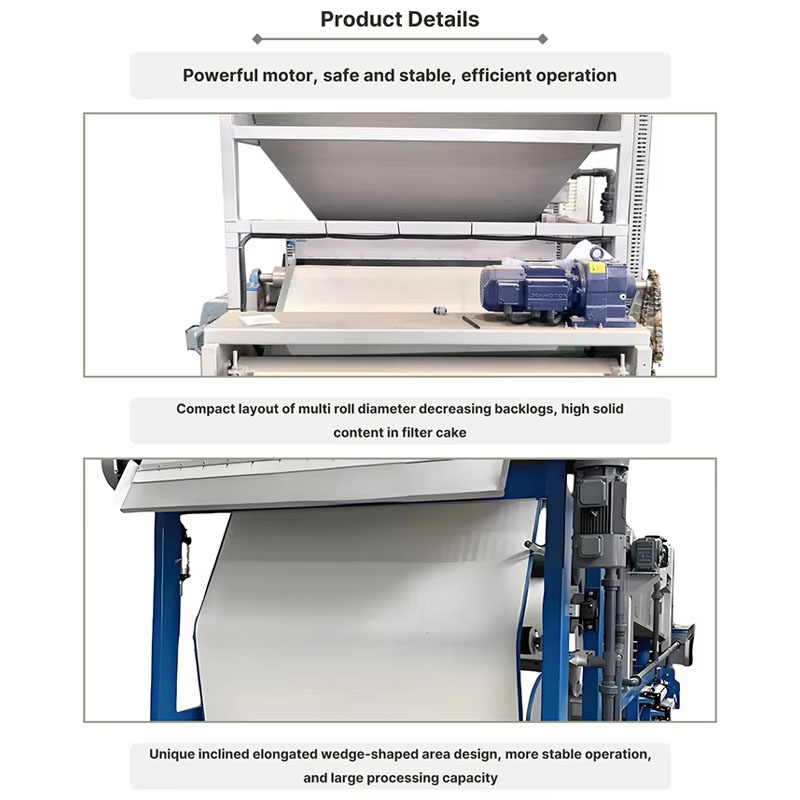
Sludge is first chemically conditioned to improve floc formation. It is then fed into the gravity zone where free water drains through the belt. The material moves into the wedge zone for pre-compression and stabilization. Finally, it enters the high-pressure zone where two tensioned belts pass through multiple rollers, applying shear and compression forces to remove bound water. The result is a dewatered filter cake with reduced moisture content and separated filtrate for further treatment.
Product Parameter Table
| Belt Width | 2000 mm |
| Treating Capacity (Inlet Consistency S.S 1-5%) | 30-35 m³/h |
| Dried Sludge | 240-450 kg/h |
| Mud Cake Water Content’s Rate | 75-85 % |
| Driving Motor (frequency control) Power | 0.75 kW |
| Disposal Agitator Motor Power | 0.75 kW |
| Drum thickener Power | 1.1 kW |
| Lower Collecting Tray for Pressed Filtrate | No |
| External Dimensions – L | 5150 mm |
| External Dimensions – W | 2750 mm |
| External Dimensions – H | 3190 mm |
| Base Dimension L1×W1 | 2715×2420 mm |
| Base Dimension L2×W2 | 950×1100 mm |
| Reference Weight | 3500 kg |
Main Features
- Multi-stage dewatering design integrates gravity, wedge, and pressure zones for progressive moisture reduction and stable cake formation.
- Adjustable wedge compression structure allows flexible adaptation to different sludge types and variable solid concentration conditions.
- Stainless steel frame and roller construction provides mechanical durability under continuous industrial operating environments.
- Low energy consumption drive system reduces operational cost while maintaining consistent sludge processing performance.
- Automated control system supports stable feeding, belt tensioning, and continuous dewatering operation with minimal manual intervention.
- Chemical conditioning compatibility improves flocculation efficiency and enhances separation performance for difficult sludge types.
Application Scenarios
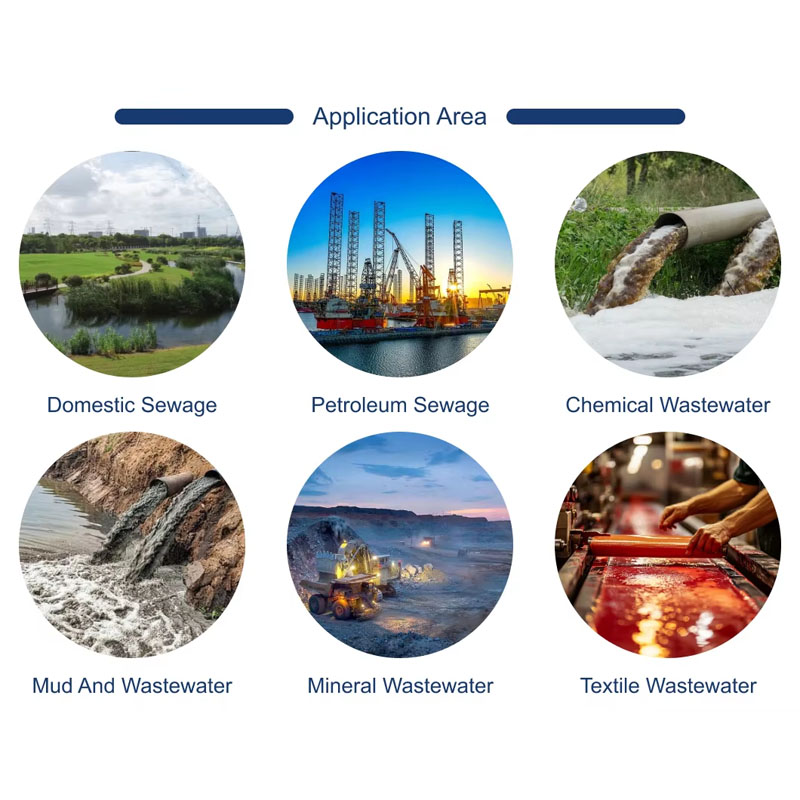
- Municipal wastewater treatment sludge thickening and dewatering processes
- Mining tailings such as iron ore, copper ore, and bauxite sludge
- Sand washing and aggregate wastewater treatment systems
- Pulp and paper industry sludge handling and fiber separation
- Industrial wastewater treatment including chemical and manufacturing effluents
- Mineral processing and ore dressing wastewater solid-liquid separation
FAQ
Q1: What types of sludge can this belt filter press handle?
A: It can handle municipal, industrial, mining, and mineral processing sludge.
Q2: Is chemical conditioning required before dewatering?
A: Yes, flocculation improves efficiency and filtration performance.
Q3: What is the main output of the process?
A: The system produces dewatered filter cake and separated filtrate water.
Q4: Is the system suitable for continuous operation?
A: Yes, it is designed for continuous sludge dewatering processing.
Q5: What industries commonly use this equipment?
A: It is widely used in wastewater treatment, mining, and industrial sectors.
Contact us to get your quotation now.
Get in touch with our engineering team.
Related products
-
Industrial Centrifuge
1200 RPM Bag Lifting Centrifuge For Chemical Separation Use
The bag lifting centrifuge is a high-efficiency solid-liquid separation system designed for batch processing and hygienic discharge operations. It uses frequency conversion speed control and PLC automation to ensure stable and programmable operation. The machine enables vibration-free installation without foundation and supports clean, contamination-free handling. It is widely used in industries requiring high cleanliness and controlled separation, providing efficient dewatering, filtration, and manual or assisted discharge under safe operating conditions.
SKU: n/a -
Industrial Water Treatment Equipment
Belt Filter Press Solution for Paper Sludge Treatment SUS304
Belt Filter Press Solution is a continuous sludge dewatering system designed for efficient solid-liquid separation in industrial and municipal wastewater treatment. It uses dual-belt tensioning, multi-stage roller compression, and controlled shear force to achieve stable sludge dehydration with low moisture output. With a processing capacity of 30–50 m³/h, it is suitable for high-load industrial operations requiring 24/7 continuous performance.
SKU: n/a -
Industrial Centrifuge
1500 rpm Vertical Centrifuge for API Crystal Separation
Vertical centrifuge is a solid-liquid separation system designed for pharmaceutical and fine chemical processing applications. It operates through feeding, separation, washing, discharging, and cleaning cycles to achieve efficient particle separation under controlled centrifugal force. Built with hygienic construction and adaptable discharge options, it supports GMP-compliant production environments. The system is suitable for continuous or batch processing of sensitive materials requiring low-breakage handling and stable performance in industrial separation workflows.
SKU: n/a -
Industrial Centrifuge
8-12 m³/h Decanter Centrifuge for Sludge Dewatering System
The 8–12 m³/h decanter centrifuge is a horizontal solid-liquid separation system designed for continuous industrial dewatering and clarification processes. It operates through high-speed rotation and screw conveyor discharge to separate solids, liquids, and oil phases efficiently. The equipment is widely used in food waste treatment, petrochemical processing, and wastewater management. It ensures stable operation under high load conditions, handling complex suspensions with consistent separation performance and reliable automated control.
SKU: n/a


