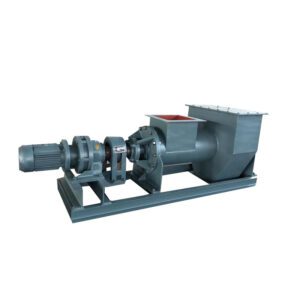
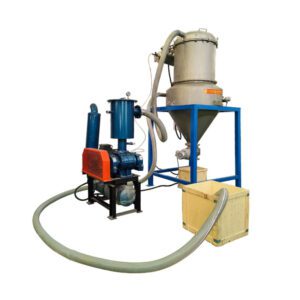
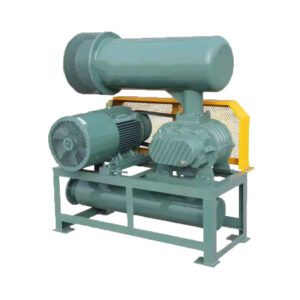
Pneumatic Conveyor Price Stainless Steel Dust Free System
Pneumatic conveyor is a closed-pipeline vacuum conveying system that uses negative pressure (-0.3 to -0.6 bar) to transport dry powders and granules. It ensures dust-free, contamination-free and gentle material handling across industrial production lines. With automatic vacuum suction, filtration and discharge cycle, it provides continuous and efficient feeding to mixers, hoppers and processing machines. Widely used in pharmaceutical, food and chemical industries for safe and hygienic material transfer.
Compare
Pneumatic Conveyor Product Introduction
Pneumatic conveyor, also known as vacuum conveying system or vacuum loader, is an advanced dust-free material handling solution. It uses a vacuum pump to generate negative pressure airflow inside a closed pipeline system.
Materials such as powders and granules are automatically sucked into the system through suction nozzles, transported through pipelines, and separated in a filtration chamber. Clean air is released while materials are discharged into target equipment such as mixers, hoppers or storage tanks.
With automatic control and compressed air reverse pulse cleaning, the system ensures continuous stable operation and high conveying efficiency.
Working principle
Step 1: Vacuum pump generates negative pressure (-0.3 to -0.6 bar)
Step 2: Airflow creates suction inside closed pipeline
Step 3: Material is sucked into inlet nozzle through pressure difference
Step 4: Powder/granules travel through conveying pipe
Step 5: Mixture enters filter separation chamber
Step 6: Air is separated and filtered from material
Step 7: Clean air is discharged from system
Step 8: Material is collected in hopper or discharge unit
Step 9: Compressed air pulse cleans filter automatically
Step 10: System repeats cycle for continuous feeding
Product Parameter Table
| Power | 7.5 kW |
| Capacity | 2000–3000 kg/h |
| Gas Supply Pressure | 0.6 MPa |
| Suction Pipe Diameter | 76 mm |
| Overall Dimensions (A×B) | 420 × 1650 mm |
Main Features
- Closed pipeline vacuum conveying system ensures zero dust leakage
- Negative pressure operation (-0.3 to -0.6 bar) for stable suction
- Gentle material handling reduces particle damage
- High-efficiency filtration system separates air and material
- Compressed air pulse cleaning keeps filter stable and clean
- Fully automatic feeding and discharging cycle control
- Suitable for powder, granules and dry bulk materials
- Low noise and energy-efficient operation system
- Easy maintenance and quick cleaning design
- Supports continuous 24/7 industrial production
Comparison Module
| Feature | Pneumatic Conveyor | Screw Conveyor | Belt Conveyor |
|---|---|---|---|
| Conveying method | Negative pressure suction | Mechanical rotation | Belt transport |
| Dust control | Fully sealed system | Medium | Low |
| Material damage | Very low | Medium | Medium |
| Automation level | High | Medium | Medium |
| Cleaning system | Automatic pulse filter | Manual | Manual |
| GMP suitability | Excellent | Limited | Not suitable |
| Installation flexibility | High | Low | Medium |
Conclusion: Pneumatic conveyor is the best choice for clean, automated and high-efficiency powder handling systems.
Application Scenarios
- Pharmaceutical production: Used for transferring raw powders into mixers and tablet production lines without manual contact, ensuring clean and contamination-free processing.
- Food processing industry: Suitable for milk powder, sugar, flour and additives conveying, maintaining hygienic conditions and preventing dust exposure during continuous production.
- Chemical industry: Handles fine and reactive powders between storage tanks, reactors and packaging systems with stable negative pressure conveying.
- Plastic and polymer industry: Feeds plastic pellets and granules directly into injection molding machines, improving feeding consistency and reducing material blockage.
- Metallurgy and mining: Transfers metal powders, mineral materials and abrasive particles while minimizing equipment wear and maintaining clean workshop conditions.
- Integrated production lines: Connects multiple processing machines such as mixers, sifters and packaging equipment for fully automated material feeding systems.
Why Choose Pneumatic Conveyor
- Provides truly dust-free and contamination-free material transfer
- Uses stable negative pressure system for reliable conveying performance
- Reduces material damage compared to mechanical conveyors
- Fully automated system reduces manual labor cost
- Supports GMP, food-grade and pharmaceutical standards
- Works efficiently for long-distance and complex pipeline layouts
- Self-cleaning filter system ensures continuous operation
- Improves production efficiency and process safety
FAQ
Q1: What is pneumatic conveyor used for in industrial production?
A: It is used for dust-free automatic conveying of powder and granule materials in closed pipeline systems.
Q2: How does vacuum conveyor work with negative pressure system?
A: It uses -0.3 to -0.6 bar vacuum pressure to suck materials through pipelines.
Q3: Is pneumatic conveyor suitable for food and pharmaceutical industry?
A: Yes, it is widely used in GMP and hygienic production environments.
Q4: How does vacuum conveyor prevent dust leakage?
A: It uses a fully closed pipeline system to ensure zero dust escape.
Q5: Can pneumatic conveyor transport long distance materials?
A: Yes, it is designed for stable long-distance pneumatic conveying.
Q6: How is filter cleaned in vacuum conveying system?
A: It uses compressed air pulse reverse blowing to clean the filter automatically.
Q7: What materials can pneumatic conveyor handle?
A: It can handle dry powders, granules and fine bulk materials.
Q8: Does pneumatic conveyor reduce material damage?
A: Yes, it uses gentle airflow instead of mechanical force.
Buying Guide
When selecting a pneumatic conveyor system, consider:
- Material type (powder, granules, bulk solids)
- Required vacuum pressure range (-0.3 to -0.6 bar)
- Conveying distance and pipeline layout
- Filtration system efficiency and cleaning method
- Automation level and control system type
- Industry requirements (food, pharma, chemical)
- Feeding equipment compatibility (mixer, hopper, packaging)
- Maintenance and cleaning frequency
Proper selection ensures stable long-term industrial performance.
Conclusion
Pneumatic conveyor provides a stable and efficient solution for dust-free powder and granule handling in modern industrial production. With its negative pressure conveying system, fully enclosed pipeline design, and automatic filter cleaning function, it ensures continuous, hygienic and safe material transfer. This equipment reduces labor intensity, improves workflow efficiency, and is widely applied in food, pharmaceutical, and chemical industries requiring high cleanliness and reliable automation.
Contact us to get your quotation now.
Get in touch with our engineering team.
Related products
-
Pneumatic Conveying Equipment/Pneumatic Conveyor
Spiral Pneumatic Conveying Pump Screw Feeder Elevator Conveyor
 Pneumatic Conveying Equipment/Pneumatic Conveyor
Spiral Pneumatic Conveying Pump Screw Feeder Elevator Conveyor
Product name: Spiral pneumatic conveying pump
Support customization
Product features: thickened materials, compact structure, simple operation and easy installation
Scope of application: Electric power, machinery, metallurgy, chemical industry and other industriesSKU: n/a -
Pneumatic Conveying Equipment/Pneumatic Conveyor
Pneumatic Conveying System Automatic Feeding Transport System Screw Conveyor For Powder And Pellet
Pneumatic Conveying Equipment/Pneumatic ConveyorPneumatic Conveying System Automatic Feeding Transport System Screw Conveyor For Powder And Pellet
High efficiency grain suction machine features:
1. The equipment has the characteristics of convenient, fast, labor-saving and people-saving.
2. less dust pollution, flexible and convenient operation.
3. Just arrange the conveying pipeline according to the needs, and you can carry out horizontal, vertical, and inclined conveying.
4. High air pressure, long conveying distance, high lift, small size, low noise and low energy consumption.
5. Use a special suction nozzle for local deep suction. It can go deep into the grain layer and obtain materials below 6 meters.SKU: n/a -