5000L Liquid CO2 Cryogenic Tank Supplier for Industrial Use
Liquid CO2 Cryogenic Tank 5000L is a double-layer vacuum insulated pressure vessel designed for safe and efficient low-temperature carbon dioxide storage. Built with stainless steel inner cylinder S30408 and alloy steel Q245R outer shell, it ensures high structural strength and corrosion resistance. The system uses perlite powder vacuum insulation to minimize heat transfer and reduce evaporation loss. With stable working pressure and compact footprint, it is ideal for industrial gas storage applications requiring reliability, safety, and long-term performance.
Compare
Product introduction of Liquid CO2 Cryogenic Tank
This liquid CO2 cryogenic storage system adopts a double-layer cylindrical structure combining stainless steel inner tank and carbon steel outer shell. The interlayer is filled with expanded perlite and maintained under high vacuum conditions to achieve superior thermal insulation. Designed for industrial-grade gas storage, it supports efficient containment of liquefied carbon dioxide under low temperature conditions ranging from -196°C to -50°C.
The 5000L effective volume configuration makes it suitable for medium-scale industrial use, offering stable pressure control, reduced evaporation loss, and centralized operation capability.
Working principle
Step 1. Liquid CO2 is filled into the inner stainless steel tank under controlled pressure
Step 2. Double-layer structure isolates external heat using vacuum and perlite insulation
Step 3. Adsorbent materials stabilize interlayer vacuum performance for long-term efficiency
Step 4. Pressure is regulated within 0.2–3.0 MPa working range automatically
Step 5. Stored CO2 remains in stable cryogenic state at -196°C to -50°C
Step 6. Controlled discharge system delivers gas or liquid CO2 as required
Product Parameter Table
| Parameter | Specification |
| Medium | Oxygen |
| Inner Tank Size (Dia × Length × Thickness) | DN1400 × 29110 × 6/6 mm |
| Outer Tank Size 1 (Dia × Length × Thickness) | DN1900 × 35550 × 8 mm |
| Outer Tank Size 2 (Dia × Length × Thickness) | 1916 × 5262 mm |
| Net Weight | 3940 kg |
Comparison Module
Vacuum Powder Insulation Tank vs Ordinary Storage Tank
- Vacuum powder system reduces thermal loss significantly
- Ordinary tanks show higher daily evaporation rates
- Vacuum design improves long-term storage stability
- Conventional tanks require more frequent refilling
Cryogenic CO2 Tank vs High Pressure Gas Cylinder
- Cryogenic tank stores larger volume with lower cost per unit
- Gas cylinders require frequent replacement and handling
- Tank system offers centralized supply and automation capability
- Cylinder systems are more labor-intensive and less efficient
Stainless Steel Inner Tank vs Carbon Steel Only Tank
- Stainless steel improves corrosion resistance and purity
- Carbon steel-only tanks degrade faster in CO2 environments
- Stainless structure supports longer operational lifespan
- Better hygiene performance for food-grade applications
Main Features
- Double-layer vacuum insulated pressure vessel structure
- Stainless steel S30408 inner tank corrosion resistant design
- Q245R alloy steel outer shell high strength support
- Expanded perlite powder insulation system thermal efficiency
- Stable working pressure range 0.2–3.0 MPa control
- High filling rate up to 95 percent utilization efficiency
- Low evaporation loss cryogenic storage performance
- Compact footprint industrial installation space saving
- Centralized control system safe operational management
- Reliable maintenance and long service life design
Application Scenarios
- For beverage carbonation gas supply, ensure stable CO2 purity and pressure consistency
- For food processing preservation systems, reduce oxidation and extend product shelf life
- For industrial welding protection gas, provide continuous and stable shielding gas supply
- For chemical manufacturing processes, maintain controlled CO2 reaction environments safely
- For laboratory cryogenic research, deliver stable low temperature gas storage performance
- For metal fabrication industries, improve welding quality through consistent gas flow supply
- For environmental gas recovery systems, enable efficient CO2 collection and reuse operation
- For beverage filling plants, ensure uninterrupted carbonation production line efficiency
Why Choose This System
- Lower evaporation loss compared to traditional insulated tanks
- More stable pressure control improves industrial gas reliability
- Longer service life due to corrosion-resistant materials
- Reduced operational cost through high thermal efficiency design
- Safer storage with multi-layer vacuum protection system
- Higher utilization rate with 95% effective filling capacity
- Suitable for continuous industrial production environments
FAQ
Q1: What is a liquid CO2 cryogenic storage tank used for industrial applications?
A: It is used for storing and supplying liquefied carbon dioxide in food processing, chemical production, beverage carbonation, and industrial manufacturing systems requiring stable CO2 supply.
Q2: How does a 5000L liquid CO2 storage tank maintain low temperature stability?
A: It uses double-layer vacuum insulation combined with expanded perlite powder to minimize heat transfer and maintain cryogenic conditions with low evaporation loss.
Q3: What is the working pressure range of cryogenic CO2 storage systems?
A: The standard working pressure range is 0.2–3.0 MPa, ensuring stable and controlled operation for industrial gas storage applications.
Q4: Why is stainless steel used in liquid CO2 cryogenic tanks?
A: Stainless steel S30408 is used for the inner tank because it offers excellent corrosion resistance, durability, and maintains gas purity in low-temperature environments.
Q5: How efficient is vacuum insulated CO2 storage compared to traditional tanks?
A: Vacuum insulation significantly reduces heat transfer and evaporation loss, making it far more efficient and cost-saving than conventional storage tanks.
Q6: What industries use liquid CO2 cryogenic storage tanks most frequently?
A: They are widely used in beverage production, food preservation, welding protection, chemical processing, and laboratory research applications.
Q7: What is the filling rate of industrial CO2 cryogenic tanks?
A: The standard filling rate is up to 95%, allowing high storage efficiency while maintaining safe operational margins.
Q8: How long can liquid CO2 be stored in cryogenic tanks safely?
A: It can be stored for extended periods with minimal loss when vacuum insulation and pressure control systems operate under stable conditions.
Contact us to get your quotation now.
Get in touch with our engineering team.
Related products
-
Pressure Tanks
Pressure Vessel Storage Tank -High Pressure, Casting, Efficient
The pressure vessel storage tank is a casting steel model , manufactured using advanced casting technics, supporting high-pressure applications, and featuring chemical and corrosion resistance. It is suitable for industrial storage scenarios requiring high pressure. Its customizability, metric measurement system, and corrosion-resistant design meet the efficient and reliable needs of the industrial sector.
SKU: n/a -
Food Processing Industry, Pressure Tanks
15 Gallon Pressure Tank, Non-Agitated, Low Pressure
- ASME rated to ensure it meets factory standards
- High quality stainless steel design is compatible with many materials
- Use in stand-alone spraying, material/catalyst supply, or as a moisture sensitive material reservoir
SKU: n/a -
Food Processing Industry, Pressure Tanks, Storage Tanks
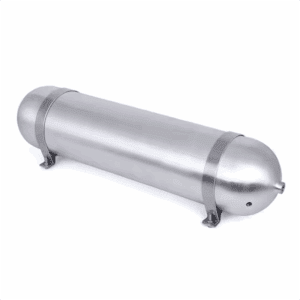
5-Gallon Aluminum Air Suspension Tank (1/4 NPT Connection), Brand New, Suitable For Car/Truck Air Suspension Systems And Heavy-Duty Vehicle Upgrades
 Food Processing Industry, Pressure Tanks, Storage Tanks
5-Gallon Aluminum Air Suspension Tank (1/4 NPT Connection), Brand New, Suitable For Car/Truck Air Suspension Systems And Heavy-Duty Vehicle Upgrades
Product Name: Air Suspension Tank
Car Model: All cars with air suspension system
Special Function: Air Ride Suspension Kit
Purpose: For Replacement/Repair
Condition: NewSKU: n/a -
Pressure Tanks
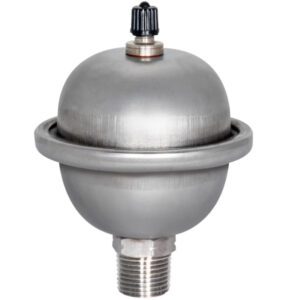
Mini 7.57L Pressure Tank: Water Hammer Arrestor for Home Hot Water Systems
This Eastman Mini Thermal Expansion Tank protects your hot water system. It specifically absorbs thermal expansion pressure. It also eliminates water hammer noise in your pipes. The tank protects your tankless water heater from damage. It is made from durable 304 stainless steel. Installation is very easy. It uses a standard 1/2-inch threaded connection.
SKU: n/a