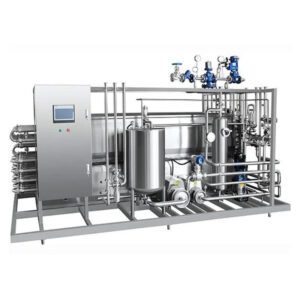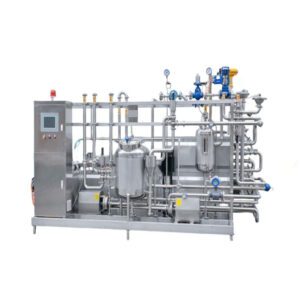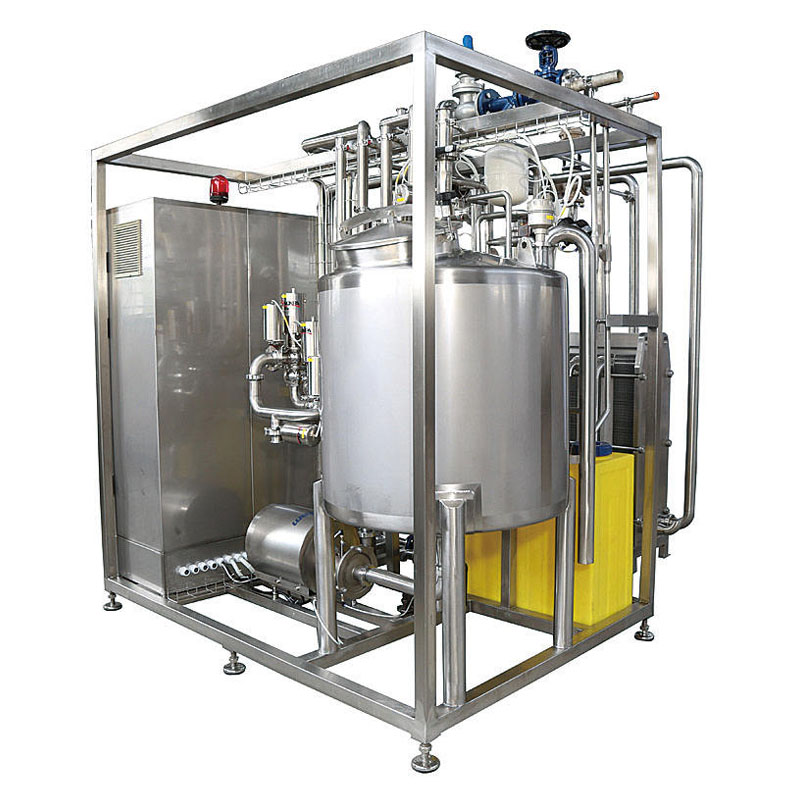
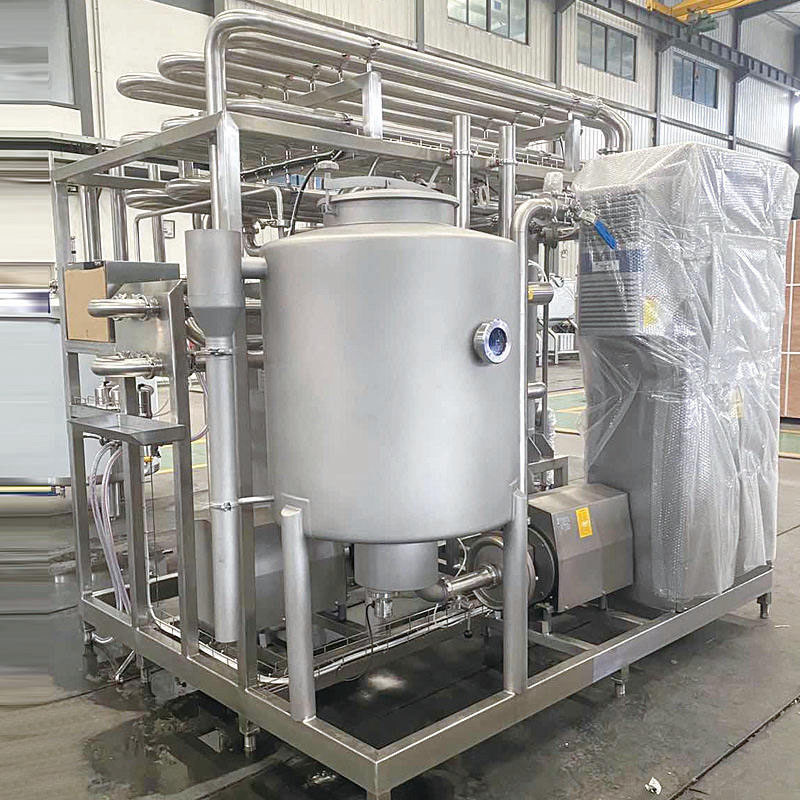
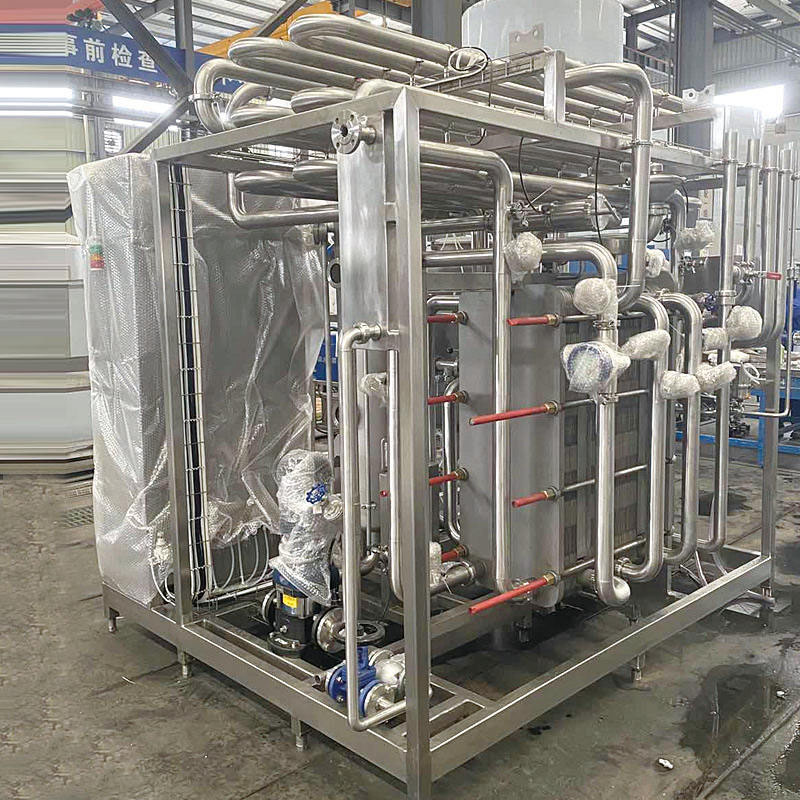
Milk Pasteurization Machine for Dairy Processing System Price
Milk pasteurization machine is a high-efficiency plate type heat treatment system designed for dairy, juice, and beverage processing. It uses stainless steel plate heat exchanger technology to achieve rapid heating, sterilization, and cooling. The system ensures food safety, extends shelf life, and maintains product taste and nutrition. It is widely used in industrial dairy production lines with stable performance and energy-saving operation.
Compare
Product introduction of Milk Pasteurization Machine
Plate type milk pasteurization machine is an advanced thermal processing equipment widely used in dairy, beverage, and food industries. It adopts a compact plate heat exchanger structure, allowing continuous countercurrent heat transfer between product and heating medium.
The system performs preheating, sterilization, and cooling in a continuous flow process, ensuring efficient microbial elimination while preserving product quality. With high heat recovery efficiency and low energy consumption, it is an ideal solution for modern industrial food processing plants.
Working principle
Step 1: Preheating stage
Raw milk enters the plate heat exchanger and is preheated using recovered thermal energy.
Step 2: Heating & sterilization stage
Product is heated to required temperature (typically 72–85°C) for microbial elimination.
Step 3: Holding stage
Milk is maintained at sterilization temperature for a set time to ensure safety.
Step 4: Cooling stage
Sterilized product is rapidly cooled using chilled water or cooling medium.
Step 5: Heat recovery stage
Outgoing hot product transfers heat to incoming raw material, improving energy efficiency.
Product Parameter Table
| Parameter | Value |
| Process capacity | 10 t/h |
| Heat exchange area | 60 m² |
| Power | 11 kW |
| Steam consumption | 520 kg/h |
| External dimension (L×W×H) | 2800×2000×2200 mm |
| Total weight of machine | 1650 kg |
Why Choose This Milk Pasteurization System
- High thermal efficiency plate heat exchanger system
- Stable continuous production for industrial dairy processing
- Lower energy consumption through heat recovery design
- Compact structure suitable for limited factory space
- Fully automated PLC control reduces manual operation
- Hygienic stainless steel design meets food safety standards
- Flexible application for multiple liquid food products
Main Features
- High-efficiency plate heat exchanger for continuous milk pasteurization process
- Stainless steel construction ensures hygienic food-grade production standards
- Compact design saves installation space in industrial processing plants
- Energy recovery system reduces operational cost significantly
- Precise temperature control ensures stable sterilization performance
- PLC automation system improves production efficiency and stability
- Suitable for milk, juice, yogurt, tea, and beverage processing
Plate Pasteurizer vs Tubular Pasteurizer
| Feature | Plate Type | Tubular Type |
|---|---|---|
| Heat efficiency | Very high | High |
| Viscous liquid handling | Limited | Excellent |
| Space requirement | Compact | Larger |
| Cleaning | Easy CIP cleaning | Moderate |
| Cost efficiency | Lower investment | Higher investment |
| Dairy application | Best choice | Secondary choice |
Conclusion: Plate type pasteurizer is ideal for milk and low-viscosity dairy liquids.
Application Scenarios
For raw milk contamination → eliminates harmful bacteria → ensures dairy safety
For juice spoilage issues → controls microbial growth → extends shelf life
For yogurt production instability → stabilizes fermentation base → improves product quality
For beverage safety control → ensures sterilization consistency → maintains taste stability
For dairy factory production scaling → supports continuous processing → increases output efficiency
Buying Guide
When selecting a milk pasteurization machine, consider:
- Processing capacity (1000L–10000L/h)
- Product type (milk, juice, yogurt, beverage)
- Heat exchanger efficiency level
- Automation system (manual / semi / full PLC)
- Material grade (SS304 / SS316 stainless steel)
- Energy recovery requirements
- Factory layout and installation space
Choosing the right system ensures higher efficiency and lower long-term cost.
FAQ
Q1: What is the price of milk plate pasteurization machine for dairy factory?
A: Price depends on capacity, automation level, and stainless steel configuration for industrial production.
Q2: How does plate type milk pasteurizer improve milk shelf life?
A: It eliminates bacteria through controlled heat treatment and maintains product safety.
Q3: What is the difference between plate and tubular pasteurization machine?
A: Plate type is better for milk and low-viscosity liquids, tubular type suits thicker products.
Q4: Which milk pasteurization system is best for dairy processing plant?
A: Plate heat exchanger system is widely used for efficient dairy production.
Q5: Can milk pasteurizer machine be used for juice and beverage?
A: Yes, it is suitable for juice, tea, yogurt, and beverage processing.
Q6: What capacity is available for industrial milk pasteurization equipment?
A: Common capacities range from 1000L/h to 10000L/h depending on production scale.
Q7: How does plate pasteurizer machine reduce energy cost in dairy industry?
A: It recovers heat through countercurrent flow design, reducing energy consumption.
Conclusion
Milk pasteurization machine is a highly efficient plate type heat exchange system designed for continuous dairy processing. It integrates preheating, sterilization, and cooling in one automated line, ensuring stable microbial control and consistent product quality. With advanced stainless steel construction and energy recovery technology, it significantly reduces operational costs while improving production efficiency. This system is widely used in modern dairy factories, beverage plants, and food processing industries as a reliable solution for safe and large-scale liquid food pasteurization.
Contact us to get your quotation now.
Get in touch with our engineering team.
Related products
-
-
Milk Flow Pasteurizer
30BBL/H Milk Flash Pasteurizer Pasteurization Machine For Lactobacillus Milk
The plate type sterilizer is suitable for the process requirements of heating, sterilization, heat preservation and cooling of heat-sensitive liquids such as fresh milk, fruit juice drinks and alcohol. Primary sterilization equipment specially designed for dairy products, fruit juices, beverages or similar liquid materials.
SKU: n/a