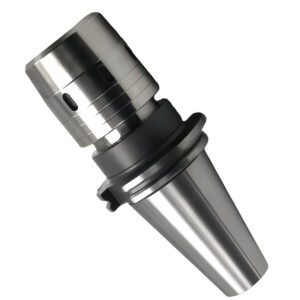
 Heavy-Duty Cutting Tool Holder for CNC Milling High Clamping
 Subtotal: $98.00


Conveyors & Feeding Elevator
Industrial Tubular Drag Chain Conveyor for Flour Transfer
Tube Chain Conveyor is a fully enclosed continuous conveying system designed for transporting powders, granules, and bulk solid materials through horizontal and vertical pipelines. The chain and disc structure enables stable material transfer with low energy consumption, minimal dust emission, and reduced product damage. With flexible feeding and discharge options, it is widely applied in chemical, food, grain, mineral, and industrial material handling systems requiring clean and reliable conveying performance.
Compare
Tubular Drag Chain Conveyor Product Introduction
Tube Chain Conveyor is an enclosed material conveying system designed for efficient transportation of powders, granules, and bulk solid materials in complex industrial environments. The conveyor uses a continuous chain equipped with discs running inside a sealed pipeline, pushing materials smoothly through horizontal, vertical, and inclined conveying routes.
The fully enclosed structure prevents dust leakage, reduces environmental pollution, and eliminates the need for additional dust collection equipment in many applications. The unique chain and disc conveying mechanism provides gentle material handling, helping maintain product quality while reducing material loss and segregation.
With flexible configuration options, the system can support multiple feeding points and discharge locations to meet different production requirements. It can be integrated with equipment such as big bag unloading stations, storage tanks, feeders, and automated production lines.
Tubular Drag Chain Conveyor features low power consumption, stable operation, easy maintenance, and strong adaptability, making it suitable for industries including chemical processing, food production, grain handling, mineral processing, and other bulk material handling applications.
Working principle
Tube Chain Conveyor works through a continuous chain and disc conveying mechanism installed inside a closed pipeline.
During horizontal conveying, the discs attached to the moving chain push the material forward. The internal friction between material particles is greater than the friction between the material and the pipe wall, allowing the material layer to move continuously along the pipeline.
During vertical conveying, the discs lift the material upward while preventing material backflow. The interaction between the discs, material particles, and pipeline creates stable continuous transportation.
The enclosed pipeline design allows the conveyor to transport materials safely through complex routes, including horizontal sections, vertical lifting sections, and directional changes.
Product Parameter Table
| Parameter | Specification |
|---|---|
| Conveying Capacity | Up to 300 m³/h |
| Horizontal Conveying Distance | Up to 80 m |
| Vertical Conveying Distance | Up to 60 m |
| Pipeline Type | Fully enclosed tubular conveying system |
| Conveying Method | Chain and disc conveying |
| Motor Power | Up to 15 kW |
| Applicable Material | Powder, granule and bulk solid material |
| Conveying Direction | Horizontal, vertical and multi-directional conveying |
| Pipeline Diameter | DN100 |
| Chain Speed Range | 0.06–0.42 m/s |
| Drive Speed Range | 3.2–19 r/min |
| Feeding Method | Manual feeding, tank feeding, container feeding available |
| Discharge Method | Single or multiple discharge options available |
| Construction Material | Carbon steel or stainless steel (optional) |
| Control System | Automatic control available |
Optional Equipment Configuration
The conveyor system can be integrated with:
- big bag unloading station
- dust collector
- rotary feeder
- pneumatic slide valve
- diverter valve
- level sensor
- storage tank
- automatic feeding system
Main Features
Fully Enclosed Pipeline Design
The sealed conveying structure prevents dust leakage, protects transported materials from external contamination, and improves the cleanliness of the working environment.
Low Energy Consumption Operation
The mechanical chain-driven system requires relatively low power compared with pneumatic conveying solutions, reducing operating costs.
Flexible Three-Dimensional Conveying
The conveyor can transport materials horizontally, vertically, and through complex layouts, allowing installation around existing equipment and limited production spaces.
Gentle Material Handling
The low-speed conveying process minimizes material breakage, degradation, and separation, making it suitable for fragile materials.
Multiple Feeding and Discharging Options
The system supports customized configurations with multiple inlets and outlets to optimize production processes.
High Conveying Efficiency
The continuous chain movement provides stable material flow and reliable transportation performance for industrial applications.
Dust-Free Material Transfer
The closed pipeline reduces airborne particles and helps maintain cleaner production conditions.
Easy Integration with Automated Systems
The conveyor can connect with feeding equipment, storage systems, packaging lines, and other automated production equipment.
Reliable Long-Distance Conveying
It can handle long horizontal and vertical conveying distances while maintaining stable operation.
Application Scenarios
Chemical Industry
Used for transporting chemical powders, additives, pigments, and other bulk materials requiring enclosed and controlled conveying.
Food Processing Industry
Suitable for conveying flour, sugar, starch, grains, food additives, and other ingredients while maintaining hygiene requirements.
Grain Processing Industry
Applied for transporting cereals, seeds, and agricultural materials in milling and storage systems.
Mineral Processing Industry
Used for handling minerals, powders, and granular materials in mining and industrial processing plants.
Chemical Fiber Industry
Suitable for transferring polymer particles, additives, and production materials in chemical fiber manufacturing.
Plastic Processing Industry
Used for transporting plastic pellets and granular raw materials in automated production lines.
Battery and New Energy Material Industry
Suitable for conveying fine powders and sensitive materials where dust control is required.
Bulk Material Storage System
Can be integrated with silos, tanks, big bag unloading stations, and feeding systems.
Suitable Materials
Tube Chain Conveyor can handle various dry bulk materials, including:
- flour
- grain
- sugar
- starch
- chemical powder
- mineral powder
- plastic pellet
- fertilizer
- food ingredient
- ceramic powder
- additive material
Advantages Compared with Traditional Conveying Equipment
Compared with Pneumatic Conveyor
- Lower energy consumption
- Lower operating cost
- Reduced material degradation
- No large air supply system required
Compared with Screw Conveyor
- Flexible conveying direction
- Suitable for longer distances
- Lower risk of material blockage
- Better protection for fragile materials
Compared with Belt Conveyor
- Fully enclosed structure
- Better dust control
- Supports vertical conveying
- Requires less installation space
FAQ
Q1: What materials can Tube Chain Conveyor transport?
Tube Chain Conveyor can transport powders, granules, pellets, and bulk materials such as flour, grain, chemical powder, food ingredients, minerals, and plastic pellets.
Q2: Is the conveyor suitable for dusty materials?
Yes. The fully enclosed pipeline design effectively reduces dust emission and prevents material leakage during transportation.
Q3: Can the conveyor transport materials vertically?
Yes. The chain and disc structure allows stable vertical conveying while preventing material backflow.
Q4: What is the maximum conveying distance?
The conveying distance depends on material properties, pipeline layout, and capacity requirements. The system can be configured for long horizontal and vertical transportation.
Q5: Can one conveyor have multiple feeding and discharge points?
Yes. Multiple inlet and outlet configurations can be designed according to different production processes.
Q6: Is Tube Chain Conveyor suitable for food applications?
Yes. With suitable material selection and cleaning design, it can be used for food ingredient handling applications.
Q7: What information is needed for conveyor selection?
Important information includes:
- material type
- bulk density
- particle size
- conveying capacity
- conveying distance
- installation layout
- feeding and discharge requirements
Contact us to get your quotation now.
Get in touch with our engineering team.
Related products
-
Conveyors & Feeding Elevator
Automatic Stainless Steel PU Food Conveyor Inclined Food Grade Belt Conveyor For Grape Fruit
 Conveyors & Feeding Elevator
Automatic Stainless Steel PU Food Conveyor Inclined Food Grade Belt Conveyor For Grape Fruit
Model:Inclined Belt Conveyor
Machine Frame:304 stainless steel
Belt Materials:PU/PVC/PP/304 stainless steel
Belt Width:400/500/600mm or customized
Machine Height:3250mm or customized
Speed:AdjustableSKU: n/a -
Conveyors & Feeding Elevator
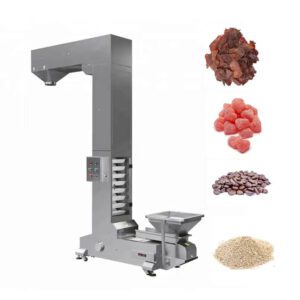
Industrial conveyor automatic z type conveyor bucket elevator for grain,snacks,nuts food grade conveyor
Conveyors & Feeding ElevatorIndustrial conveyor automatic z type conveyor bucket elevator for grain,snacks,nuts food grade conveyor
The conveyor is applicable for vertical lifting of granule material such as corn,jerry, snack, candy , nuts, plastic and chemical product, small hardware ,vegetable ,fruit and so on. For this machine, the bucket is driven by the chains to lift.
SKU: n/a -
Conveyors & Feeding Elevator, Material Handling & Storage
1.5meters long 08B standard double-curved plate single-hole transmission conveyor roller transmission chain, single-sided single-hole curved plate chain, industrial transmission conveyor belt ear curved plate chain
Conveyors & Feeding Elevator, Material Handling & Storage1.5meters long 08B standard double-curved plate single-hole transmission conveyor roller transmission chain, single-sided single-hole curved plate chain, industrial transmission conveyor belt ear curved plate chain
- Chain Model
- 08B Double Wings Single Hole
SKU: n/a -
Conveyors & Feeding Elevator
food grade stainless steel 304 mesh belt conveyor for beer equipment
For our mesh belt conveyor,It is suitable for long-distance, material handing under fixed scene. It is simple and easy to assemble with low noise,easy maintenance, high efficiency. For conveyor belt, there are plastic module belt ,stainless steel mesh belt, chain rod belt ,chain plate and so on.We can make it based your drawing. or our engineer will make the exact auto CAD drawing in 3-5 days once we make the deal. In addition , we may revise the the drawing according to our clients’ feedback untill everything is fixed by both parties .We are confident of the quality of our product and the service of our team.
SKU: n/a