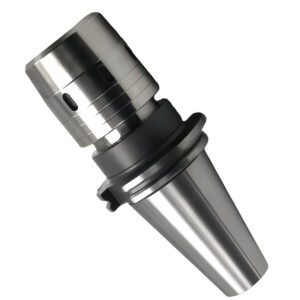
 Heavy-Duty Cutting Tool Holder for CNC Milling High Clamping
 Subtotal: $98.00

Central Kitchen Food Processing Machines
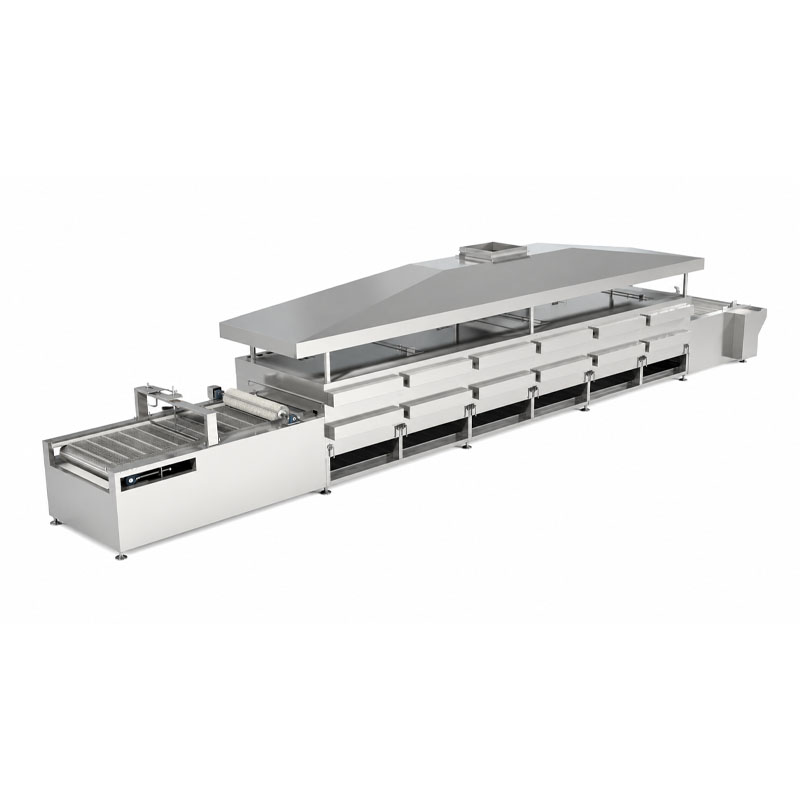
Industrial Infrared Tunnel Oven for Bakery Production
The Infrared Tunnel Oven is an advanced continuous baking solution designed for bakeries, food factories, and industrial production lines. It uses infrared radiant heating technology with multi-zone temperature control to achieve fast, uniform, and efficient baking performance. With flexible configuration, stable operation, and energy-saving design, this oven is suitable for pizza, flatbread, bread, pastry, and other bakery products requiring consistent quality and high-volume production.
Compare
Product introduction of Infrared Tunnel Oven
The Infrared Tunnel Oven is a continuous industrial baking system designed to meet the requirements of modern food processing plants, central kitchens, and commercial bakeries. By combining infrared radiant heat technology with advanced burner or heating control systems, the oven provides precise heat transfer and consistent baking results.
Unlike traditional batch ovens, this continuous tunnel design allows products to move through different heating zones at a controlled speed, ensuring stable temperature exposure, uniform color, proper moisture removal, and consistent product quality. The multi-zone heating structure enables operators to adjust temperature, airflow, and exhaust conditions according to different recipes and production requirements.
The Industrial Infrared Tunnel Oven is suitable for various bakery products, including pizza, flatbread, bread, pastries, and other high-volume baked goods. Its modular structure, efficient energy utilization, and reliable operation make it an ideal choice for factories seeking automated and standardized baking solutions.
Designed with safety, hygiene, and easy maintenance in mind, the oven can be integrated with upstream forming equipment, proofing systems, cooling conveyors, and packaging lines to create a complete automated bakery production process.
Working principle
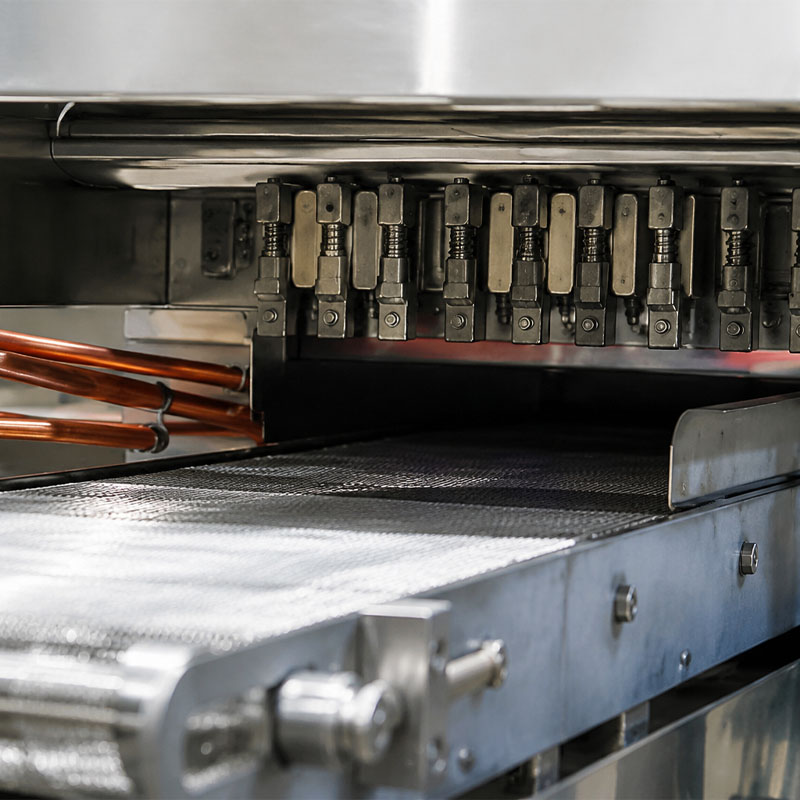
The Infrared Tunnel Oven works by transporting products through a continuous conveyor system at a controlled speed. As products enter different heating zones, infrared radiation delivers targeted heat energy to the surface and interior. Each zone can be adjusted independently to control temperature, baking time, moisture evaporation, and product color. The coordinated heating and exhaust system ensures uniform baking results before products exit the oven for cooling or further processing.
Product Parameter Table
| Parameter | Specification |
|---|---|
| Oven Type | Infrared Tunnel Oven |
| Baking Chamber Length | 4,500 mm |
| Baking Surface Width | 1,000 mm |
| Baking Time Range | 20–240 seconds |
| Overall Dimensions | 10,250 × 3,000 × 2,800 mm |
| Machine Weight | Approx. 5,000 kg |
| Electrical Power | 15 kW |
| Thermal Power | 380 kW |
| Fuel Type | LPG, 30 mbar |
| Maximum Fuel Consumption | 28 kg/h |
| Maximum Operating Temperature | 500°C |
How to Select the Right Infrared Tunnel Oven
Before selecting an oven configuration, customers should consider:
- Product type and size
- Required baking temperature
- Production capacity
- Baking time requirements
- Moisture and color requirements
- Heating method and energy source
- Factory layout and available space
- Upstream and downstream equipment connection
A proper configuration ensures the best balance between production efficiency, product quality, and operating cost.
Main Features
1. Uniform Infrared Heating Technology
The Infrared Tunnel Oven uses radiant heat transfer to directly heat products, improving baking efficiency and ensuring consistent results throughout continuous production.
2. Multi-Zone Temperature Control
The heating chamber is divided into different zones, allowing operators to adjust temperature settings according to product thickness, moisture content, and baking requirements.
3. Continuous Automated Production
With a conveyor-based design, products can pass through the oven continuously, improving production capacity and reducing manual handling.
4. Consistent Baking Quality
Precise control of heat distribution, conveyor speed, and exhaust conditions helps achieve uniform color, texture, and moisture levels.
5. Energy Efficient Operation
Optimized heating technology reduces unnecessary energy consumption while maintaining stable baking performance.
6. Flexible Product Adaptability
The oven configuration can be adjusted for different bakery products with various sizes, thicknesses, and baking requirements.
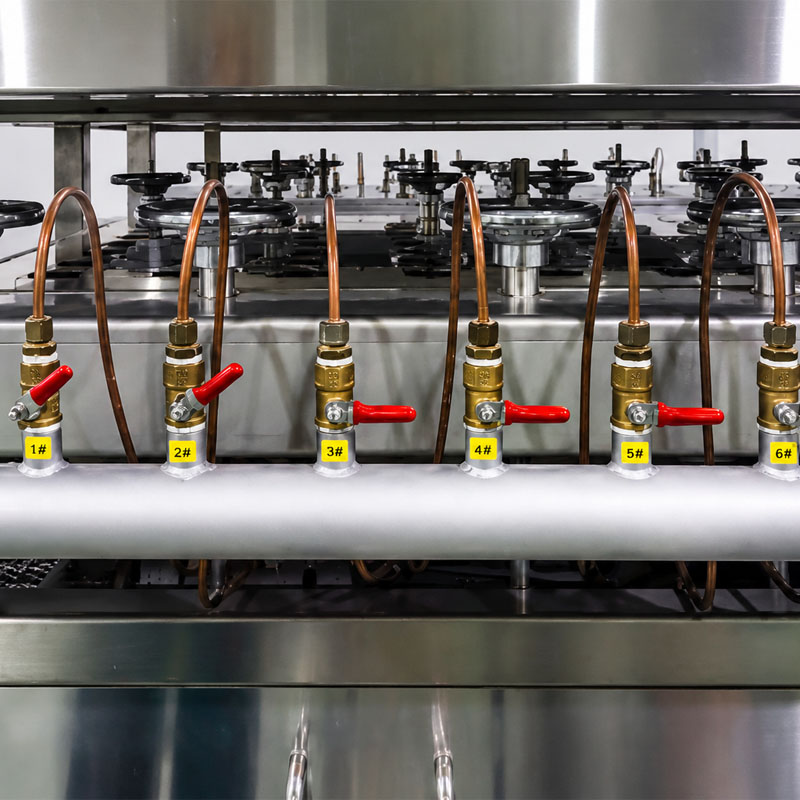
7. Advanced Combustion or Heating Control
The heating system provides accurate temperature management and stable heat output for reliable long-term operation.
8. Hygienic Stainless Steel Construction
The food-grade stainless steel structure ensures durability, easy cleaning, and compliance with industrial food production requirements.
9. Easy Maintenance Design
The equipment provides convenient access for inspection, cleaning, and maintenance of heating components, conveyor systems, and internal structures.
10. Production Line Integration
The oven can connect with dough processing machines, proofing equipment, cooling systems, and packaging equipment for complete automated production.
Integration and Maintenance
The Infrared Tunnel Oven can exchange production signals with feeding and discharge equipment to achieve automated operation. The design allows convenient access for:
- Conveyor inspection
- Heating system maintenance
- Exhaust cleaning
- Temperature sensor checking
- Burner or heating component adjustment
Regular maintenance helps maintain stable baking performance and extend equipment service life.
Application Scenarios
Commercial Bakeries
The Infrared Tunnel Oven helps bakeries achieve consistent quality and high-volume production of bread, pizza, pastries, and flatbread products.
Food Processing Factories
Suitable for industrial food manufacturers requiring continuous baking processes and standardized product quality.
Central Kitchen Production
Provides an efficient baking solution for central kitchens supplying restaurants, supermarkets, and catering businesses.
Pizza Production Lines
Ideal for continuous pizza baking with precise temperature control and consistent crust quality.
Flatbread and Regional Bakery Products
Suitable for pita, naan, and other flatbread products requiring fast and uniform heat transfer.
Frozen Food Production
Can be integrated into frozen bakery production lines for pre-baking or final baking processes.
Advantages Compared with Traditional Baking Equipment
Higher Production Efficiency
Continuous conveyor operation enables large-scale production compared with traditional batch ovens.
Better Product Consistency
Automatic speed and temperature control reduce variation between different batches.
Flexible Production Adjustment
Different heating zones allow operators to optimize baking parameters for different products.
Lower Labor Requirements
Automated operation reduces manual intervention and improves production efficiency.
Improved Energy Management
Precise heat transfer reduces energy waste and improves overall production economics.
Suitable Products
The Industrial Infrared Tunnel Oven can be applied to:
- Pizza
- Flatbread
- Bread
- Pastry
- Cookies
- Baked snacks
- Frozen bakery products
- Other continuous baking products
Why Choose This Infrared Tunnel Oven
- Continuous industrial baking operation
- Uniform infrared heat distribution
- Multi-zone temperature control
- Suitable for various bakery products
- High efficiency and stable performance
- Easy integration into automated production lines
- Designed for food factory and central kitchen applications
FAQ
1. What is an Infrared Tunnel Oven used for?
An Infrared Tunnel Oven is used for continuous baking of bread, pizza, flatbread, pastries, and other food products in industrial production environments.
2. How does an infrared tunnel oven work?
The oven uses infrared radiant heat to transfer energy directly to products while they move through different heating zones on a conveyor.
3. What products can be baked with this oven?
It is suitable for pizza, flatbread, bread, pastries, cookies, and various bakery products.
4. What are the advantages of infrared heating?
Infrared heating provides fast heat transfer, uniform baking, and improved temperature control compared with conventional heating methods.
5. Can the baking temperature be adjusted?
Yes. Each heating zone can be adjusted according to product requirements and production processes.
6. Is this oven suitable for continuous production?
Yes. The tunnel structure is specifically designed for high-volume continuous baking operations.
7. Can the oven be integrated into a complete production line?
Yes. It can connect with dough processing, proofing, cooling, and packaging equipment.
8. How can maintenance be performed?
The equipment is designed with accessible components for inspection, cleaning, and routine maintenance.
Contact us to get your quotation now.
Get in touch with our engineering team.
Related products
-
Central Kitchen Food Processing Machines
1.6KW Automatic Fermenter with Constant Temperature Proofing
 Central Kitchen Food Processing Machines
1.6KW Automatic Fermenter with Constant Temperature Proofing
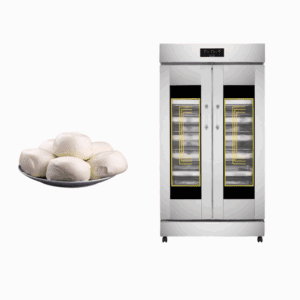
The Automatic Fermenter with Constant Temperature Proofing can support one-touch setting of fermentation time, temperature, and humidity parameters. It also features timed reminders, fault alarms, and other functions. This device operates without the need for manual supervision, enabling full-process fermentation automation. It is a key piece of equipment for enhancing the standardization and scalability of bakery production, helping businesses reduce labor costs and stabilize product quality.
SKU: n/a -
Central Kitchen Food Processing Machines
200L Gas-Heated Automatic Stirring Tilting Food Mixer for Central Kitchen
Central Kitchen Food Processing Machines200L Gas-Heated Automatic Stirring Tilting Food Mixer for Central Kitchen
Food Mixer highlight:
- High-Efficiency Production & Precise Temperature Control
The 400L extra-large capacity, paired with rapid gas heating technology, enables pre-processing of hundreds of meal servings within 30 minutes. Its ±5℃ precise temperature control system guarantees flavor consistency during sauce boiling and stock simmering, eliminating the risk of scorching.- Intelligent & Versatile Stirring System
With stepless speed regulation (0-35rpm), the mixer accommodates all ingredient types, from liquid broths to high-viscosity sauces. The wear-resistant alloy steel stirring paddles enable 360° three-dimensional stir-frying, enhancing ingredient mixing uniformity by 40%.- User-Friendly Operational Design
The hydraulic automatic tilting mechanism allows for one-button discharge, reducing manual labor intensity. The integrated touch control panel streamlines operations—new staff can master the equipment within 10 minutes of training, significantly boosting kitchen teamwork efficiency.- Durability & Safety Assurance
Constructed with a 980kg thickened stainless-steel body and a dual-explosion-proof gas system, the mixer meets EU CE safety standards. Its core components (bearings, gearbox) utilize imported German materials, ensuring 8,000 hours of continuous operation without failure and a service life of up to 10 years.SKU: n/a -
Central Kitchen Food Processing Machines
500L Commercial High Pressure Cooking Pot with Steam Heating Jacket
Central Kitchen Food Processing Machines500L Commercial High Pressure Cooking Pot with Steam Heating Jacket
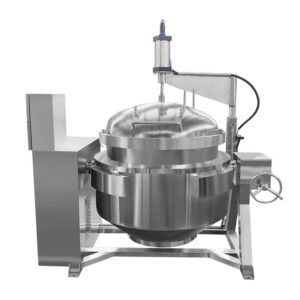
Commercial 500L High Pressure Cooking Pot with Steam Heating Jacket is designed for professional food processing applications such as sauces, soups, jams, meat stewing, and ready meals. The equipment features a durable food-grade 304 stainless steel body with a steam heating jacket, ensuring fast and uniform heat transfer. The high-pressure design significantly shortens cooking time while preserving flavor, color, and nutrients.
SKU: n/a -
Central Kitchen Food Processing Machines
Fully Automatic Dumpling Machine Imitating Handmade Style
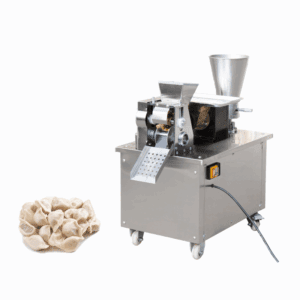
The fully automatic dumpling machine synchronizes the supply of dumpling wrappers and filling, allowing the wrapper-to-filling ratio to be freely adjusted. This ensures that each dumpling is evenly filled and the production capacity is stable at up to 4000 pieces per hour, which is 5-8 times more efficient than manual making, significantly reducing labor costs.
SKU: n/a