Continuous Vegetable Dryer for Central Kitchen Ingredient
The Continuous Vegetable Dryer is an industrial mesh belt drying system designed for high-volume vegetable dehydration. It uses continuous conveyor operation, multi-zone temperature control, and adjustable airflow technology to achieve uniform drying quality. Suitable for garlic, onion, chili, leafy vegetables, fruits, herbs, and food ingredients, this dryer improves production efficiency while reducing labor and energy consumption for food processing factories and central kitchens.
Compare
Product introduction of Continuous Vegetable Dryer
The Continuous Vegetable Dryer is a high-capacity industrial drying solution developed for manufacturers requiring stable and continuous dehydration production. Unlike traditional batch dryers, this machine adopts a conveyor-based drying process, allowing fresh materials to enter from one side and automatically discharge as finished dried products from the other side.
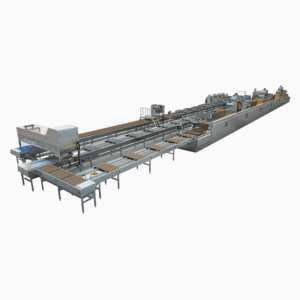
The system consists of a food-grade stainless steel mesh belt, multi-zone drying chamber, heating system, moisture exhaust system, transmission mechanism, and intelligent control unit. During operation, vegetables are evenly distributed onto the moving belt and transported through different temperature zones. Hot air continuously penetrates the material layer to remove moisture while maintaining product color, texture, and nutritional quality.
With adjustable belt speed, drying temperature, airflow volume, and drying time, the Continuous Vegetable Dryer can be customized for different moisture contents and production requirements. It is widely used for garlic flakes, onion slices, chili, carrots, cabbage, spinach, mushrooms, fruit slices, herbs, spices, and other agricultural products.
Designed for industrial food processing plants, central kitchens, and ingredient suppliers, this continuous drying system provides consistent output, lower operating costs, and reliable long-term performance.
Equipment Structure
The Continuous Vegetable Dryer mainly consists of:
Feeding Conveyor
Automatically transports and evenly spreads fresh materials onto the drying belt.
Stainless Steel Mesh Belt
Carries products through the drying chamber and allows hot air to pass through evenly.
Multi-Zone Drying Chamber
Contains several independent drying sections with adjustable temperature and airflow control.
Heating System
Provides heat through electricity, steam, gas, LPG, biomass, or other customized heating sources.
Hot Air Circulation System
Includes fans and air ducts to create uniform airflow and improve drying efficiency.
Moisture Exhaust System
Removes humid air from the chamber to maintain stable drying conditions.
Transmission System
Controls belt movement speed and adjusts material retention time inside the dryer.
Control System
Uses an intelligent control panel to monitor and adjust temperature, belt speed, and operating parameters.
Working principle
The Continuous Vegetable Dryer removes moisture from food materials through controlled hot air circulation and continuous conveyor movement.
The heating system generates hot air, which is evenly distributed inside the drying chamber through fans and air ducts. The hot air passes through the material layer on the mesh belt, transferring heat to the products and evaporating internal moisture.
During the drying process, humid air is continuously discharged through the moisture exhaust system, while fresh heated air is circulated back into the chamber. By controlling temperature, airflow, and belt speed, the machine achieves efficient moisture removal while maintaining product color, texture, and nutritional quality.
Working Process
Step 1: Feeding and Material Distribution
Fresh vegetables or food ingredients are placed onto the feeding conveyor. The material is evenly spread across the mesh belt to ensure consistent drying.
Step 2: Multi-Zone Continuous Drying
The materials enter the drying tunnel and move slowly through different temperature zones. Hot air circulates through the product layer to evaporate moisture.
Step 3: Moisture Removal
Humid air generated during drying is removed through the exhaust system, maintaining an ideal low-humidity drying environment.
Step 4: Automatic Discharge
After completing the drying process, the finished dried products are automatically discharged and transferred to the next process, such as cooling, packaging, or grinding.
Product Parameter Table
| Parameter | Specification |
|---|---|
| Drying Layers | 1–5 layers (customizable) |
| Production Capacity | 500–3,000+ kg/h (depending on raw material and drying requirements) |
| Drying Time | 15 minutes–6 hours (adjustable by VFD control) |
| Operating Temperature | Ambient–120°C (adjustable according to drying zones) |
| Control System | PLC control system with HMI touchscreen |
| Temperature Control | Independent PID control for multiple drying zones |
| Conveyor Drive System | Variable Frequency Drive (VFD) for adjustable belt speed |
| Main Frame Material | Food-grade SUS304 stainless steel |
| Belt Type | SUS304 stainless steel wire mesh belt, perforated plate belt, or Teflon-coated belt (optional) |
| Heating Source | Natural gas/LPG, steam, electricity, biomass, or other customized heating methods |
| Moisture Exhaust System | Stainless steel exhaust duct system for continuous humid air removal |
| Drying Method | Hot air circulation and continuous conveyor drying |
| Moisture Control | Adjustable drying parameters for different raw materials |
| Application Materials | Vegetables, fruits, mushrooms, herbs, spices, and other food ingredients |
| Maintenance Design | Quick-opening stainless steel doors for cleaning and inspection |
| Customization | Belt width, drying length, layer number, and configuration can be customized |
Main Features
Continuous High-Capacity Drying
The Continuous Vegetable Dryer adopts a conveyor belt structure to achieve automatic feeding, continuous drying, and automatic discharge, making it suitable for large-scale food production.
Uniform Drying Quality
Multi-zone temperature control and forced hot air circulation ensure even moisture removal, preventing over-drying or uneven drying.
Flexible Production Adjustment
The belt speed, drying temperature, and airflow can be adjusted according to different materials and moisture requirements.
Hygienic Food-Grade Design
The drying chamber and food-contact parts are made of stainless steel, ensuring easy cleaning, corrosion resistance, and safe food processing.
Energy-Efficient Operation
The insulated drying chamber reduces heat loss, while multiple heating options provide flexible energy solutions.
Application Scenarios
Vegetable Dehydration
Suitable for garlic, onion, chili, carrot, cabbage, spinach, mushroom, and other vegetables.
Fruit Processing
Used for drying mango, apple, pineapple, banana, and other fruit slices.
Central Kitchen Ingredients
Ideal for producing dehydrated ingredients for instant food, seasoning, and prepared meal production.
Herbs and Spices
Suitable for tea leaves, ginger, turmeric, basil, mint, and other aromatic products.
Food Processing Industry
Applied in large-scale food factories requiring continuous and stable drying production.
Why Choose Continuous Vegetable Dryer?
Continuous Production
Automatic feeding, drying, and discharge enable efficient large-scale food processing with reduced labor costs.
Uniform Drying Performance
Multi-zone temperature control and hot air circulation ensure consistent moisture removal and stable product quality.
Wide Application Range
Suitable for vegetables, fruits, mushrooms, herbs, spices, and other food ingredients with adjustable drying conditions.
Energy-Efficient Operation
Optimized airflow and insulation design improve heat utilization and reduce energy consumption.
Customized Solution
Drying capacity, belt width, heating method, and drying configuration can be customized according to production needs.
FAQ
1. What materials can be processed by the Continuous Vegetable Dryer?
The machine can dry a wide range of products, including vegetables, fruits, herbs, spices, mushrooms, seafood, and agricultural products. Common applications include garlic, onion, chili, carrot, cabbage, spinach, mango, apple, and tea leaves.
2. What is the difference between a Continuous Vegetable Dryer and a tray dryer?
A tray dryer works in batches and requires manual loading and unloading. The Continuous Vegetable Dryer uses a conveyor belt system for automatic feeding, continuous drying, and automatic discharge, making it more suitable for large-scale production.
3. Can the drying parameters be adjusted for different products?
Yes. The drying temperature, belt speed, airflow volume, and drying time can be adjusted according to the material type, initial moisture content, and required final moisture level.
4. Is the Continuous Vegetable Dryer suitable for central kitchen production?
Yes. The continuous operation, stable drying quality, and automatic production process make it suitable for central kitchens, prepared food factories, and ingredient processing plants.
5. What heating sources can be used for this dryer?
The machine can be configured with different heating methods, including electricity, steam, natural gas, LPG, biomass, or other customized energy sources according to customer requirements.
6. How does the machine ensure uniform drying?
The dryer uses a forced hot air circulation system, multi-zone temperature control, and adjustable belt speed to ensure every product receives consistent heat and airflow during the drying process.
Contact us to get your quotation now.
Get in touch with our engineering team.
Related products
-
Central Kitchen Food Processing Machines
Central Kitchen Food Processing Machines High-Efficiency Deep Fryer for Restaurants
 Central Kitchen Food Processing Machines
Central Kitchen Food Processing Machines High-Efficiency Deep Fryer for Restaurants
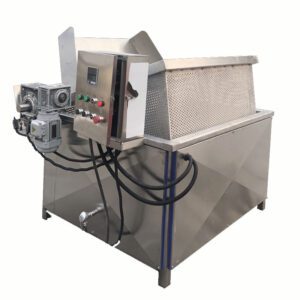
Our Central Kitchen Food Processing Deep Fryer is a critical piece of equipment designed specifically for chain restaurants and large-scale catering services. It integrates a high-volume frying function, capable of continuously and efficiently handling large quantities of ingredients, perfectly suited for the peak demands of fast food or pre-made meal production. Technically, this deep fryer utilizes an advanced PID precise temperature control system, ensuring oil temperature fluctuations are managed within , guaranteeing the consistent texture and golden color of every fried batch. Furthermore, the integrated automatic oil filtration and replenishment systemsignificantly extends the lifespan of the cooking oil while enhancing food safety and operational efficiency by reducing manual handling.
SKU: n/a -
Central Kitchen Food Processing Machines
200L Gas-Heated Automatic Stirring Tilting Food Mixer for Central Kitchen
Central Kitchen Food Processing Machines200L Gas-Heated Automatic Stirring Tilting Food Mixer for Central Kitchen
Food Mixer highlight:
- High-Efficiency Production & Precise Temperature Control
The 400L extra-large capacity, paired with rapid gas heating technology, enables pre-processing of hundreds of meal servings within 30 minutes. Its ±5℃ precise temperature control system guarantees flavor consistency during sauce boiling and stock simmering, eliminating the risk of scorching.- Intelligent & Versatile Stirring System
With stepless speed regulation (0-35rpm), the mixer accommodates all ingredient types, from liquid broths to high-viscosity sauces. The wear-resistant alloy steel stirring paddles enable 360° three-dimensional stir-frying, enhancing ingredient mixing uniformity by 40%.- User-Friendly Operational Design
The hydraulic automatic tilting mechanism allows for one-button discharge, reducing manual labor intensity. The integrated touch control panel streamlines operations—new staff can master the equipment within 10 minutes of training, significantly boosting kitchen teamwork efficiency.- Durability & Safety Assurance
Constructed with a 980kg thickened stainless-steel body and a dual-explosion-proof gas system, the mixer meets EU CE safety standards. Its core components (bearings, gearbox) utilize imported German materials, ensuring 8,000 hours of continuous operation without failure and a service life of up to 10 years.SKU: n/a -
Central Kitchen Food Processing Machines
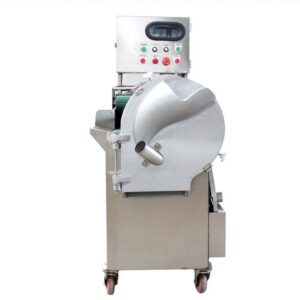
Industrial – Grade Multi – function Vegetable and Fruit Cutting Equipment Versatile Slicing, Dicing & Shredding Applied in Central Kitchens, Food Manufacturing Plants, Fast Food Restaurants
Central Kitchen Food Processing MachinesIndustrial – Grade Multi – function Vegetable and Fruit Cutting Equipment Versatile Slicing, Dicing & Shredding Applied in Central Kitchens, Food Manufacturing Plants, Fast Food Restaurants
Highlight Description of Multi – purpose Vegetable and Fruit Cutter
- Superior Performance & High – Efficiency Output
Powered by a robust drive system and precision mechanical design, it enables accurate and efficient cutting. Capable of processing large volumes of fruit and vegetable raw materials rapidly, it significantly shortens ingredient pre – processing time. This greatly enhances the production efficiency of central kitchens and food factories, providing a solid guarantee for the catering and food processing industries.- Multifunctional & Flexible Processing
Supporting diverse cutting forms such as slicing, dicing, and shredding, it meets the production requirements of various dishes and food products. Whether for delicate salad ingredients or industrial – scale fruit and vegetable products, it excels in handling different tasks. This effectively reduces the cost of purchasing multiple devices and improves equipment utilization.- Industrial – Grade Quality, Durable & Reliable
Crafted from high – quality materials and advanced manufacturing techniques, the cutter features a sturdy structure with excellent wear and corrosion resistance. Even under high – intensity, long – term operation, it maintains stable performance, offering long – term and reliable support for food processing enterprises.- Versatile Adaptability, Wide Application
Designed specifically for central kitchens, food factories, fast – food restaurants, etc., it perfectly adapts to both large – scale standardized production and diverse catering operations. With its flexibility and high – efficiency, it has become an indispensable asset in the food processing and catering service industries.- User – Friendly Operation, Hassle – Free Maintenance
Featuring an intuitive user interface, it minimizes the learning curve, allowing employees to operate it with minimal training. Additionally, its detachable and easy – to – clean structure simplifies maintenance, effectively reducing downtime for servicing and ensuring continuous production.SKU: n/a -
Central Kitchen Food Processing Machines
Fully Automatic Cake Machine with European-style Paper Cups
The fully automatic cake machine is designed to meet daily mass production, peak holiday orders, and customized production needs. Technically, it features a double-layer insulation baking structure and a silent drive design, saving energy and reducing noise, while significantly lowering labor costs and material waste.
SKU: n/a