Automatic Tomato Canning and Processing Line
The Automatic Tomato Canning and Processing Line is designed for continuous production of canned tomato products from fresh tomatoes. It integrates washing, peeling, cutting, container preparation, filling, sealing, and sterilization into a complete processing system. Suitable for whole peeled tomatoes, diced tomatoes, chopped tomatoes, and other canned tomato products, the line offers flexible capacities and packaging configurations for commercial food production.
Compare
Tomato Canning and Processing Line Product Introduction
The Automatic Tomato Canning and Processing Line provides a complete solution for transforming freshly harvested tomatoes into shelf-stable canned products. The system covers the major processing stages from raw tomato receiving and cleaning to peeling, preparation, filling, can sealing, and final thermal sterilization.
Fresh tomatoes first pass through washing and inspection to remove soil, leaves, damaged fruits, and other unwanted materials. Depending on the required finished product, tomatoes can then undergo steam peeling and be kept whole or processed into diced and chopped formats.
Before filling, empty cans or other compatible containers can be cleaned to maintain hygienic processing conditions. Prepared tomatoes are accurately filled into containers, followed by automatic sealing to create an airtight package. The sealed products then undergo controlled retort sterilization to achieve the required commercial processing conditions.
The production line can be configured according to raw material characteristics, finished tomato product, processing capacity, can size, packaging format, and factory layout, making it suitable for different scales of industrial tomato processing. The reference configuration covers capacities from 500 to 10,000 kg/h.
Key Features
Complete Tomato Canning Process
Integrates tomato washing, peeling, cutting, filling, sealing, and sterilization into a coordinated industrial processing system.
Gentle Tomato Washing
Bubble washing and water spraying can remove soil and surface impurities while minimizing unnecessary mechanical damage to ripe tomatoes.
Efficient Steam Peeling
Steam peeling technology rapidly loosens tomato skins and helps reduce unnecessary flesh loss compared with aggressive mechanical peeling methods.
Flexible Product Preparation
Tomatoes can be processed as whole peeled tomatoes, diced tomatoes, chopped tomatoes, or other suitable canned tomato preparations.
Accurate Filling System
The filling section can be selected according to product form and viscosity to provide stable and consistent filling into cans or other suitable containers.
Reliable Can Sealing
Automatic sealing equipment provides secure, airtight closure to prepare the product for subsequent thermal sterilization.
Processing Flow
Fresh Tomato Receiving → Sorting → Washing → Steam Peeling → Inspection → Cutting / Dicing → Can Washing → Filling → Sealing → Retort Sterilization → Cooling → Finished Product
Step 1 – Tomato Receiving & Sorting
Fresh tomatoes are received and conveyed to the inspection section. Damaged, unripe, or unsuitable tomatoes and visible foreign materials are removed before processing.
Step 2 – Washing
Tomatoes enter the washing system where water circulation, bubbles, and spray rinsing remove soil and surface contaminants while maintaining gentle product movement.
Step 3 – Steam Peeling
For peeled tomato products, controlled steam treatment loosens the tomato skin for efficient removal while helping preserve the usable flesh.
Step 4 – Inspection & Preparation
After peeling, tomatoes can undergo further inspection. Depending on the finished product, they can remain whole or enter cutting and dicing equipment.
Step 5 – Cutting or Dicing
Tomatoes intended for diced or chopped products are processed to the required dimensions. The reference configuration supports adjustable dicing sizes according to production requirements.
Step 6 – Container Washing
Empty cans or compatible containers are cleaned before entering the filling section to maintain hygienic packaging conditions.
Step 7 – Tomato Filling
Whole, diced, chopped, or other prepared tomato products are transferred to the filling machine for controlled dosing into containers.
Step 8 – Can Sealing
Filled cans are automatically sealed to create an airtight package suitable for subsequent sterilization and storage.
Step 9 – Retort Sterilization
Sealed containers undergo controlled thermal sterilization. Different retort configurations can be selected according to the product and packaging requirements.
Step 10 – Cooling & Finished Product
After sterilization, the containers are cooled and prepared for downstream drying, labeling, coding, case packing, and storage.
Technical Specifications
| Parameter | Specification |
|---|---|
| Raw Material | Fresh vegetables and leafy greens |
| Finished Product | Fresh-cut vegetable and salad ingredients |
| Main Process | Sorting, cutting, washing, rinsing, dewatering, drying |
| Cutting Type | Slice, shred, strip, dice or customized |
| Washing System | Water circulation / bubble / spray washing |
| Washing Stages | Single or multi-stage, customizable |
| Dewatering Method | Centrifugal / vibration / continuous drying |
| Conveyor Speed | Adjustable |
| Equipment Material | Food-grade stainless steel |
| Control System | PLC control, optional |
| Water Circulation | Available according to configuration |
| Packaging System | Optional |
| Automation Level | Semi-automatic / fully automatic |
| Power Supply | Customized according to local standard |
Main Equipment
A complete fresh-cut vegetable salad processing line can include:
- Raw material feeding conveyor
- Sorting and inspection table
- Vegetable trimming table
- Automatic vegetable cutting machine
- Vegetable shredding or slicing machine
- Elevator conveyor
- Primary vegetable washing machine
- Secondary washing machine
- Rinsing system
- Vibrating draining conveyor
- Vegetable dewatering machine
- Continuous drying system
- Inspection conveyor
- Vegetable mixing equipment
- Weighing system
- Automatic packaging machine
Applications
The Automatic Fresh Cut Vegetable Salad Processing Line is suitable for fresh-cut vegetable factories, ready-to-eat salad manufacturers, central kitchens, vegetable processing plants, food-service suppliers, supermarket fresh food suppliers, catering ingredient processors, and agricultural processing facilities.
The system can be used for both single-variety vegetables and mixed salad products, with equipment configurations adapted according to the required finished product.
Why Choose Us?
Complete Processing Configuration
We can configure the complete process from raw vegetable feeding and cutting through washing, dewatering, inspection, mixing, and packaging, reducing the need to coordinate separate processing machines from different systems.
Designed for Different Vegetables
Leafy vegetables, root vegetables, cabbage, and cucumbers have different handling requirements. Equipment and operating processes can therefore be selected according to the characteristics of the actual raw materials.
Gentle Washing for Fresh-Cut Products
The washing system combines effective cleaning with controlled product movement, helping minimize excessive mechanical damage to delicate cut vegetables and leafy greens.
Flexible Cutting Specifications
Cutting equipment can be selected according to the required finished product, including slicing, shredding, strip cutting, and dicing for different salad applications.
Effective Water Removal
Suitable dewatering equipment helps reduce residual surface moisture after washing, which is particularly important before fresh-cut vegetables enter mixing, weighing, and packaging processes.
Hygienic Food-Grade Construction
Food-contact sections use food-grade stainless steel and are designed with sanitation, drainage, cleaning, and routine maintenance requirements in mind.
Customized Factory Layout
The complete line can be arranged according to workshop dimensions, processing direction, water supply and drainage, production capacity, and downstream packaging area.
FAQ
What vegetables can this processing line handle?
The line can process lettuce, cabbage, purple cabbage, carrot, cucumber, pepper, radish, arugula, leafy greens, and many other suitable vegetables.
Can different vegetables be processed on the same line?
Yes. The line can be designed for multiple vegetables, although cutting equipment, washing intensity, conveyor speed, and dewatering parameters may need to be adjusted for different products.
Can the vegetables be cut into different sizes?
Yes. Cutting equipment can be selected according to the required product shape, including slices, strips, shreds, cubes, and other specifications.
How are leafy vegetables washed without excessive damage?
The washing system can use controlled water circulation, bubbles, or gentle agitation to move and clean leafy vegetables while reducing excessive mechanical impact.
Does the line include a vegetable dryer?
Yes. Centrifugal dewatering or continuous drying equipment can be included according to the vegetable type and required residual moisture.
Can multiple washing stages be used?
Yes. Primary washing, secondary washing, and final rinsing stages can be configured according to the cleanliness requirements and raw material conditions.
Contact us to get your quotation now.
Get in touch with our engineering team.
Related products
-
Fruit And Vegetable Processing Line
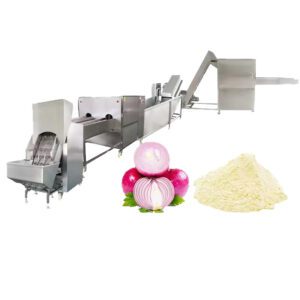
Onion Powder Making Machine Onion Dryer Machine Ginger Powder Processing Line
 Fruit And Vegetable Processing Line
Onion Powder Making Machine Onion Dryer Machine Ginger Powder Processing Line
Feeding Conveyor:0.75KW
Picking line:0.75KW
Onion Root Cutting Machine:1.86KW
Feeding Conveyor:0.75KW
Chain Type Onion Peeling Machine:0.75KW
Air compressor set:37KW
Feeding Conveyor:0.75KW
Onion cutting machine:0.75KW
Feeding Conveyor:0.75KW
Bubble Washing machine:6KWSKU: n/a -
Food & Beverage Processing Equipment, Fruit And Vegetable Processing Line
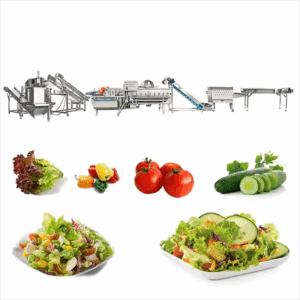
Fully automatic salad production line Fruit and vegetable processing production line
Food & Beverage Processing Equipment, Fruit And Vegetable Processing LineFully automatic salad production line Fruit and vegetable processing production line
Processing steps:
Vegetable cutter → lifting and feeding (to vegetable washer) → washing and decontamination → secondary cleaning → lifting and transport (to dehydrator) → dehydration → final outlet with conveyorSKU: n/a -
Fruit And Vegetable Processing Line
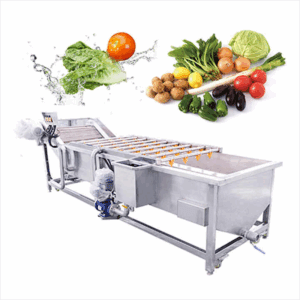
Automatic Ozone Bubble Vegetable Washing Machine Date Washing Fruit Washer Salad Washing machine
Fruit And Vegetable Processing LineAutomatic Ozone Bubble Vegetable Washing Machine Date Washing Fruit Washer Salad Washing machine
Application fields:Snack food factory, Commercial catering, Dairy products factory, Fruit processing plant, Cooking oil factory, Vegetable processing plant, Cannery, Beverage Factory, Seasoning plant, Frozen food Factory
SKU: n/a -
Food & Beverage Processing Equipment, Fruit And Vegetable Processing Line
QX-400 High-Efficiency Vegetable Pretreatment Equipment, 304 Stainless Steel
Food & Beverage Processing Equipment, Fruit And Vegetable Processing LineQX-400 High-Efficiency Vegetable Pretreatment Equipment, 304 Stainless Steel
Model: QX-400
Capacity: 800-1000 kg/h
Overall size: 4000*1300*1250 mm
Power: 4.6 kW
Voltage: 380 V 50 Hz
Conveyor width: 800 mm
Conveyor material: stainless steel 304SKU: n/a