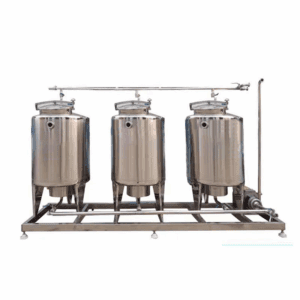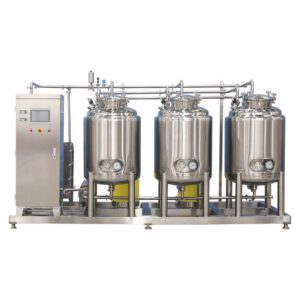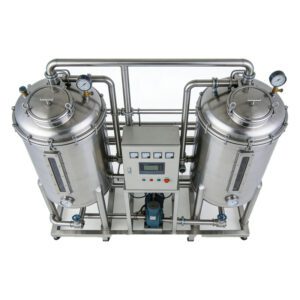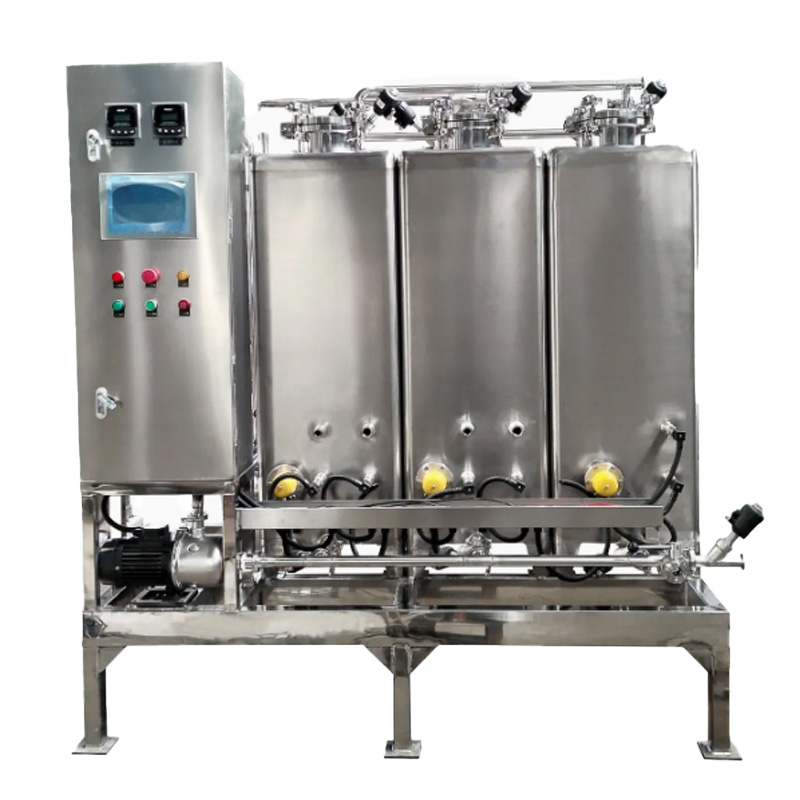


Automatic CIP Cleaning System Price for Beverage Production
The automatic CIP cleaning system for beverage production is designed for hygienic and efficient cleaning of tanks, pipelines, and beverage processing equipment. It integrates intelligent automatic circulation cleaning, temperature control, and sanitary stainless steel systems to ensure stable cleaning performance while reducing labor costs and production downtime. Suitable for juice, soft drink, bottled water, and liquid beverage manufacturing plants requiring reliable industrial cleaning solutions.
Compare
What Is an Automatic CIP Cleaning System?
An automatic CIP (Clean-In-Place) cleaning system is a professional industrial cleaning solution designed for beverage production equipment such as tanks, pipelines, filling machines, heat exchangers, and mixing systems.
The system automatically circulates cleaning solutions inside the equipment without dismantling the production line, ensuring efficient sanitation and stable cleaning quality.
Automatic CIP systems are widely used in modern beverage factories because they improve hygiene standards, reduce labor costs, and increase production efficiency.
Automatic CIP Cleaning System Product Introduction
The automatic CIP cleaning system for beverage production is engineered for hygienic and efficient cleaning of industrial beverage processing systems.
The equipment integrates:
- Cleaning tanks
- Heating systems
- Sanitary pumps
- Automatic control systems
- Pipeline circulation systems
- Stainless steel valves and fittings
The fully automated cleaning process improves operational efficiency and ensures consistent sanitation results for beverage production lines.
The system is suitable for juice production, carbonated beverages, bottled water, tea drinks, dairy beverages, and other liquid food processing applications.
Why Beverage Production Requires CIP Cleaning Systems
In beverage manufacturing, cleaning and sanitation directly affect product quality, shelf life, and production safety.
Traditional manual cleaning methods often create problems such as:
- Long cleaning time
- High labor intensity
- Inconsistent sanitation quality
- Product contamination risk
- Excessive water and chemical usage
- Production downtime
An automatic CIP cleaning system helps beverage manufacturers achieve efficient, stable, and hygienic cleaning while maintaining continuous industrial production.
Core Advantages of Automatic CIP Systems
Fully Automatic Cleaning Operation
The system automatically controls cleaning cycles, circulation time, temperature, and cleaning processes, reducing manual operation.
Improved Beverage Hygiene Standards
The circulation cleaning system ensures complete sanitation of tanks, pipelines, and production equipment.
Reduced Production Downtime
Fast cleaning cycles help factories resume production quickly and improve overall efficiency.
Lower Labor Costs
Automatic operation reduces labor requirements and simplifies factory management.
Stable Cleaning Performance
Consistent cleaning quality improves product safety and beverage production stability.
Hygienic Stainless Steel Construction
Food-grade stainless steel materials ensure sanitary and reliable operation.
Industry Pain Points
Many beverage factories face the following issues:
- Difficult tank and pipeline cleaning
- Residue buildup inside production equipment
- Inconsistent cleaning results
- High maintenance and labor costs
- Excessive water and chemical consumption
- Production interruptions caused by manual sanitation
Our Beverage CIP Cleaning Solution
This automatic CIP system solves those problems through:
- Intelligent automatic cleaning circulation
- Precise temperature control
- Efficient chemical utilization
- Stable cleaning pressure and flow
- Hygienic sanitary system design
- Reliable industrial operation
The result is improved production efficiency, lower operating costs, and higher sanitation standards.
System Configuration
The CIP cleaning system can include:
- Alkali cleaning tank
- Acid cleaning tank
- Hot water sterilization tank
- Sanitary centrifugal pumps
- Electric or steam heating system
- Plate heat exchanger
- PLC automatic control cabinet
- Stainless steel pipelines and valves
Optional configurations include:
- 2-tank CIP system
- 3-tank CIP system
- 4-tank CIP system
Beverage CIP Cleaning Process
Step 1 – Pre-Rinse
Water removes remaining beverage residue from tanks and pipelines.
Step 2 – Alkali Cleaning
Alkali solution removes sugar deposits, proteins, and organic contamination.
Step 3 – Intermediate Rinse
The system flushes remaining cleaning chemicals from the equipment.
Step 4 – Acid Cleaning
Acid cleaning removes mineral scaling and inorganic residue.
Step 5 – Final Sterilization
The final rinse and sterilization process ensures hygienic sanitation before restarting production.
Why Choose This CIP System
Intelligent PLC Control
Automatic control systems simplify operation and improve cleaning consistency.
Food-Grade Hygienic Design
Designed specifically for beverage processing applications.
Energy-Efficient Operation
Optimized circulation systems reduce water, energy, and chemical consumption.
Flexible System Configuration
Available in multiple capacities and tank configurations for different production requirements.
Reliable Industrial Performance
Designed for continuous long-term industrial operation.
Beverage Production Cost Advantages
Using an automatic CIP cleaning system helps manufacturers:
- Reduce labor expenses
- Reduce cleaning time
- Improve sanitation consistency
- Lower maintenance costs
- Reduce production downtime
- Improve overall factory productivity
Higher operational efficiency directly improves factory profitability.
CIP System Price Factors
The price of an automatic CIP cleaning system depends on several factors:
- Tank quantity
- System capacity
- Heating method
- Automation level
- PLC control configuration
- Pump specifications
- Stainless steel material thickness
- Pipeline layout requirements
Customized CIP systems are available based on beverage factory requirements.
Investment and ROI Advantage
Compared with traditional manual cleaning systems, automatic CIP systems provide:
- Faster cleaning speed
- Reduced labor requirements
- Lower contamination risk
- Lower operating costs
- Extended equipment lifespan
- Improved production efficiency
Typical return on investment is approximately 1–2 years depending on production scale and operating conditions.
Technical Specifications
| Item | Specification |
|---|---|
| System Type | Automatic CIP Cleaning System |
| Application | Beverage Production |
| Cleaning Method | Circulation Cleaning |
| Material | Stainless Steel |
| Heating Method | Electric / Steam |
| Control System | PLC Automatic |
| Pump Type | Sanitary Centrifugal Pump |
| Tank Configuration | 2 / 3 / 4 Tanks |
| Installation | Modular Integrated Design |
| Maintenance | Low |
| Service Life | Long-Term Industrial Use |
Engineering Advantages
- Compact modular structure
- Stable circulation cleaning system
- Accurate temperature control
- Hygienic pipeline design
- Easy installation and maintenance
- Reliable industrial operation
Application Scenarios
The system is widely used in:
- Juice production lines
- Carbonated beverage factories
- Bottled water production plants
- Tea beverage processing systems
- Dairy beverage production
- Functional drink manufacturing
- Beverage storage tank cleaning
- Filling machine sanitation systems
Industry Applications
This solution is suitable for:
- Beverage industry
- Juice processing industry
- Dairy beverage industry
- Bottled water industry
- Liquid food processing industry
It is ideal for factories requiring hygienic cleaning systems and continuous industrial production.
FAQ
What is an automatic CIP cleaning system?
An automatic CIP (Clean-In-Place) cleaning system is an industrial sanitation solution used to clean tanks, pipelines, filling machines, heat exchangers, and beverage processing equipment without dismantling the production line. The system automatically circulates cleaning liquids through the equipment to ensure hygienic and efficient cleaning.
Why is CIP cleaning important in beverage production?
Beverage production requires strict hygiene standards to prevent contamination, maintain product taste, and extend shelf life. A CIP system helps factories achieve stable sanitation results, reduce cleaning time, and improve production efficiency while minimizing manual labor.
What equipment can be cleaned by the CIP system?
The system can clean:
- Beverage storage tanks
- Mixing tanks
- Fermentation tanks
- Filling machines
- Stainless steel pipelines
- Heat exchangers
- Syrup processing systems
- Juice production equipment
Is the CIP cleaning process fully automatic?
Yes. The automatic CIP system can control cleaning cycles, circulation time, cleaning temperature, and pump operation through a PLC control system. This improves cleaning consistency and reduces operator workload.
What industries can use this CIP cleaning system?
The system is widely used in:
- Beverage production plants
- Juice processing factories
- Carbonated drink production
- Bottled water manufacturing
- Dairy beverage production
- Liquid food processing
- Pharmaceutical processing
What are the advantages of automatic CIP systems compared with manual cleaning?
Automatic CIP systems provide several advantages:
- Faster cleaning cycles
- Reduced labor costs
- Stable sanitation quality
- Lower contamination risk
- Reduced production downtime
- Lower water and chemical consumption
- Improved production efficiency
What heating methods are available?
The system can be configured with:
- Electric heating
- Steam heating
Electric heating is suitable for factories without steam boilers, while steam heating is often preferred for large-scale industrial production.
Can the system be customized?
Yes. The CIP cleaning system can be customized according to:
- Production capacity
- Tank quantity
- Automation level
- Heating method
- Cleaning process requirements
- Factory layout
Contact us to get your quotation now.
Get in touch with our engineering team.
Related products
-
Automatic CIP Systems
600L Automatic CIP System for Beer Brewing Tank Cleaning
The 600L Automatic CIP System is designed for efficient cleaning of beer brewing tanks, pipelines, and processing equipment. It performs automatic circulation cleaning using alkaline solution, acid solution, and hot water to remove residues and ensure hygienic production. Widely used in breweries, beverage plants, and dairy processing lines, the system features stainless steel construction, reliable pumps, and automatic control for stable and safe operation.
SKU: n/a -
Automatic CIP Systems
500L Automatic CIP Cleaning System for Food Equipment
The 500L Automatic CIP Cleaning System efficiently sanitizes food processing tanks, pipelines, and equipment. With automated circulation, precise temperature and flow control, and clean-in-place operation, it removes residues, bacteria, and contaminants without disassembly. The system reduces labor, saves water and cleaning agents, and maintains consistent hygienic standards. Ideal for dairy, juice, beverage, and small to medium food production lines requiring reliable and efficient sanitation solutions.
SKU: n/a -
Automatic CIP Systems
5-100 m³/h Automatic CIP System for Beverage Tank Cleaning
The 5-100 m³/h Automatic CIP System efficiently cleans beverage tanks, pipelines, and processing equipment. Featuring automated circulation, precise chemical dosing, spray ball technology, and PLC control, it ensures thorough sanitation, removes residues and contaminants, reduces labor, and maintains consistent hygiene standards across beverage production lines. Ideal for fruit juice, soft drink, dairy, and brewery applications.
SKU: n/a