Automatic Carrot Washing and Drying Processing Line
The Automatic Carrot Washing and Drying Processing Line is designed for continuous cleaning, sorting, dewatering, and surface drying of fresh carrots and other root vegetables. The line integrates conveying, drum washing, brush cleaning, sorting, vibrating dewatering, and air drying into one continuous process. With stainless steel construction and customizable configurations, it is suitable for vegetable processing plants, fresh produce facilities, frozen food factories, and commercial root vegetable preparation.
Compare
Washing and Drying Processing Line Product Introduction
The Automatic Carrot Washing and Drying Processing Line provides an integrated solution for processing freshly harvested carrots from soil removal and washing through sorting and surface moisture removal.Fresh carrots are continuously conveyed into the cleaning system. A drum washing machine provides the primary washing stage, using drum rotation, water, and product movement to loosen and remove soil from the carrot surface. The carrots then pass through a brush roller cleaning section for additional cleaning and, when required, light surface peeling.
After cleaning, a sorting section can be used for inspection and removal of unsuitable materials. The carrots are subsequently transferred to a vibrating dewatering machine to drain free water before entering the air drying section for further surface moisture removal.The reference configuration has a total processing capacity of approximately 1000 kg/h and includes a hoisting machine, drum cleaning machine, hair roller cleaning machine, sorting machine, secondary hoisting machine, vibrating machine, and air drying machine. Conventional specifications can be customized according to production requirements.
Drum Washing Working Principle
The drum washing machine is particularly useful for freshly harvested root vegetables carrying significant amounts of soil.Carrots enter the rotating drum and continuously roll and move forward during processing. Washing water, carrot-to-carrot contact, and contact between the product and the drum assist in loosening surface soil.The reference manufacturer describes the drum rotation itself as contributing to both product movement and cleaning. Compared with relying only on a brush washer, introducing a preliminary drum washing stage can remove a substantial portion of loose soil before secondary cleaning.
Carrot Washing and Drying Process
1. Feeding and Conveying
Fresh carrots are loaded onto the feeding or hoisting conveyor and transferred continuously into the washing section.The conveyor helps maintain a controlled material flow between processing stages and reduces repeated manual handling.
2. Drum Washing
Carrots enter the rotating drum washing machine for primary soil removal.During rotation, the carrots continuously move and turn inside the drum while being exposed to washing water. The combined action of water, drum movement, contact between the carrots, and contact with the drum surface helps loosen and remove attached soil and surface impurities.
3. Brush Roller Cleaning
After drum washing, the carrots enter the brush roller cleaning machine for secondary cleaning.Rotating brushes contact the carrot surface while water can be used to carry away loosened soil and residues. Depending on the selected brush material and operating conditions, the section can be configured primarily for washing or for washing with additional surface peeling.
4. Sorting and Inspection
After cleaning, carrots can pass through a sorting or inspection section.This stage provides an opportunity to remove unsuitable material before downstream processing. The reference 1000 kg/h line includes a dedicated sorting machine.
5. Vibrating Dewatering
Washed carrots normally carry free water on their surfaces.
A vibrating machine helps drain and separate part of this water before the carrots enter the air drying section.
6. Air Drying
The carrots are transferred through an air drying machine where forced airflow further removes surface moisture remaining after washing.In this application, drying primarily refers to surface water removal rather than dehydration of the internal moisture of the carrots.
Technical Specifications
| Item | Reference Specification |
|---|---|
| Product Name | Carrot Washing and Drying Processing Line |
| Total Output | 1000 kg/h |
| Main Material | SUS304 Stainless Steel |
| Processing Type | Continuous |
| Hoisting Machine | 0.75 kW |
| Drum Cleaning Machine | 3.75 kW |
| Brush Roller Cleaning Machine | 2.0 kW |
| Sorting Machine | 0.75 kW |
| Secondary Hoisting Machine | 0.75 kW |
| Vibrating Machine | 1.5 kW |
| Air Drying Machine | 15 kW |
| Reference Power Supply | 380 V / 50 Hz |
| Cleaning Method | Drum Washing + Brush Cleaning |
| Water Removal | Vibrating Dewatering + Air Drying |
| Configuration | Customizable |
Key Features
- Multi-Stage Carrot Cleaning
The line combines primary soil removal, drum washing, brush cleaning, sorting, dewatering, and air drying instead of relying on a single washing stage. - Continuous Processing
Conveyors connect the individual machines, allowing carrots to move continuously from raw-material feeding through cleaning and surface drying. - Drum Washing for Soil Removal
The rotating drum continuously turns the carrots while washing, helping loosen soil attached to freshly harvested root vegetables. - Brush Roller Secondary Cleaning
Brush rollers provide additional mechanical cleaning after drum washing. Different brush materials and operating settings can be selected according to the required cleaning or peeling effect. - Washing or Washing-and-Peeling Configuration
The brush section can be configured according to the finished-product requirement.The manufacturer’s separate brush washing and peeling equipment uses rotating brushes with water spray and is applicable to carrots, potatoes, ginger, yam and other root vegetables. - Integrated Sorting Section
A dedicated sorting stage can be incorporated between washing and dewatering to facilitate product inspection before further processing. - Two-Stage Surface Water Removal
The vibrating machine removes free water first, followed by fan-assisted air drying for further surface moisture reduction. - Stainless Steel Construction
The reference production line specifies SUS304 stainless steel construction for the processing equipment. - Customizable Production Line
Capacity, machine dimensions, conveyors, brush configuration, sorting equipment, and downstream processing modules can be selected according to the actual project.
Suitable Raw Materials
Although the page is positioned primarily around carrots, the manufacturer’s related brush washing equipment is also intended for various root vegetables.
- Carrot
The main application of the line, including soil removal, washing, optional surface peeling, sorting, dewatering, and air drying. - Potato
Brush washing equipment can be used for potato cleaning and peeling applications. The manufacturer separately offers brush systems specifically for potatoes. - Ginger
The washing section can be configured for ginger and similar irregular root materials. - White Radish
Suitable washing modules can be configured for radish processing according to the required surface finish. - Yam
Brush washing equipment is also listed by the manufacturer for yam and similar root vegetables. - Sweet Potato and Taro
These can also be evaluated for root vegetable washing applications, with brush intensity and processing conditions selected according to the raw material.
Typical Applications
The Automatic Carrot Washing and Drying Processing Line can be integrated into:
- Fresh Carrot Packing Plants
For washing, sorting, surface drying, and preparation before packing. - Fresh-Cut Vegetable Factories
For cleaning carrots before cutting, slicing, shredding, or dicing. - Frozen Vegetable Processing Plants
For upstream preparation before subsequent cutting, blanching, cooling, and freezing. - Root Vegetable Processing Plants
For carrots, potatoes, radishes, ginger, yam, and other suitable root vegetables. - Central Kitchens and Food Factories
For continuous preparation of root vegetables before cooking or further processing.
How to Select the Right Carrot Processing Line
Before configuring the production line, the following project information should be confirmed:
- Raw Material: Carrot or other root vegetable
- Required Capacity: kg/h
- Incoming Condition: Amount of soil and field debris
- Product Size: Typical diameter and length
- Cleaning Requirement: Washing only or washing + peeling
- Finished Product: Whole, sliced, diced, shredded, frozen, or dried
- Downstream Process: Cutting, blanching, freezing, drying, or packaging
- Power Supply: Voltage / phase / frequency
- Available Factory Space: Required line arrangement and installation area
FAQ
What is the capacity of the carrot washing line?
The reference configuration has a total output of 1000 kg/h. The manufacturer states that the conventional parameters can be customized according to customer requirements.
What equipment is included in the standard line?
The reference line includes a hoisting machine, drum cleaning machine, hair roller cleaning machine, sorting machine, secondary hoisting machine, vibrating machine, and air drying machine.
Can the line wash carrots with soil?
Yes. The drum washing stage is specifically described as being used to remove soil attached to carrots before secondary cleaning.
Can the machine peel carrots?
The brush roller section can be configured for cleaning or for cleaning with peeling. The manufacturer’s dedicated brush equipment supports both washing and peeling applications for carrots and other root vegetables.
Does the air dryer completely dehydrate carrots?
No. In this production line, the air dryer is primarily used to remove surface moisture after washing. Producing dehydrated carrots requires a separate thermal drying process.
Can other root vegetables be processed?
Yes. The manufacturer’s related equipment is also intended for potatoes, ginger, radish, yam, and other suitable root vegetables.
Can a carrot cutting machine be added?
Yes. The reference page explicitly identifies cutting as a possible downstream process after washing.
Can the line connect to freezing or packaging equipment?
Yes. Cutting, further drying, freezing, and packaging can be configured downstream according to the final product.
Contact us to get your quotation now.
Get in touch with our engineering team.
Related products
-
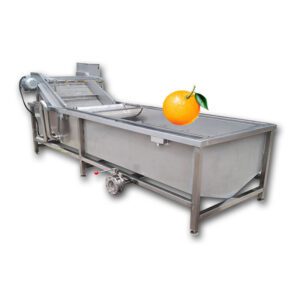
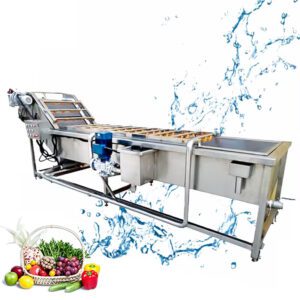
Fruit And Vegetable Processing Line
Commercial Industrial Bubble Fruit Avocado Mango Vegetable Potato Washing Machine Vegetable Production Line
 Fruit And Vegetable Processing Line
Commercial Industrial Bubble Fruit Avocado Mango Vegetable Potato Washing Machine Vegetable Production Line
Features: The seafood cleaning machine uses with arc angle with the cone bottom design, easy to clean, with a high-pressure spray, better cleaning effect, wider range.
The machine is widely used for cleaning carrots, hawthorn, apple, orange, mango, jujube,date etc. demanding shape materials, suitable for: vegetables, fruits, aquatic products and other granular, leaf, root and other products.SKU: n/a -
Food & Beverage Processing Equipment, Fruit And Vegetable Processing Line
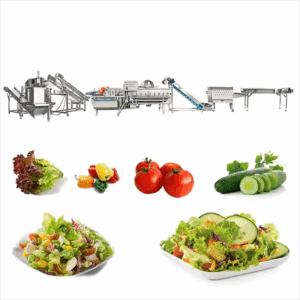
Fully automatic salad production line Fruit and vegetable processing production line
Food & Beverage Processing Equipment, Fruit And Vegetable Processing LineFully automatic salad production line Fruit and vegetable processing production line
Processing steps:
Vegetable cutter → lifting and feeding (to vegetable washer) → washing and decontamination → secondary cleaning → lifting and transport (to dehydrator) → dehydration → final outlet with conveyorSKU: n/a