Automatic Air Bubble Washer for Fresh Produce Processing
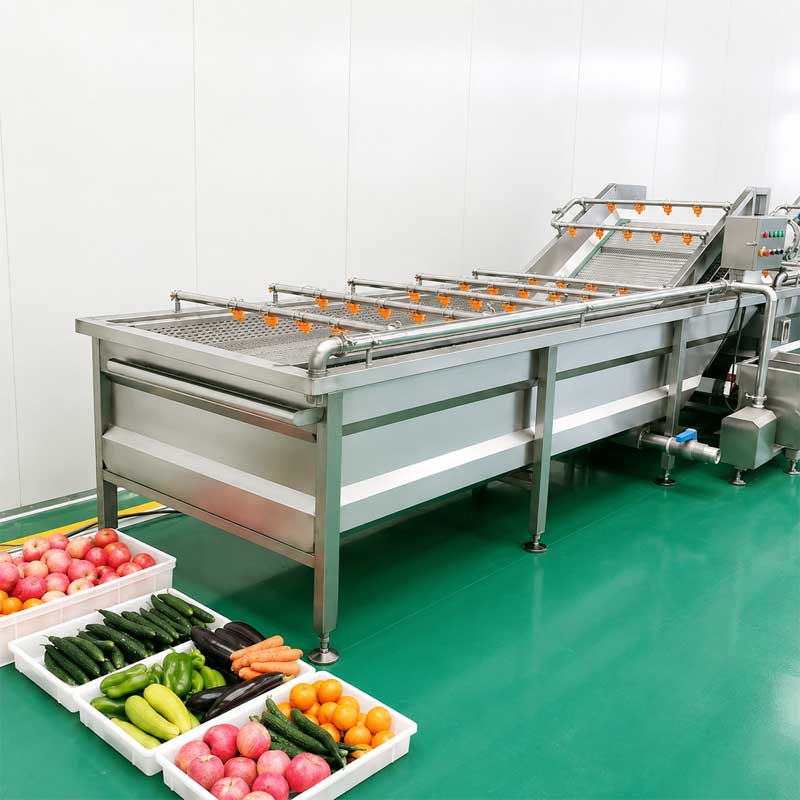
The Automatic Air Bubble Washer provides gentle, continuous cleaning for fresh produce using aerated water movement instead of aggressive mechanical contact. Bubble turbulence loosens soil and debris from product surfaces and difficult-to-reach areas, while circulating water, filtration, conveying, and final spray rinsing support an efficient washing process. Built from SUS304 stainless steel, the machine is suitable for berries, leafy greens, mushrooms, fruits, vegetables, and other delicate food materials.
Compare
Bubble Washing Machine Product Overview
The Automatic Air Bubble Washer for Fresh Produce Processing is designed for food processors that need effective washing without excessive brushing, rubbing, or mechanical handling.
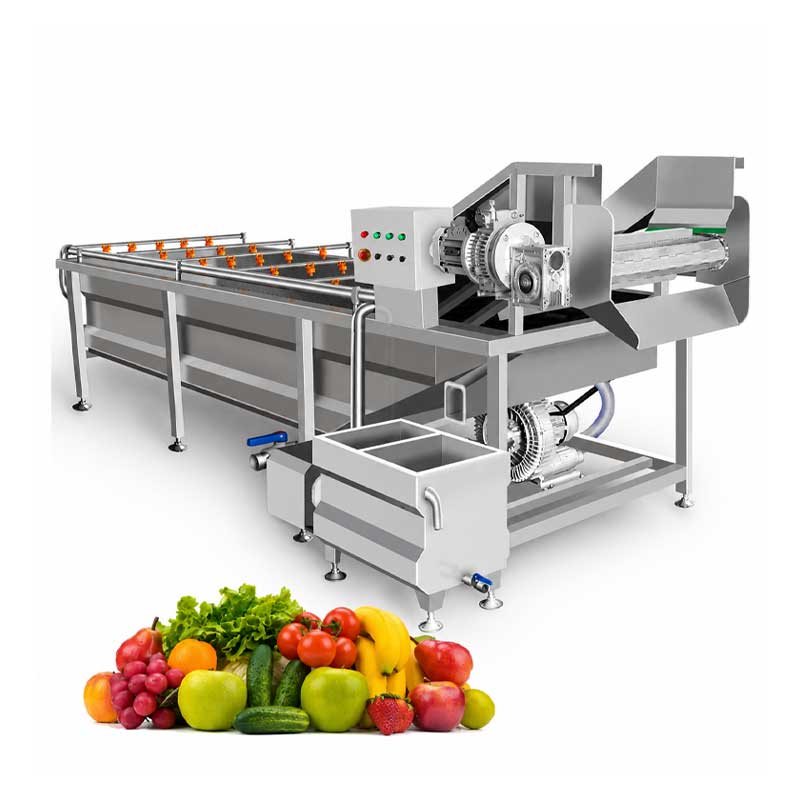
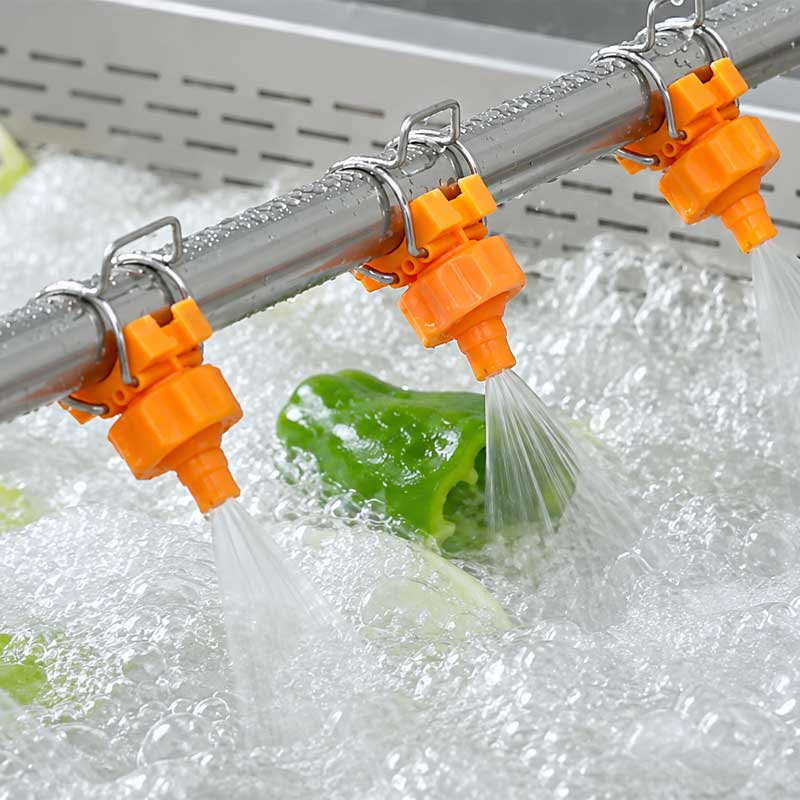
An air pump introduces a large volume of air into the washing tank, creating continuous bubbles and turbulent water movement. As the bubbles rise and burst, the surrounding water gently agitates the product, helping loosen mud, sand, dust, and lightweight surface impurities. The product is then carried toward the discharge section, where spray nozzles provide an additional rinse before it leaves the machine.
This hydraulic washing method makes the equipment particularly useful for products that can be bruised, scratched, broken, or deformed by conventional brush washing. Air pressure and water flow can be adjusted to suit different raw materials and cleaning requirements.The washer can operate continuously and can be connected with sorting, cutting, dewatering, drying, inspection, or packaging equipment to create a complete fresh produce processing line.
How the Air Bubble Washer Works
Product Feeding
Fresh produce is introduced into the washing tank manually or through an upstream feeding conveyor.Once inside the water, the product is surrounded by aerated water rather than being subjected immediately to mechanical brushing.
Bubble Agitation
The air pump supplies air beneath the water surface.The resulting bubbles generate turbulence and water circulation around the products, helping separate adhered dirt and loose contaminants.Bubble intensity can be matched to the characteristics of the material being processed.
Hydraulic Cleaning
The combined movement of air and water continuously turns and agitates the product within the washing zone.For delicate materials, this provides a gentler cleaning mechanism than high-friction washing.
Water Filtration and Recirculation
Process water passes through a circulation and filtration system.Separated debris can be removed from the circulating water before it returns to the washing area, helping reduce unnecessary water consumption and supporting stable continuous operation. The reference design specifically incorporates water circulation and filtration for repeated water use.
Conveyor Lifting
After sufficient washing, the conveyor gradually lifts the product from the tank.Water drains through the conveyor surface while the material moves toward the outlet.
Spray Rinsing
Spray nozzles positioned around the discharge conveyor provide a final rinse.This stage helps wash away loosened debris and residual process water before the cleaned product enters the next processing step.
Why Air Bubble Washing Is Suitable for Delicate Produce
Some fresh products cannot tolerate strong brushing or intensive mechanical agitation.
Strawberries, blueberries, mushrooms, and leafy greens are typical examples. Their surfaces can easily be damaged during washing, which can reduce product appearance and increase processing losses.
The reference equipment therefore uses hydraulic cleaning rather than contact-based components such as brushes or blades. The manufacturer specifically lists strawberries, blueberries, leafy vegetables, and mushrooms among the materials suited to this low-damage washing approach.
By controlling air pressure, water flow, residence time, and conveyor speed, the cleaning intensity can be adapted to the product.
Key Features
Air Bubble Agitation
A dedicated air system creates intensive bubble movement throughout the washing tank, allowing water to reach irregular product surfaces.
Non-Contact Cleaning Action
The primary washing force comes from moving water and bubbles rather than direct brush contact, helping protect sensitive raw materials.
Adjustable Washing Intensity
Air pressure and water flow can be adjusted according to product type and contamination level.
Continuous Feeding and Discharge
The conveyor provides continuous product transfer, making the washer suitable for integration into automated processing lines.
Circulating Water System
Process water can be filtered and recirculated instead of being continuously discharged after a single use.
Final Spray Rinse
Spray nozzles provide additional rinsing as the product leaves the washing tank.
Technical Specifications
| Parameter | Standard Configuration 1 | Standard Configuration 2 |
|---|---|---|
| Equipment Type | Air Bubble Washer | Air Bubble Washer |
| Processing Capacity | 500 kg/h | 800 kg/h |
| Overall Dimensions | 4200 × 1460 × 1470 mm | 4200 × 1660 × 1470 mm |
| Conveyor Belt Width | 600 mm | 800 mm |
| Total Power | 3.7 kW | 3.7 kW |
| Voltage | 380V | 380V |
| Main Material | SUS304 | SUS304 |
| Washing Principle | Air bubble / hydraulic washing | Air bubble / hydraulic washing |
| Water System | Circulation and filtration | Circulation and filtration |
| Discharge Method | Continuous conveyor | Continuous conveyor |
| Final Rinsing | Spray nozzles | Spray nozzles |
| Conveyor Material | PP / optional SUS304 | PP / optional SUS304 |
Main Machine Components
Air Pump
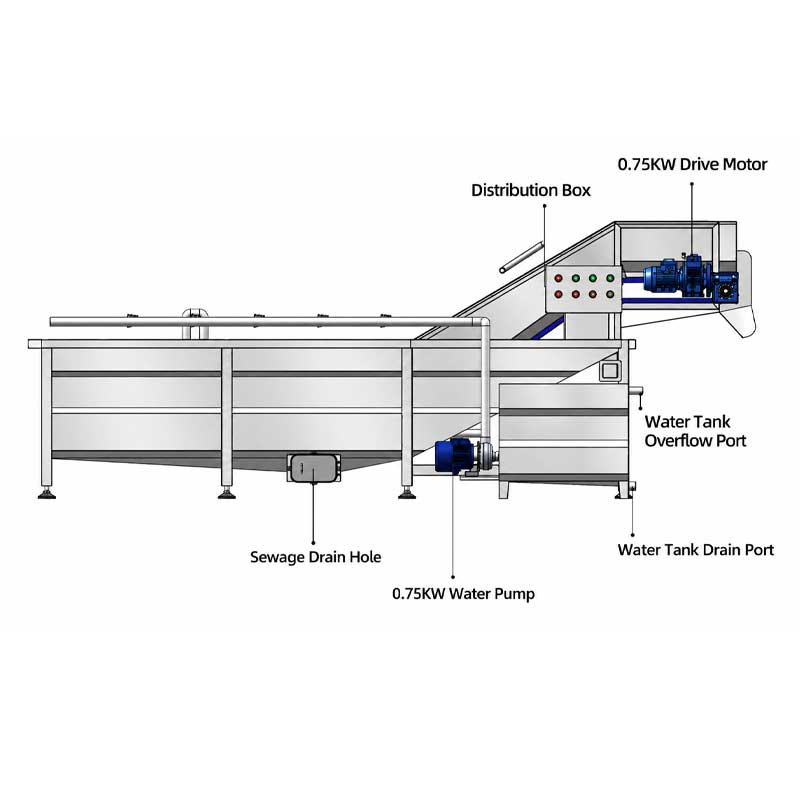
The air pump supplies the airflow required to generate bubbles and turbulent water movement inside the tank.
Washing Tank
The stainless-steel tank provides the primary cleaning zone and holds the process water during operation.
Water Pump
The pump maintains circulation through the washing and rinsing system.
Filtration System
The filtration section separates collected debris from circulating process water.
Lifting Conveyor
The inclined conveyor transfers cleaned products out of the tank while allowing excess water to drain.
Spray Nozzles
Nozzles positioned near the discharge section rinse products during conveying.
Drive Motor
The motor powers the conveying system to maintain continuous product movement.
Electrical Control System
The electrical control section manages the main operating components of the washer.
Drainage System
Drain outlets allow process water and sediment to be discharged during water replacement and equipment cleaning.
How to Choose the Correct Configuration
Raw Material:
What products will be washed?
Capacity:
How many kilograms per hour must the line process?
Product Condition:
Will the raw material be whole, cut, peeled, fresh, frozen, or pickled?
Contamination:
Is the main problem soil, sand, dust, leaves, or other surface debris?
Product Sensitivity:
Can the product tolerate strong water movement, or does it require particularly gentle handling?
Next Process:
Will the washed product be cut, dried, frozen, cooked, juiced, or packed?
Utilities:
What power supply and water source are available at the installation site?
FAQ
What is an air bubble washer?
An air bubble washer uses air introduced into water to generate bubbles and turbulent water movement. This hydraulic action helps loosen dirt and debris from food products without relying primarily on mechanical brushing.
What products are best suited to bubble washing?
It is particularly suitable for products that require gentle handling, including leafy greens, strawberries, blueberries, mushrooms, fruits, and vegetables. The reference equipment is also intended for aquatic products and medicinal herbs.
What capacity is available?
The standard reference configurations are 500 kg/h and 800 kg/h. Capacity can also be customized according to production requirements.
Does the machine use brushes?
No. Its primary cleaning principle is hydraulic washing created by bubbles and water movement, making it different from a conventional brush washer.
Does it have a spray rinsing system?
Yes. Spray nozzles are incorporated into the reference machine and can provide additional rinsing during product transfer.
Can the washing water be reused?
The machine incorporates water circulation and filtration, allowing suitable process water to be reused during operation. Fresh-water replacement should still follow the processor’s hygiene and water-quality requirements.
What material is used for the machine?
The reference machine is manufactured from SUS304 stainless steel.
What conveyor belt is used?
The reference equipment uses a PP conveyor belt, with SUS304 available as an alternative.
Contact us to get your quotation now.
Get in touch with our engineering team.
Related products
-
Fruit And Vegetable Processing Line
Onion Powder Making Machine Onion Dryer Machine Ginger Powder Processing Line
 Fruit And Vegetable Processing Line
Onion Powder Making Machine Onion Dryer Machine Ginger Powder Processing Line
Feeding Conveyor:0.75KW
Picking line:0.75KW
Onion Root Cutting Machine:1.86KW
Feeding Conveyor:0.75KW
Chain Type Onion Peeling Machine:0.75KW
Air compressor set:37KW
Feeding Conveyor:0.75KW
Onion cutting machine:0.75KW
Feeding Conveyor:0.75KW
Bubble Washing machine:6KWSKU: n/a -
Fruit And Vegetable Processing Line
Brush Washer Peeler Machine Automatic Commercial Avocado Kiwi Fruit Yam Cassava Taro Potatoes Peeling Machine
Fruit And Vegetable Processing LineBrush Washer Peeler Machine Automatic Commercial Avocado Kiwi Fruit Yam Cassava Taro Potatoes Peeling Machine
The Sealed cover peeling machine issuitable for cleaning and peeling round and ovalfruits and vegetables such as ginger, carrot, taro, potato, sweet potato and other root vegetables.
The cleaning brush is a nylon cord rolledmaterial treated by a special process, and thepeeling is a hardened material, which has verygood wear resistance.
The whole machine is made of high-quality stainless steel material, and the materi-al can rotated outside. The bottom of the machine is equipped with an isolation filternetwork to effectively separate waste residue and waste water.
SKU: n/a