Sanitary Yeast Storage Tank for Commercial Brewing Process
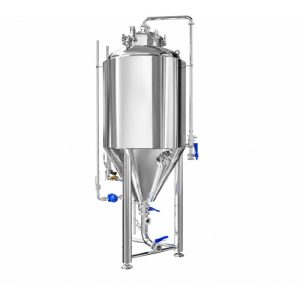
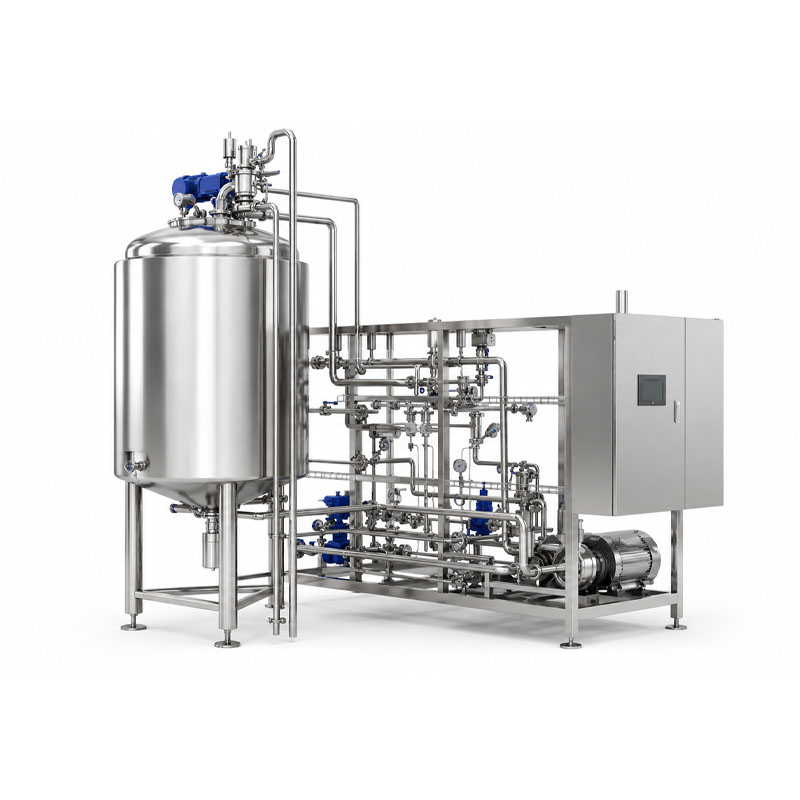
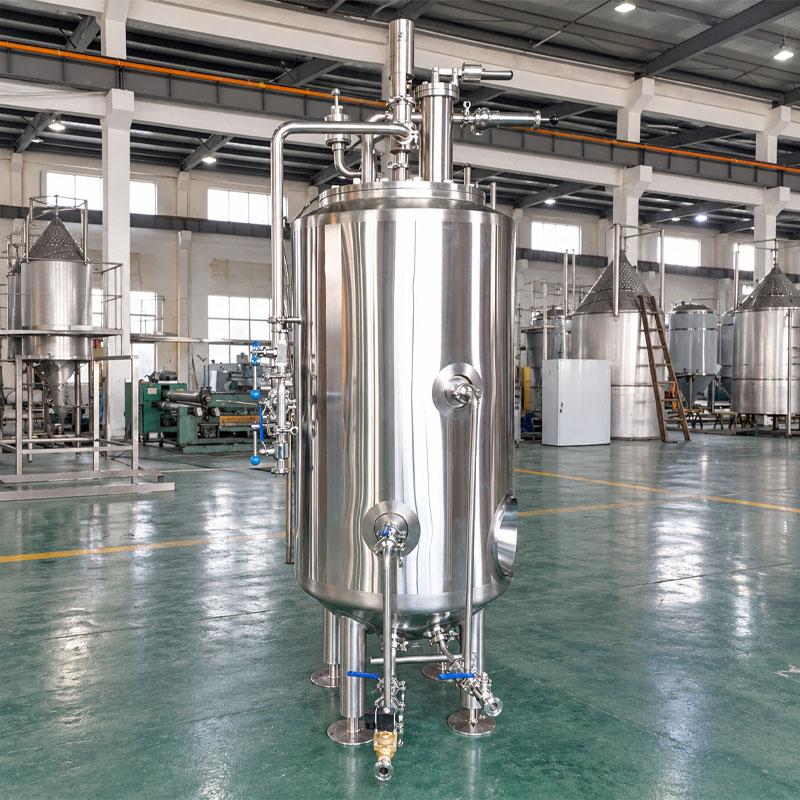
The stainless steel yeast tank supports controlled yeast cultivation for breweries seeking consistent fermentation performance. Its cylindrical body, conical bottom, and insulated construction help maintain stable process conditions, while dual dimple jackets enable cooling and heating. A mirror-polished interior, aseptic sampling valve, and CIP-connected rotary spray ball support hygienic operation. Available in multiple capacities, the tank can be configured for different brewing scales and integrated with suitable yeast transfer and cleaning systems.
Compare
Product Introduction: Sanitary Yeast Storage Tank
A sanitary yeast storage tank provides a controlled vessel for preparing and maintaining yeast cultures before fermentation. Its cylindrical body and conical bottom support handling, while insulated stainless steel construction helps maintain stable operating conditions. Dual dimple jackets allow heating or cooling according to process requirements.
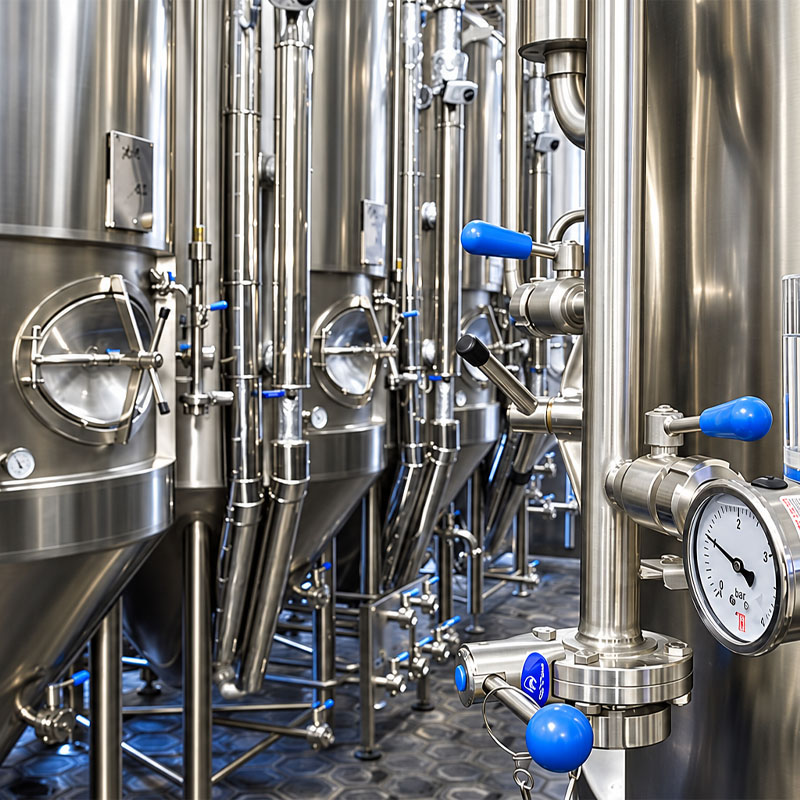
The mirror-polished interior minimizes hard-to-clean areas and supports sanitation between batches. A rotary spray ball connected to the clean-in-place line helps clean the tank interior, while an aseptic sampling valve enables sample collection for process checks with reduced contamination risk. The pressure manway provides access for inspection and maintenance, and adjustable legs help level the vessel.
Available in capacities from 1 to 50 BBL, the tank can be selected for brewing operations and configured to suit the yeast strain, process sequence, and facility layout. Paired with compatible temperature control, transfer equipment, and sanitation procedures, it helps breweries manage yeast preparation consistently and support fermentation planning.
Working Principle
The yeast tank provides a controlled environment for holding and handling yeast cultures as part of the brewing process. After the vessel has been cleaned and prepared, the yeast culture is introduced according to the brewery’s process requirements.
The insulated vessel helps limit heat exchange with the surrounding environment. Heating or cooling fluid circulates through the dual dimple jackets to adjust the tank temperature as required. Operators monitor the process using the appropriate temperature instrumentation and control equipment.
When sampling is required, the aseptic sampling valve provides access to the culture for quality assessment. After the yeast has been used or transferred, the tank can be cleaned through its CIP connection and rotary spray ball. Where required and supported by the validated equipment configuration, an appropriate sterilization procedure can be implemented before the next batch.
Working Process
Step 1: Vessel Preparation
Inspect the tank, connections, valves, and cleaning system. Clean and prepare the vessel before use.
Step 2: Yeast Loading
Introduce the prepared yeast culture through a suitable process connection.
Step 3: Temperature Adjustment
Use the jacketed heating or cooling circuit to establish the required operating temperature.
Step 4: Yeast Holding and Management
Maintain the culture according to the specified process conditions and the requirements of the yeast strain.
Step 5: Sampling and Quality Checks
Collect samples through the aseptic sampling valve for appropriate process and quality assessments.
Step 6: Yeast Transfer
Transfer the culture to the next processing stage using compatible pumps, valves, or other suitable transfer arrangements.
Step 7: Cleaning and Preparation for Reuse
Connect the CIP system and clean the internal surfaces before preparing the tank for another production cycle.
Technical Specifications
| Parameter | Specification |
|---|---|
| Equipment type | Yeast tank |
| Capacity range | 1–50 BBL |
| Construction material | Stainless steel 304 |
| Vessel configuration | Cylindrical body with conical bottom |
| Internal surface finish | Mirror polished |
| Top access | Pressure manway |
| Cleaning system | CIP rotary spray ball |
| Sampling connection | Aseptic sampling valve |
| Insulation | PU foam |
| Temperature control | Dual dimple heating and cooling jackets |
| Support structure | Four adjustable legs |
Key Features and Benefits
Insulated Stainless Steel Construction
The stainless steel vessel combines durability with an insulated structure to help reduce unwanted temperature fluctuations during yeast handling.
Dual Dimple Jacket Design
Separate jacketed sections support heating and cooling, allowing the tank to accommodate different temperature requirements during operation.
Mirror-Polished Interior
The smooth internal finish helps reduce residue accumulation and simplifies routine cleaning between production batches.
Integrated CIP Cleaning
A rotary spray ball connects to the clean-in-place system to distribute cleaning solution across the internal vessel surfaces.
Aseptic Sampling Valve
The sampling connection enables operators to collect yeast samples for quality checks while helping minimize contamination risks.
Pressure Manway Access
The top access opening supports internal inspection, maintenance, and servicing according to the equipment’s operating procedures.
Adjustable Support Legs
Four adjustable legs help stabilize and level the vessel during installation.
Industrial Applications
Brewery Yeast Preparation
Provides a dedicated vessel for preparing yeast cultures before transfer to fermentation tanks.
Craft Beer Production
Supports yeast handling and fermentation preparation in small and medium-sized brewing operations.
Commercial Brewing Facility
Accommodates larger production requirements through a range of available vessel capacities.
Yeast Culture Maintenance
Provides a suitable vessel for holding and managing yeast cultures according to the brewery’s established process.
Multi-Batch Brewing
Helps organize yeast preparation between production batches and supports a more consistent brewing schedule.
Brewery Process Integration
Connects with compatible cleaning, temperature control, and yeast transfer systems within the production facility.
Optional Equipment and Customization
- Temperature Control Package
A compatible temperature control system can be selected to regulate heating and cooling according to the required process conditions. - Yeast Transfer System
Suitable transfer equipment and sanitary connections can be configured to suit the layout of the brewery. - CIP Integration
The tank’s cleaning connections can be coordinated with an existing or newly supplied clean-in-place system. - Instrumentation Package
Temperature indicators and other appropriate monitoring instruments can be selected according to process requirements. - Customized Vessel Capacity
Available tank capacity and dimensions can be selected according to the required yeast volume, available installation space, and production schedule.
Frequently Asked Questions
Q1: What is a yeast tank used for?
A: A yeast tank is used to hold, manage, and prepare yeast cultures for brewing operations. Its precise role depends on the process and the selected configuration.
Q2: What capacity options are available?
A: The listed capacity range is 1–50 BBL. The appropriate size depends on the amount of yeast required per batch and the brewery’s operating schedule.
Q3: Can the tank control temperature?
A: Yes. The dual dimple jackets support heating and cooling. A compatible external temperature control system is selected according to the process requirements.
Q4: How is the tank cleaned?
A: A rotary spray ball connects to the clean-in-place system to facilitate internal cleaning. The cleaning procedure should be matched to the vessel design and production requirements.
Q5: Does the tank support hygienic sampling?
A: An aseptic sampling valve is included in the described configuration to facilitate sample collection while helping reduce contamination risk.
Q6: What material is used for the tank?
A: The listed construction material is stainless steel 304, with a mirror-polished internal surface.
Contact us to get your quotation now.
Get in touch with our engineering team.
Related products
-
Yeast propagator
4000L Yeast Propagation System – Brewery – SS304-Reliable
The Yeast Propagation System is designed for breweries with a 4000L capacity. Constructed from SS304 stainless steel for hygiene and durability, it features steam heating and -5℃ glycol water cooling for precise temperature control. With automatic temperature and pressure control, it ensures consistent fermentation. It meets the efficient and compliant large-scale production needs of breweries for yeast propagation equipment.
SKU: n/a -
Yeast propagator
50L Yeast Propagation Keg – Biotech – Stainless Steel, PLC, Reliable Fermentation
The yeast propagation keg equipment is designed for fermentation of yeast, enzymes, and microorganisms in biotech, citric acid production lines, etc. Made of 304/316L stainless steel, it offers a capacity range of 50-5000L, features PLC control and high-speed rotation (14000-20000 r/min) for precise fermentation. It meeting the efficient and compliant needs of biological fermentation equipment.
SKU: n/a -
Yeast propagator
80L Pressurized Yeast Storage Tank for Modern Brewing Use
This 80L yeast pressure storage tank is designed for storing, cooling, collecting, and dosing brewing yeast into fermentation tanks. Its duplex cooling jacket connects to an ice water or glycol system to maintain suitable storage conditions. Operating as a low-pressure vessel with a maximum pressure of 0.5 bar, it supports yeast transfer without a dedicated dosing pump. The tiltable tank structure facilitates drainage, helping improve yeast recovery and simplify routine handling in brewery operations.
SKU: n/a -
Yeast propagator
Automatic Yeast Propagation System for Commercial Breweries
Automatic yeast propagation system designed for sterile cultivation and reliable yeast renewal in commercial beer production. The system supports batch or continuous operation, controlled temperature, sterile aeration, and hygienic wort preparation to maintain yeast vitality and consistency. Stainless steel propagation vessels, sanitary valves, level monitoring, pressure protection, and optional agitation help ensure safe operation. Configurations can be customized for different brewery capacities, yeast strains, automation levels, and CIP cleaning requirements.
SKU: n/a