Tubular Chain Conveyor for Coffee Beans and Powder Handling
Tubular Chain Conveyor is an enclosed conveying system designed for efficient transfer of coffee beans, powder, grains, seeds, and bulk materials. Its sealed tube structure prevents contamination and dust leakage while ensuring gentle product handling. With flexible conveying routes, low energy consumption, and reliable operation, it is widely used in food processing, coffee production, chemical, and agricultural industries for clean and automated material transportation.
Compare
Tubular Chain Conveyor Product Introduction
Tubular Chain Conveyor is an advanced enclosed conveying system designed for the gentle and reliable transportation of powders, granules, and bulk materials over short or long distances. Unlike traditional conveying equipment, this system uses a continuous chain-driven conveying structure inside a sealed tube, allowing materials to move safely while preventing contamination, dust leakage, and product loss.
The fully enclosed design makes it especially suitable for industries with strict hygiene and cleanliness requirements, including food processing, animal feed, chemical production, agriculture, and pharmaceutical applications. Materials such as coffee beans, coffee powder, grains, seeds, cereals, flour, sugar, spices, and other dry ingredients can be conveyed efficiently without damaging product quality.
The flexible pipeline configuration allows horizontal, vertical, and inclined conveying with multiple directional changes, helping optimize factory layouts and reduce the need for multiple transfer points. Compared with pneumatic conveying and traditional screw conveyors, the tubular chain conveyor provides lower energy consumption, reduced maintenance requirements, and stable long-distance material handling performance.
Made with durable materials and designed for continuous industrial operation, this conveying system offers a clean, reliable, and energy-efficient solution for modern automated production lines.
Working principle
The tubular chain conveyor operates through a continuous chain equipped with conveying discs that move inside a sealed tube. When the drive system starts, the chain circulates through the pipeline, pushing materials forward from the feeding point to the discharge point.
The enclosed conveying path prevents material leakage and external contamination while maintaining stable transportation performance. According to different production requirements, the system can be designed with multiple inlet and outlet points to support automated feeding and distribution.
Working Process
1. Material Feeding
The material enters the tubular chain conveyor through the feeding inlet. Different feeding devices can be connected according to production requirements to ensure continuous and stable material supply.
2. Chain Driven Conveying
After startup, the drive system rotates the continuous chain inside the sealed tube. Conveying discs attached to the chain push the materials forward smoothly along the pipeline.
3. Flexible Material Transfer
The enclosed conveying route allows materials to move horizontally, vertically, or at an incline. The system can include multiple bends and directional changes to fit complex factory layouts.
4. Material Discharging
When the material reaches the designated outlet, it is discharged into the next processing stage, storage equipment, or packaging system through the discharge port.
5. Continuous Automated Operation
The conveyor operates continuously with stable speed control, reducing manual handling requirements and improving production efficiency while maintaining a clean working environment.
Product Parameter Table
| Parameter | Specification |
|---|---|
| Transmission System | Gear motor drive (no belt) |
| Maximum Capacity | Up to 60 m³/h |
| Available Models | 3 models |
| Tube Diameter | Ø100 mm – Ø200 mm |
| Capacity (Ø100 mm Version) | Up to 10 m³/h |
| Capacity (Ø159 mm Version) | Up to 30 m³/h |
| Capacity (Ø200 mm Version) | Up to 60 m³/h |
| Disc Type | Plastic discs bolted to chain |
| Drive System | Chain-driven system |
| Installed Power | Up to 7.5 kW |
| Power Supply | 400V / 50Hz (other voltages available) |
| Control Panel | Available on request |
| Material Options | Galvanized steel and stainless steel |
Main Features
Fully Enclosed Conveying Design
The sealed tube structure protects transported materials from external contamination while preventing dust generation during operation. It helps maintain a cleaner production environment and improves workplace safety.
Gentle Material Handling
The slow-speed conveying movement reduces product impact and friction, helping maintain the original shape and quality of fragile materials such as coffee beans, cereals, seeds, and food ingredients.
Flexible Installation Layout
The conveyor can be configured for horizontal, vertical, and inclined transportation. Multiple bends and directional changes can be achieved, making it suitable for factories with limited installation space.
Low Energy Consumption
The optimized drive system operates efficiently with lower power requirements compared with pneumatic conveying systems. A single drive unit can handle long-distance conveying routes, reducing operating costs.
Reduced Maintenance Requirements
With fewer moving components and stable operation, the system requires less maintenance compared with conventional conveying equipment. Inspection and service points are designed for easy access.
Dust-Free Operation
The enclosed structure minimizes dust emissions during material transfer, making it ideal for powder handling applications where cleanliness is essential.
Wide Material Compatibility
Suitable for conveying various dry materials, including powder, granules, seeds, grains, coffee beans, flour, sugar, spices, feed ingredients, and chemical powders.
Food-Grade Construction Options
The conveyor can be manufactured with stainless steel materials to meet food processing requirements and provide corrosion resistance and long service life.
Technical Advantages
- Fully enclosed tube conveying structure
- Flexible horizontal and vertical transportation
- Continuous automatic material transfer
- Low-speed gentle conveying operation
- Reduced dust generation
- Energy-efficient drive system
- Easy cleaning and maintenance
- Suitable for continuous production environments
Application Scenarios
Food Processing Industry
Used for transporting coffee beans, coffee powder, flour, sugar, starch, cereals, grains, spices, and other food ingredients between processing equipment.
Coffee Production Line
Ideal for conveying roasted coffee beans, ground coffee, and other coffee materials while reducing breakage and maintaining product quality.
Animal Feed Industry
Suitable for transferring feed ingredients, pellets, grains, and seeds in automated feed production systems.
Chemical Industry
Used for handling dry chemical powders, additives, pigments, and other bulk materials requiring enclosed transportation.
Agricultural Processing
Applied in grain storage, seed processing, cereal handling, and agricultural product packaging systems.
Beverage and Ingredient Plants
Suitable for automated transfer of dry ingredients used in beverage, nutrition, and food manufacturing processes.
Advantages Compared with Traditional Conveying Systems
Compared with Pneumatic Conveyor
- Lower energy consumption
- Reduced air supply requirements
- Less product degradation
- Lower operating noise
- Better suitability for long-distance conveying
Compared with Screw Conveyor
- Flexible conveying direction
- Lower material damage
- Easier pipeline layout
- Reduced maintenance frequency
- Better sealing performance
Compared with Belt Conveyor
- Fully enclosed structure
- Better dust control
- Smaller installation footprint
- Suitable for complex conveying routes
FAQ
Q1: What materials can be transported by a tubular chain conveyor?
A tubular chain conveyor can handle various dry bulk materials, including coffee beans, coffee powder, flour, sugar, cereals, seeds, grains, spices, feed ingredients, and chemical powders. The final configuration depends on material characteristics such as particle size, density, moisture content, and flowability.
Q2: Is a tubular chain conveyor suitable for food processing applications?
Yes. With a fully enclosed structure and stainless steel construction options, it is widely used in food processing applications where hygiene, cleanliness, and contamination prevention are important.
Q3: Can the conveyor transport materials vertically?
Yes. The flexible pipeline design allows horizontal, inclined, and vertical conveying, making it suitable for factories where space optimization is required.
Q4: How does a tubular chain conveyor reduce dust?
The material moves inside a sealed tube, preventing direct exposure to the surrounding environment. This enclosed design significantly reduces dust leakage during transportation.
Q5: What is the difference between a tubular chain conveyor and a pneumatic conveyor?
A tubular chain conveyor uses mechanical chain movement to transfer materials, while pneumatic conveyors rely on airflow. The tubular chain conveyor generally requires less energy and provides gentler material handling.
Q6: Can the conveyor system be customized?
Yes. The conveying distance, inlet and outlet positions, pipeline layout, material requirements, and capacity can be customized according to different production conditions.
Q7: What industries commonly use tubular chain conveyors?
They are commonly used in food processing, coffee production, animal feed manufacturing, chemical processing, agriculture, and other industries requiring clean and efficient bulk material transfer.
Contact us to get your quotation now.
Get in touch with our engineering team.
Related products
-
Conveyors & Feeding Elevator
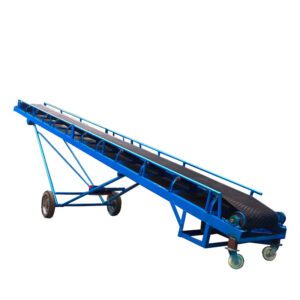
industrial mobile belt conveyor for coal/bulk material/sand gravel stone transporting
 Conveyors & Feeding Elevator
industrial mobile belt conveyor for coal/bulk material/sand gravel stone transporting
Our advantages on belt conveyor:
1).OEM service.
2).More than 30 years experience of conveying industry.Specialized in various conveyors(0-90 degree transportation),like Mobile Belt Conveyor,Fixed Belt Conveyor,Screw Conveyor,PVC Belt Conveyor,PVC(Rubber) Sidewall Belt Conveyor etc.
3).Delivery on time.
4).3% to 10% discounts for new customer(Based on the quantity.)
5).Professional engineer team help you to choose best model for your projectSKU: n/a -
Conveyors & Feeding Elevator
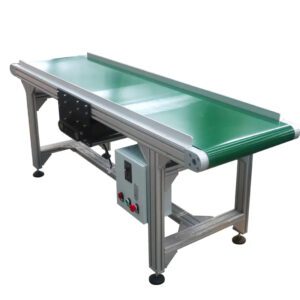
Factory professional custom pvc belt conveyor/semi-automatic aluminum frame conveyor belt
Conveyors & Feeding ElevatorFactory professional custom pvc belt conveyor/semi-automatic aluminum frame conveyor belt
1.12mm thickness structure with Aluminum material
2.3mm thickness PVC belt
3.Normal height 90±10cm adjustable
4.Width and length and height can made according to customer requirement
5.Speed adjustableSKU: n/a -
Conveyors & Feeding Elevator
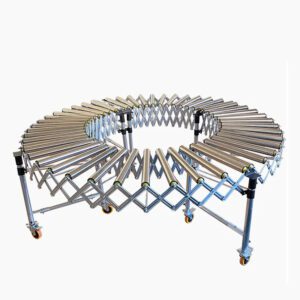
Factory Cheap Price Stainless Steel Motorized Flexible Roller Conveyor and Gravity Conveyor Roller For Sales
Conveyors & Feeding ElevatorFactory Cheap Price Stainless Steel Motorized Flexible Roller Conveyor and Gravity Conveyor Roller For Sales
The roller conveyor has a simple structure, high reliability, and convenient use and maintenance. The roller conveyor is suitable for the conveyance of articles with a flat bottom, which is mainly composed of a driving drum, a frame, a bracket, a driving part and the like. It has the characteristics of large transport volume, high speed, light operation, and the ability to realize the transmission of multiple lines at the same time.
SKU: n/a -
Conveyors & Feeding Elevator
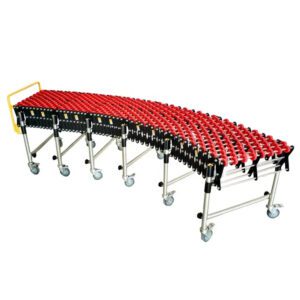
Gravity Flexible Expandable Plastic Skate Wheel Roller Conveyor
Gravity flexible expandable skate wheels conveyor is designed for handling of small-and medium-sized cartons/boxes. It use steel structure completely. The structure remains integrated when laying out according to complete expansion of single curve or composite curve remains integrated.
SKU: n/a